


Human molecular genetic and functional studies identify TRIM63, encoding Muscle RING Finger Protein 1, as a novel gene for human hypertrophic cardiomyopathy
- PMID: 22821932
- PMCID: PMC3482312
- DOI: 10.1161/CIRCRESAHA.112.270207
Human molecular genetic and functional studies identify TRIM63, encoding Muscle RING Finger Protein 1, as a novel gene for human hypertrophic cardiomyopathy
Abstract
Rationale: A delicate balance between protein synthesis and degradation maintains cardiac size and function. TRIM63 encoding Muscle RING Finger 1 (MuRF1) maintains muscle protein homeostasis by tagging the sarcomere proteins with ubiquitin for subsequent degradation by the ubiquitin-proteasome system (UPS).
Objective: To determine the pathogenic role of TRIM63 in human hypertrophic cardiomyopathy (HCM).
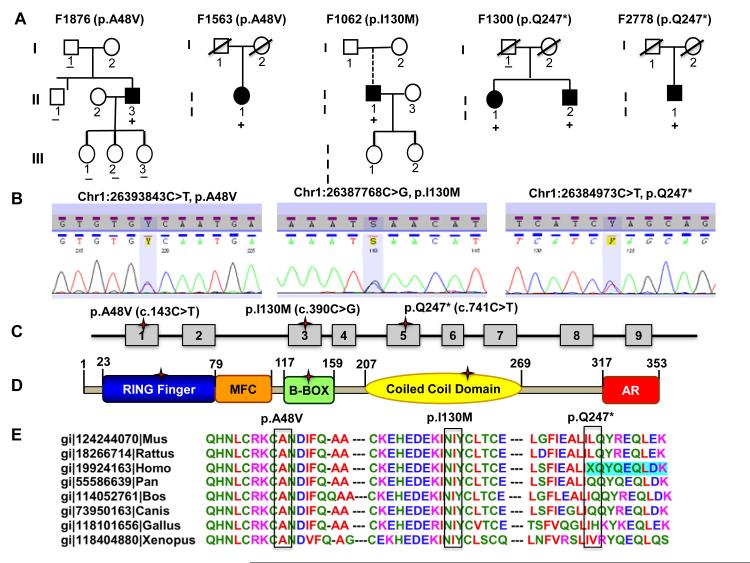
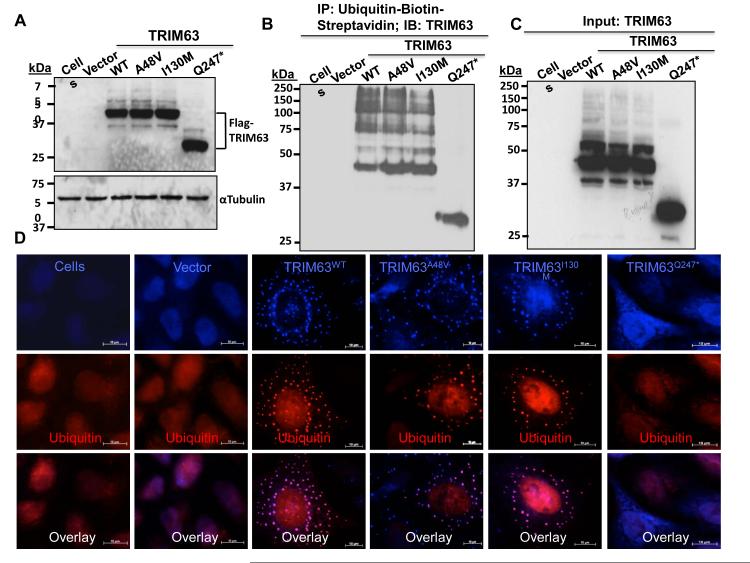
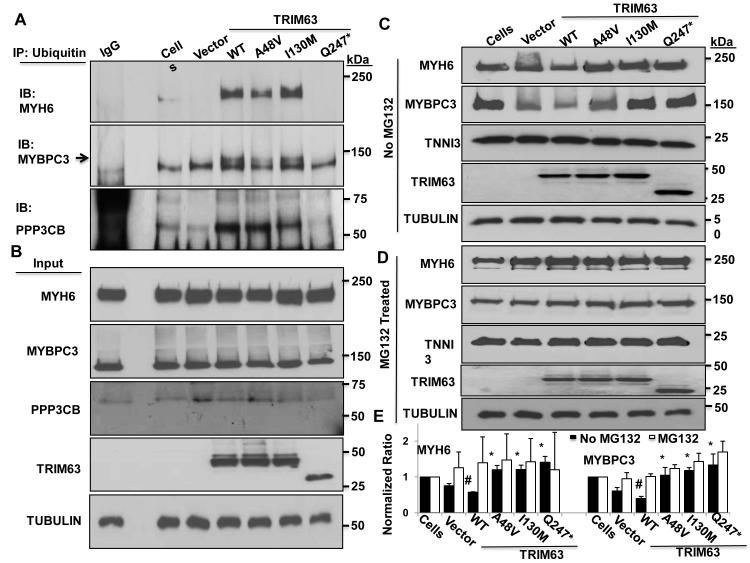
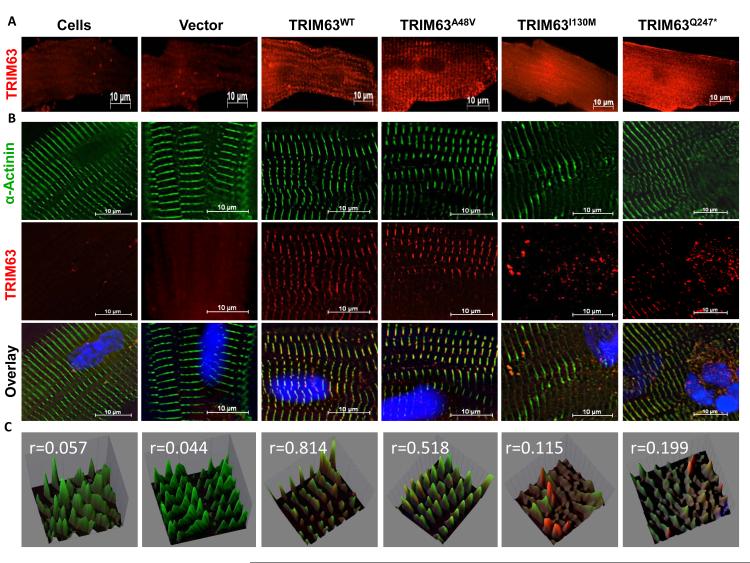
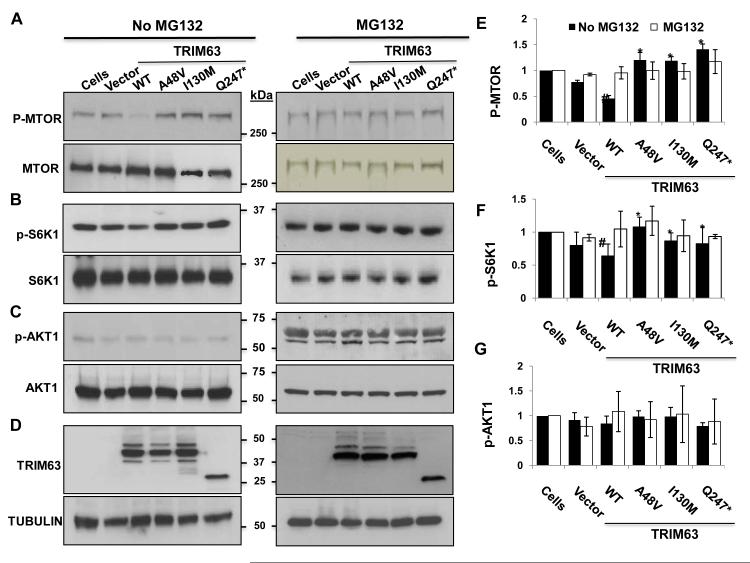
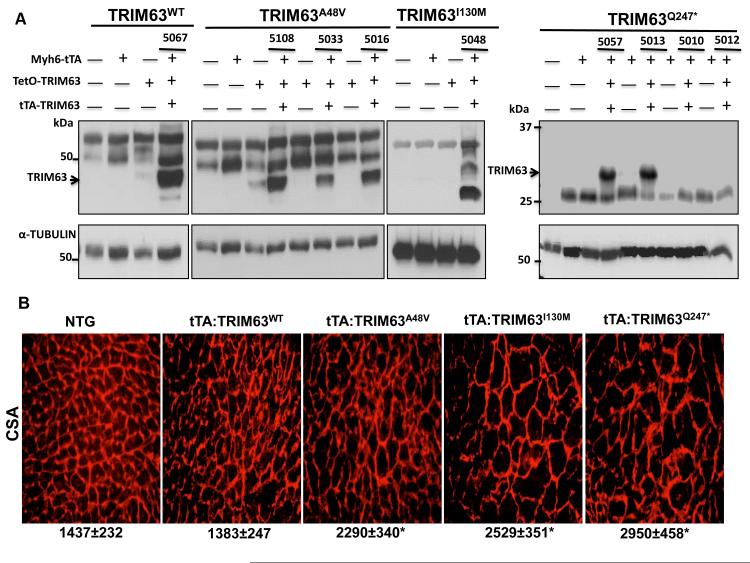
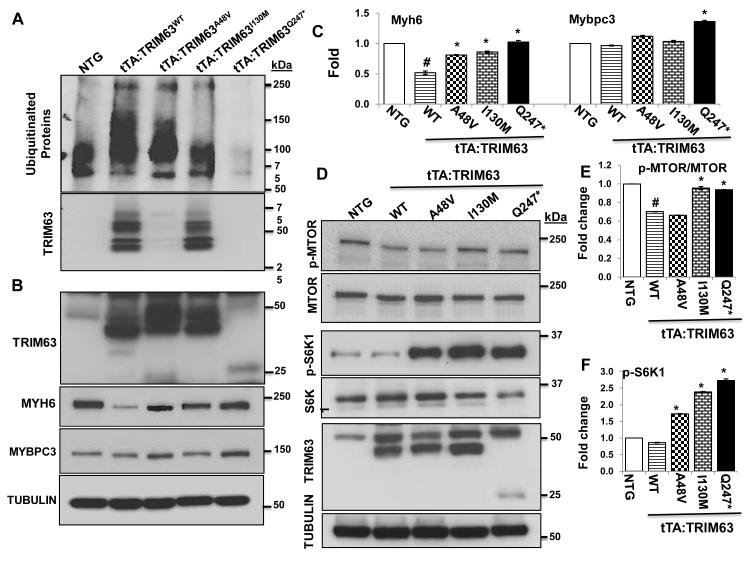
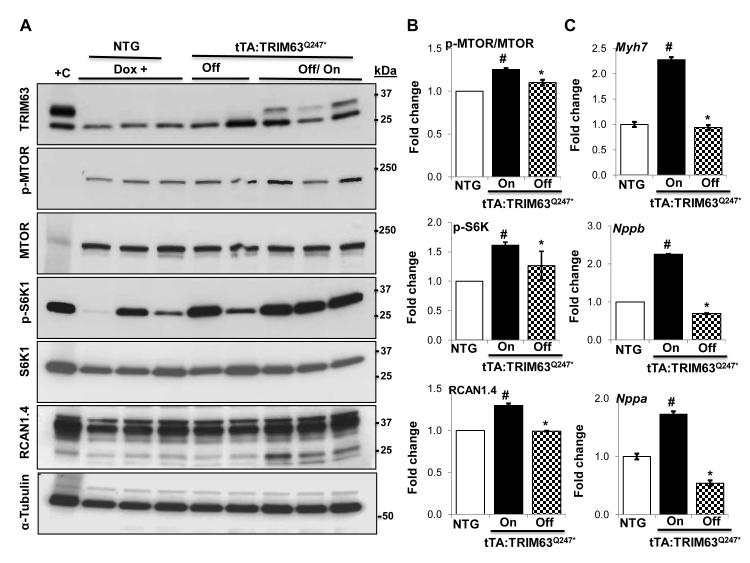
Methods and results: Sequencing of TRIM63 gene in 302 HCM probands (250 white individuals) and 339 control subjects (262 white individuals) led to identification of 2 missense (p.A48V and p.I130M) and a deletion (p.Q247*) variants exclusively in the HCM probands. These 3 variants were absent in 751 additional control subjects screened by TaqMan assays. Likewise, rare variants were enriched in the white HCM population (11/250, 4.4% versus 3/262, 1.1%, respectively, P=0.024). Expression of the mutant TRIM63 was associated with mislocalization of TRIM63 to sarcomere Z disks, impaired auto-ubiquitination, reduced ubiquitination and UPS-mediated degradation of myosin heavy chain 6, cardiac myosin binding protein C, calcineurin (PPP3CB), and p-MTOR in adult cardiac myocytes. Induced expression of the mutant TRIM63 in the mouse heart was associated with cardiac hypertrophy, activation of the MTOR-S6K and calcineurin pathways, and expression of the hypertrophic markers, which were normalized on turning off expression of the mutant protein.
Conclusions: TRIM63 mutations, identified in patients with HCM, impart loss-of-function effects on E3 ligase activity and are probably causal mutations in HCM. The findings implicate impaired protein degradation in the pathogenesis of HCM.
Figures
Comment in
-
Causality in genetics: the gradient of genetic effects and back to Koch's postulates of causality.Circ Res. 2014 Jan 17;114(2):e18-21. doi: 10.1161/CIRCRESAHA.114.302904. Circ Res. 2014. PMID: 24436434 Free PMC article. No abstract available.
-
Does p.Q247X in TRIM63 cause human hypertrophic cardiomyopathy?Circ Res. 2014 Jan 17;114(2):e2-5. doi: 10.1161/CIRCRESAHA.114.302662. Circ Res. 2014. PMID: 24436435
References
-
- Simpson P. Stimulation of hypertrophy of cultured neonatal rat heart cells through an alpha 1-adrenergic receptor and induction of beating through an alpha 1- and beta 1-adrenergic receptor interaction. Evidence for independent regulation of growth and beating. Circulation Research. 1985;56:884–894. - PubMed
-
- Heineke J, Molkentin JD. Regulation of cardiac hypertrophy by intracellular signalling pathways. Nat Rev Mol Cell Biol. 2006;7:589–600. - PubMed
-
- Schlossarek S, Carrier L. The ubiquitin-proteasome system in cardiomyopathies. Current Opinion in Cardiology. 2011;26:190–195. - PubMed
-
- Mearini G, Schlossarek S, Willis MS, Carrier L. The ubiquitin-proteasome system in cardiac dysfunction. Biochim Biophys Acta. 2008;1782:749–763. - PubMed
Publication types
MeSH terms
Substances
Grants and funding
LinkOut - more resources
Full Text Sources
Other Literature Sources
Molecular Biology Databases
Research Materials
Miscellaneous
