


A novel hierarchical clustering algorithm for gene sequences
- PMID: 22823405
- PMCID: PMC3443659
- DOI: 10.1186/1471-2105-13-174
A novel hierarchical clustering algorithm for gene sequences
Abstract
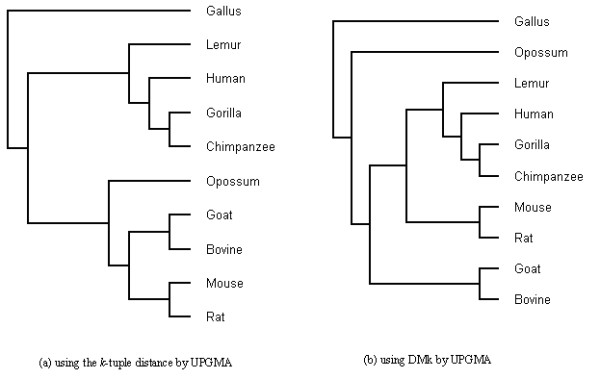
Background: Clustering DNA sequences into functional groups is an important problem in bioinformatics. We propose a new alignment-free algorithm, mBKM, based on a new distance measure, DMk, for clustering gene sequences. This method transforms DNA sequences into the feature vectors which contain the occurrence, location and order relation of k-tuples in DNA sequence. Afterwards, a hierarchical procedure is applied to clustering DNA sequences based on the feature vectors.
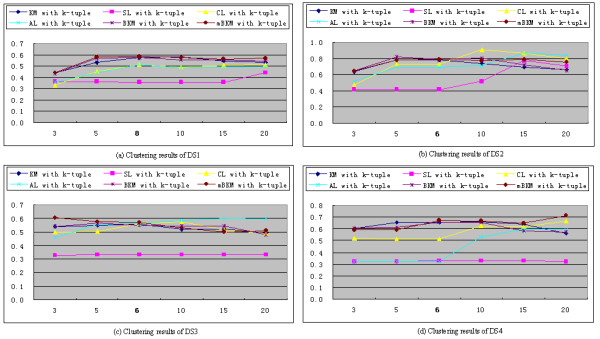
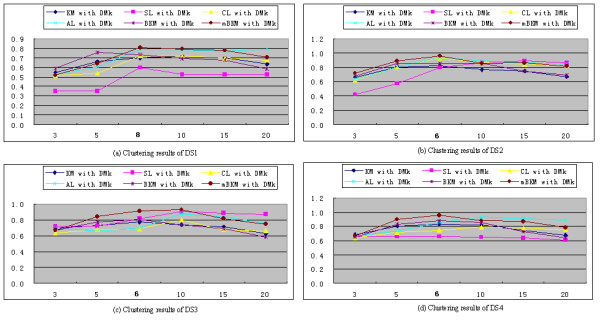
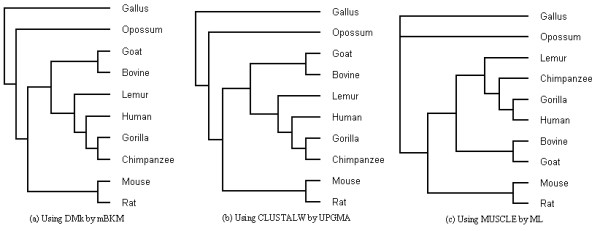
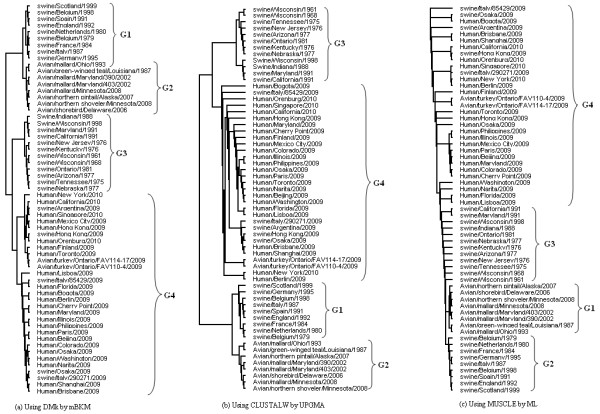
Results: The proposed distance measure and clustering method are evaluated by clustering functionally related genes and by phylogenetic analysis. This method is also compared with BlastClust, CD-HIT-EST and some others. The experimental results show our method is effective in classifying DNA sequences with similar biological characteristics and in discovering the underlying relationship among the sequences.
Conclusions: We introduced a novel clustering algorithm which is based on a new sequence similarity measure. It is effective in classifying DNA sequences with similar biological characteristics and in discovering the relationship among the sequences.
Figures
References
-
- Altschul SF, Gish W, Miller W, Myers EW, Lipman DJ. A basic local alignment search tool. JMol Biol. 1990;215:403–410. - PubMed
Publication types
MeSH terms
LinkOut - more resources
Full Text Sources
Other Literature Sources
Research Materials
