


The relevance of liver histology to predicting clinically meaningful outcomes in nonalcoholic steatohepatitis
- PMID: 22824477
- PMCID: PMC4176889
- DOI: 10.1016/j.cld.2012.05.006
The relevance of liver histology to predicting clinically meaningful outcomes in nonalcoholic steatohepatitis
Abstract
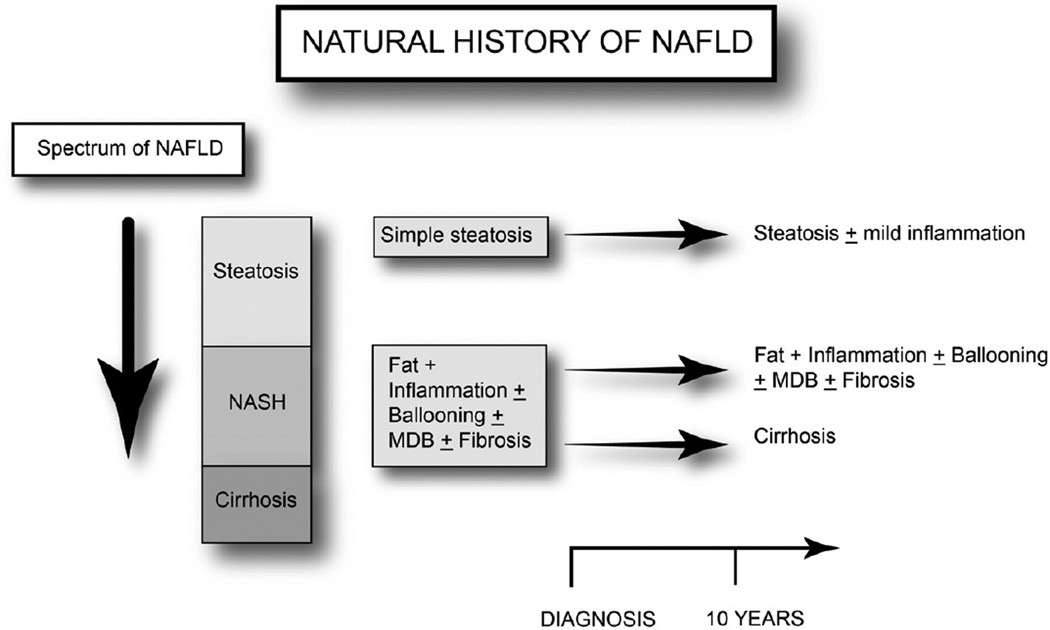
Nonalcoholic fatty liver disease (NAFLD) has emerged as the most prevalent chronic liver disease. Nonalcoholic steatohepatitis (NASH), the more severe form of NAFLD, has an increased risk for progression to cirrhosis. The available data suggest increased morbidity and mortality among those patients with advanced histologic severity such as NASH and fibrosis. Despite the lack of a universally accepted histologic definition of NAFLD and inconsistency among pathologists regarding histologic findings essential to the diagnosis of NASH, a few studies have identified specific histologic findings (particularly fibrosis regardless of stage) that are able to predict NAFLD-related mortality as being most important.
Copyright © 2012 Elsevier Inc. All rights reserved.
Figures
References
-
- Browning JD, Szczepaniak LS, Dobbins R, et al. Prevalence of hepatic steatosis in an urban population in the United States: impact of ethnicity. Hepatology. 2004;40(6):1387–1395. - PubMed
-
- Luyckx FH, Desaive C, Thiry A, et al. Liver abnormalities in severely obese subjects: effect of drastic weight loss after gastroplasty. Int J Obes Relat Metab Disord. 1998;22(3):222–226. - PubMed
-
- Williams CD, Stengel J, Asike MI, et al. Prevalence of nonalcoholic fatty liver disease and nonalcoholic steatohepatitis among a largely middle-aged population utilizing ultrasound and liver biopsy: a prospective study. Gastroenterology. 2011;140(1):124–131. - PubMed
-
- McCullough AJ. Pathophysiology of nonalcoholic steatohepatitis. J Clin Gastroenterol. 2006;40(Suppl 1):S17–S29. - PubMed
Publication types
MeSH terms
Grants and funding
LinkOut - more resources
Full Text Sources
Medical
