


Consumption of fructose- but not glucose-sweetened beverages for 10 weeks increases circulating concentrations of uric acid, retinol binding protein-4, and gamma-glutamyl transferase activity in overweight/obese humans
- PMID: 22828276
- PMCID: PMC3463498
- DOI: 10.1186/1743-7075-9-68
Consumption of fructose- but not glucose-sweetened beverages for 10 weeks increases circulating concentrations of uric acid, retinol binding protein-4, and gamma-glutamyl transferase activity in overweight/obese humans
Abstract
Background: Prospective studies in humans examining the effects of fructose consumption on biological markers associated with the development of metabolic syndrome are lacking. Therefore we investigated the relative effects of 10 wks of fructose or glucose consumption on plasma uric acid and RBP-4 concentrations, as well as liver enzyme (AST, ALT, and GGT) activities in men and women.
Methods: As part of a parallel arm study, older (age 40-72), overweight and obese male and female subjects (BMI 25-35 kg/m2) consumed glucose- or fructose-sweetened beverages providing 25% of energy requirements for 10 wks. Fasting and 24-h blood collections were performed at baseline and following 10 wks of intervention and plasma concentrations of uric acid, RBP-4 and liver enzyme activities were measured.
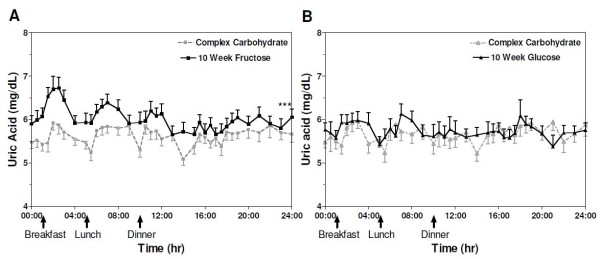
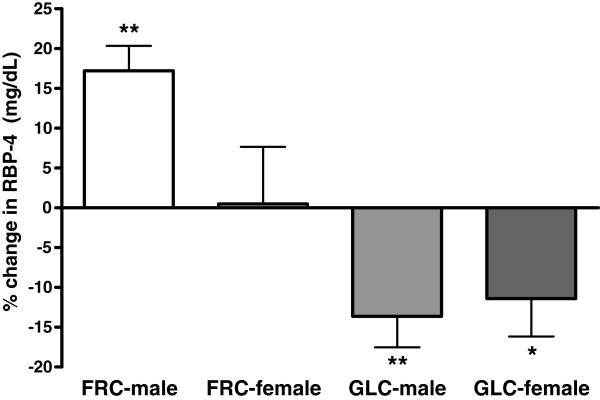
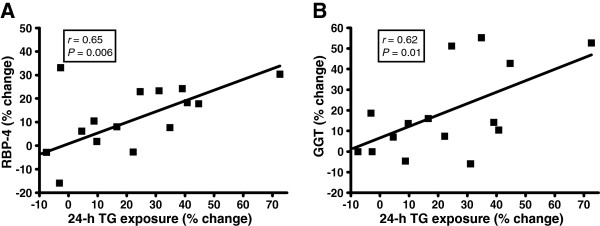
Results: Consumption of fructose, but not glucose, led to significant increases of 24-h uric acid profiles (P < 0.0001) and RBP-4 concentrations (P = 0.012), as well as plasma GGT activity (P = 0.04). Fasting plasma uric acid concentrations increased in both groups; however, the response was significantly greater in subjects consuming fructose (P = 0.002 for effect of sugar). Within the fructose group male subjects exhibited larger increases of RBP-4 levels than women (P = 0.024).
Conclusions: These findings suggest that consumption of fructose at 25% of energy requirements for 10 wks, compared with isocaloric consumption of glucose, may contribute to the development of components of the metabolic syndrome by increasing circulating uric acid, GGT activity, suggesting alteration of hepatic function, and the production of RBP-4.
Figures
References
-
- Wells FW, Buzby JC. Dietary assessment of major trends in U.S. food consumption, 1970–2005. Economic Information Bulletin No. 33. Economic Research Service, U.S. Dept. of Agriculture. 2008. pp. 1–20.
-
- Bray GA, Nielsen SJ, Popkin BM. Consumption of high-fructose corn syrup in beverages may play a role in the epidemic of obesity. Am J Clin Nutr. 2004;79:537–543. - PubMed
Grants and funding
LinkOut - more resources
Full Text Sources
Medical
Research Materials
Miscellaneous
