


Design and characterization of auxotrophy-based amino acid biosensors
- PMID: 22829942
- PMCID: PMC3400592
- DOI: 10.1371/journal.pone.0041349
Design and characterization of auxotrophy-based amino acid biosensors
Abstract
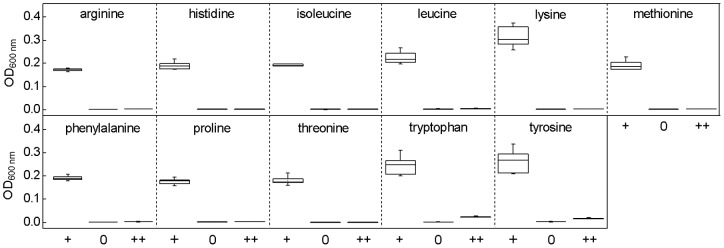
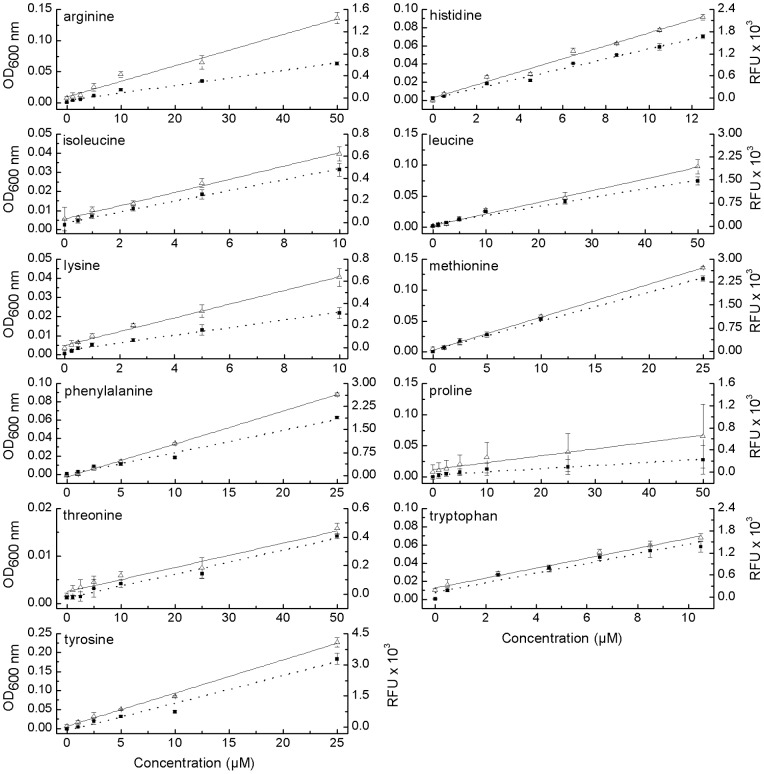
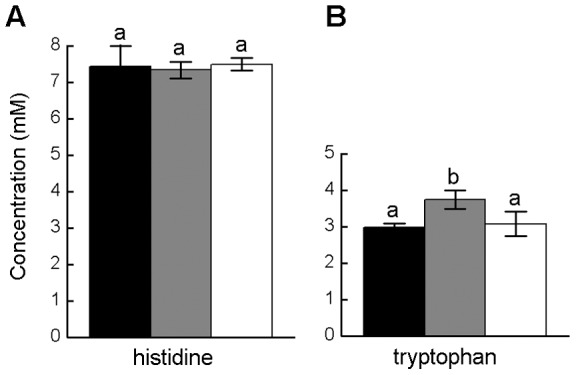
Efficient and inexpensive methods are required for the high-throughput quantification of amino acids in physiological fluids or microbial cell cultures. Here we develop an array of Escherichia coli biosensors to sensitively quantify eleven different amino acids. By using online databases, genes involved in amino acid biosynthesis were identified that - upon deletion - should render the corresponding mutant auxotrophic for one particular amino acid. This rational design strategy suggested genes involved in the biosynthesis of arginine, histidine, isoleucine, leucine, lysine, methionine, phenylalanine, proline, threonine, tryptophan, and tyrosine as potential genetic targets. A detailed phenotypic characterization of the corresponding single-gene deletion mutants indeed confirmed that these strains could neither grow on a minimal medium lacking amino acids nor transform any other proteinogenic amino acid into the focal one. Site-specific integration of the egfp gene into the chromosome of each biosensor decreased the detection limit of the GFP-labeled cells by 30% relative to turbidometric measurements. Finally, using the biosensors to determine the amino acid concentration in the supernatants of two amino acid overproducing E. coli strains (i.e. ΔhisL and ΔtdcC) both turbidometrically and via GFP fluorescence emission and comparing the results to conventional HPLC measurements confirmed the utility of the developed biosensor system. Taken together, our study provides not only a genotypically and phenotypically well-characterized set of publicly available amino acid biosensors, but also demonstrates the feasibility of the rational design strategy used.
Conflict of interest statement
Figures
References
-
- Efron ML, Maccready RA, Young D, Moser HW. A simple chromatographic screening test for the detection of disorders of amino acid metabolism. New Eng J Med. 1964;270:1378–1383. - PubMed
-
- Froelich CA, Ricke SC. Rapid bacterial-based bioassays for quantifying methionine bioavailability in animal feeds: A review. J Rap Met Autom Microbiol. 2005;13:1–10.
-
- Chalova VI, Zabala-Diaz IB, Woodward CL, Ricke SC. Development of a whole cell green fluorescent sensor for lysine quantification. World J Microbiol Biotechnol. 2008;24:353–359.
-
- Pfeiffer D, Wollenberger U, Makower A, Scheller F, Risinger L, et al. Amperometric amino acid electrodes. Electroanalysis. 1990;2:517–523.
-
- Simova E, Simov Z, Beshkova D, Frengova G, Dimitrov Z, et al. Amino acid profiles of lactic acid bacteria, isolated from kefir grains and kefir starter made from them. Int J Food Microbiol. 2006;107:112–123. - PubMed
Publication types
MeSH terms
Substances
LinkOut - more resources
Full Text Sources
Other Literature Sources
Research Materials
