. 2012 May-Jun;34(3):1-10.

IRB chairs' perspectives on genotype-driven research recruitment

Affiliations

IRB chairs' perspectives on genotype-driven research recruitment

Laura M Beskow et al. IRB. 2012 May-Jun.

Abstract

Recruiting research participants based on genetic information generated about them in a prior study is a potentially powerful way to study the functional significance of human genetic variation, but also presents ethical challenges. To inform policy development on this issue, we conducted a survey of U.S. institutional review board chairs concerning the acceptability of recontacting genetic research participants about additional research and their views on the disclosure of individual genetic results as part of recruitment. Our findings suggest there is unlikely to be a “one-size-fits-all” solution, but rather several ethically acceptable approaches to genotype-driven recruitment depending on context. Disclosures made during the consent process for the original study and the clinical validity of the results are key considerations. Researchers must be prepared to communicate and answer questions in clear, lay language about what is known and not known about the role of genetics in their proposed area of research.


Conflict of interest statement

None of the authors has any conflict, financial or otherwise, to declare.

Figures
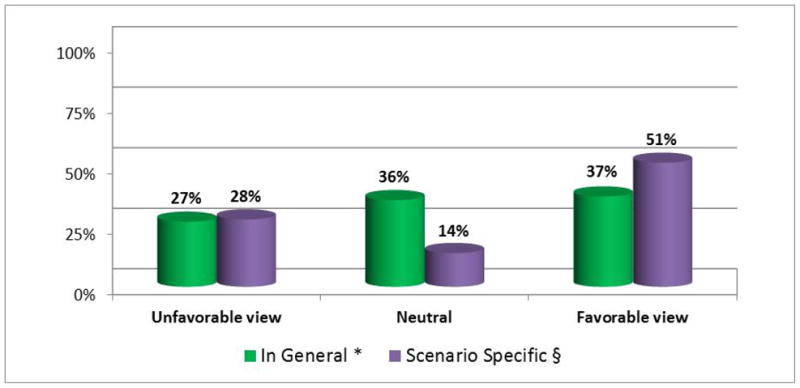
Figure 1
Figure 1. General vs. scenario-specific views of the acceptability of recontact for genetic research recruitment
* Based on responses to the general statement, “Researchers should be allowed to contact participants in one genetic research study in order to invite their participation in another genetic research study.” Unfavorable views include those who disagreed or strongly disagreed with this statement; neutral views are those who selected ‘neither agree nor disagree’; favorable views include those who agreed or strongly agreed. § Based on responses to the scenario-specific question, “Would you allow Dr. Jones to contact eligible participants to invite their participation in a second study?” Unfavorable views include those who said they definitely or probably would not; neutral views are those who were undecided; favorable views include those who said they definitely or probably would.
Figure 2
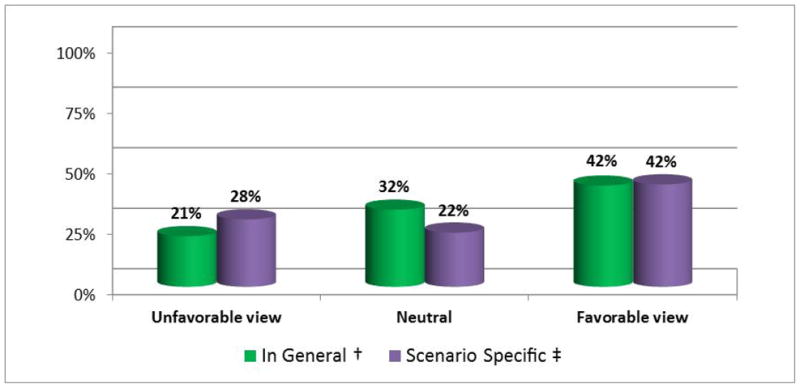
Figure 2. General vs. scenario-specific views about the disclosure of individual genetic research results during the recruitment process
† Based on responses to the general statement, “Each participant should be offered his/her individual genetic results from the first study when contacted about taking part in the second study.” Unfavorable views include those who disagreed or strongly disagreed with this statement; neutral views are those who selected ‘neither agree nor disagree’; favorable views include those who agreed or strongly agreed. ‡ Based on responses to the scenario-specific question, “Should Dr. Jones offer to disclose individual genetic results from the first study as part of her explanation of the purpose of the second study?” Unfavorable views include those who said she definitely or probably should not; neutral views are those who were undecided; favorable views include those who said she definitely or probably should.

References

    1. McGuire SE, McGuire AL. Don’t throw the baby out with the bathwater: enabling a bottom-up approach in genome-wide association studies. Genome Res. 2008;18:1683–1685. - PMC - PubMed
    1. Beskow LM, Linney KN, Radtke RA, et al. Ethical challenges in genotype-driven research recruitment. Genome Res. 2010;20:705–709. - PMC - PubMed
    1. Chulada PC, Vahdat HL, Sharp RR, et al. The Environmental Polymorphisms Registry: a DNA resource to study genetic susceptibility loci. Hum Genet. 2008;123:207–214. - PubMed
    1. See ref. .

    1. See ref.

Publication types

LinkOut - more resources