


SNP variation in the promoter of the PRKAG3 gene and association with meat quality traits in pig
- PMID: 22831392
- PMCID: PMC3485185
- DOI: 10.1186/1471-2156-13-66
SNP variation in the promoter of the PRKAG3 gene and association with meat quality traits in pig
Abstract
Background: The PRKAG3 gene encodes the γ3 subunit of adenosine monophosphate activated protein kinase (AMPK), a protein that plays a key role in energy metabolism in skeletal muscle. Non-synonymous single nucleotide polymorphisms (SNPs) in this gene such as I199V are associated with important pork quality traits. The objective of this study was to investigate the relationship between gene expression of the PRKAG3 gene, SNP variation in the PRKAG3 promoter and meat quality phenotypes in pork.
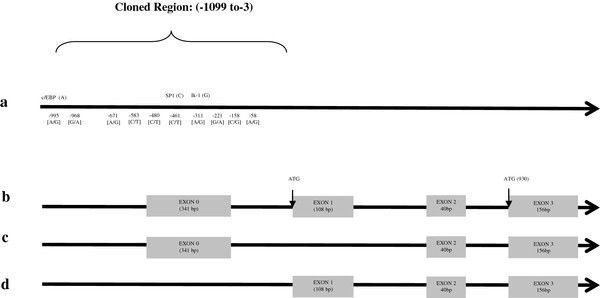
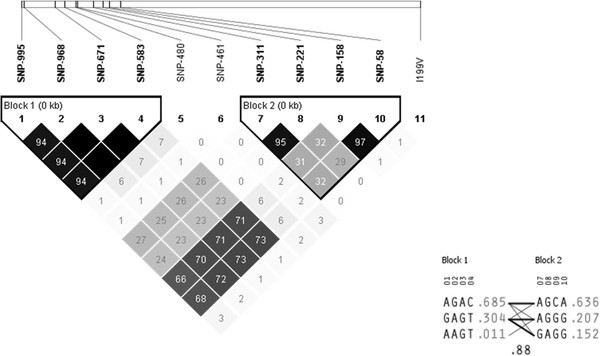
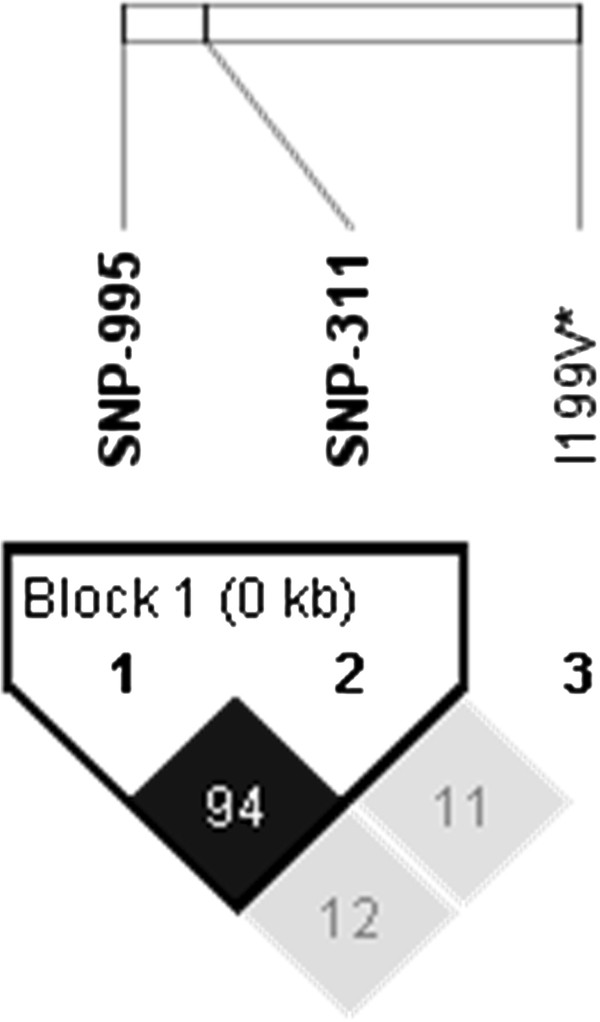
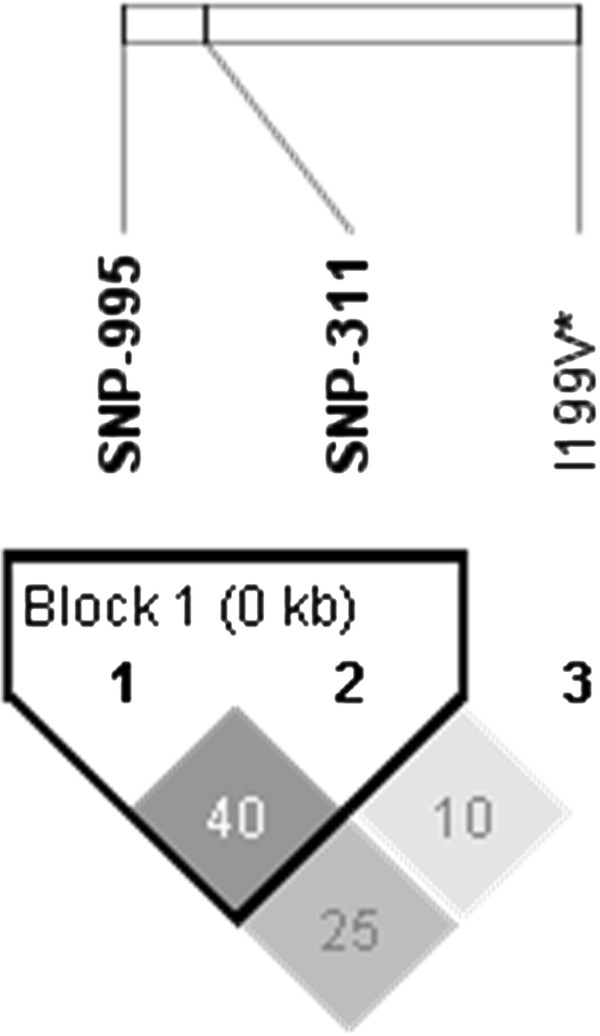
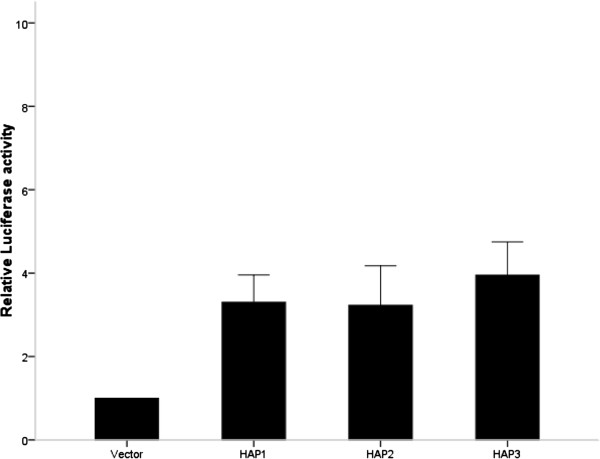
Results: PRKAG3 gene expression was found to correlate with a number of traits relating to glycolytic potential (GP) and intramuscular fat (IMF) in three phenotypically diverse F1 crosses comprising of 31 Large White, 23 Duroc and 32 Pietrain sire breeds. The majority of associations were observed in the Large White cross. There was a significant association between genotype at the g.-311A>G locus and PRKAG3 gene expression in the Large White cross. In the same population, ten novel SNPs were identified within a 1.3 kb region spanning the promoter and from this three major haplotypes were inferred. Two tagging SNPs (g.-995A>G and g.-311A>G) characterised the haplotypes within the promoter region being studied. These two SNPs were subsequently genotyped in larger populations consisting of Large White (n = 98), Duroc (n = 99) and Pietrain (n = 98) purebreds. Four major haplotypes including promoter SNP's g.-995A>G and g.-311A>G and I199V were inferred. In the Large White breed, HAP1 was associated with IMF% in the M. longissmus thoracis et lumborum (LTL) and driploss%. HAP2 was associated with IMFL% GP-influenced traits pH at 24 hr in LTL (pHULT), pH at 45 min in LTL (pH(45)LT) and pH at 45 min in the M. semimembranosus muscle (pH(45)SM). HAP3 was associated with driploss%, pHULT pH(45)LT and b* Minolta. In the Duroc breed, associations were observed between HAP1 and driploss% and pHUSM. No associations were observed with the remaining haplotypes (HAP2, HAP3 and HAP4) in the Duroc breed. The Pietrain breed was monomorphic in the promoter region. The I199V locus was associated with several GP-influenced traits across all three breeds and IMF% in the Large White and Pietrain breed. No significant difference in promoter function was observed for the three main promoter haplotypes when tested in vitro.
Conclusion: Gene expression levels of the porcine PRKAG3 are associated with meat quality phenotypes relating to glycolytic potential and IMF% in the Large White breed, while SNP variation in the promoter region of the gene is associated with PRKAG3 gene expression and meat quality phenotypes.
Figures
References
-
- Winder WW. Energy-sensing and signaling by AMP-activated protein kinase in skeletal muscle. J Appl Physiol. 2001;91(3):1017–1028. - PubMed
-
- Essén-Gustavsson B, Granlund A, Benziane B, Jensen-Waern M, Chibalin AV. Muscle glycogen resynthesis, signalling and metabolic responses following acute exercise in exercise-trained pigs carrying the PRKAG3 mutation. Exp Physiol. 2011;96(9):927–937. - PubMed
-
- Mahlapuu M, Johansson C, Lindgren K, Hjälm G, Barnes BR, Krook A, Zierath JR, Andersson L, Marklund S. Expression profiling of the γ3-subunit isoforms of AMP-activated protein kinase suggests a major role for γ3 in white skeletal muscle. Am J Physiol-Endoc M. 2004;286(2):E194–E200. - PubMed
Publication types
MeSH terms
Substances
LinkOut - more resources
Full Text Sources
Molecular Biology Databases
Research Materials
Miscellaneous
