


Sweet-bitter and umami-bitter taste interactions in single parabrachial neurons in C57BL/6J mice
- PMID: 22832571
- PMCID: PMC3545017
- DOI: 10.1152/jn.00465.2012
Sweet-bitter and umami-bitter taste interactions in single parabrachial neurons in C57BL/6J mice
Abstract
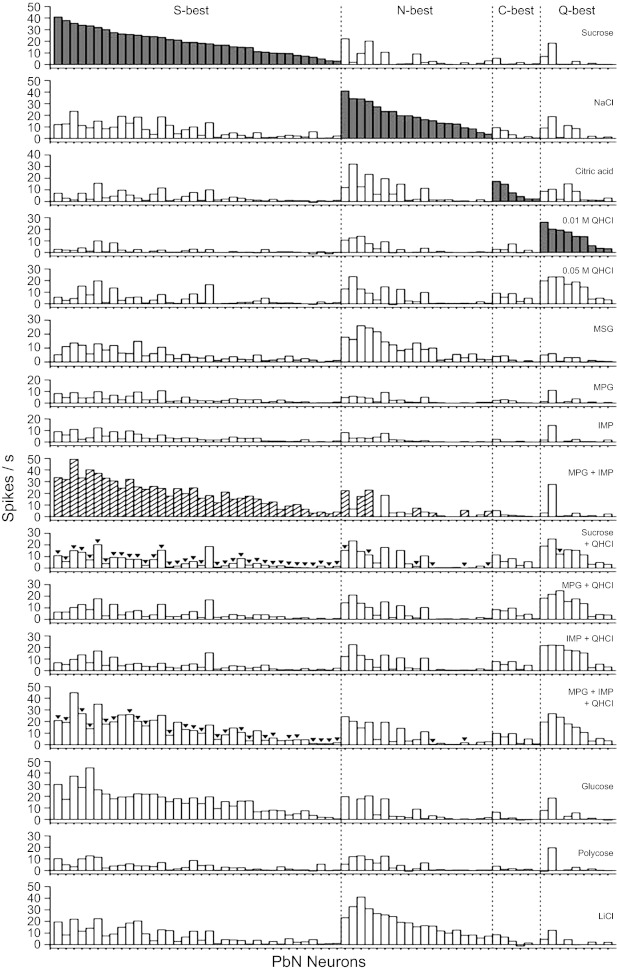
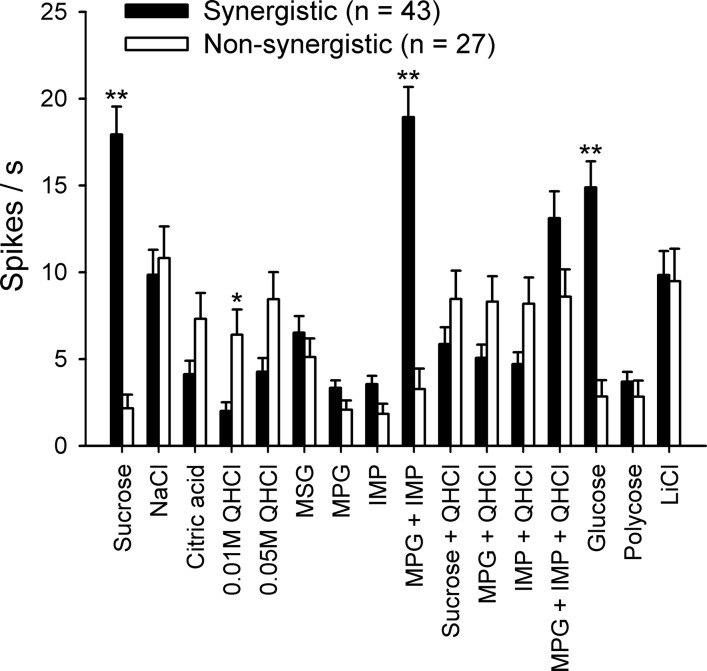
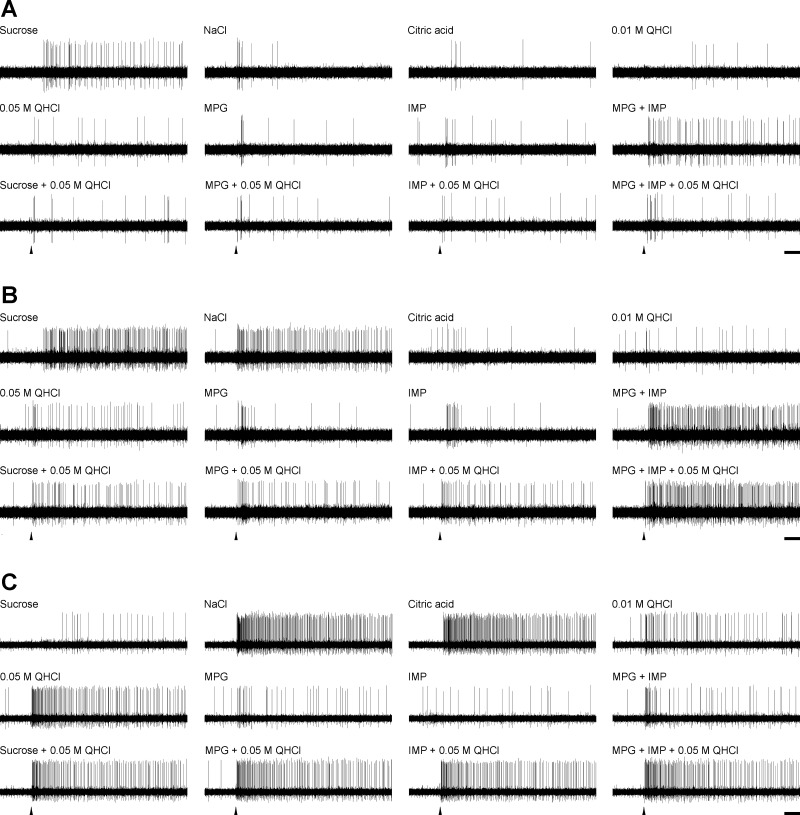
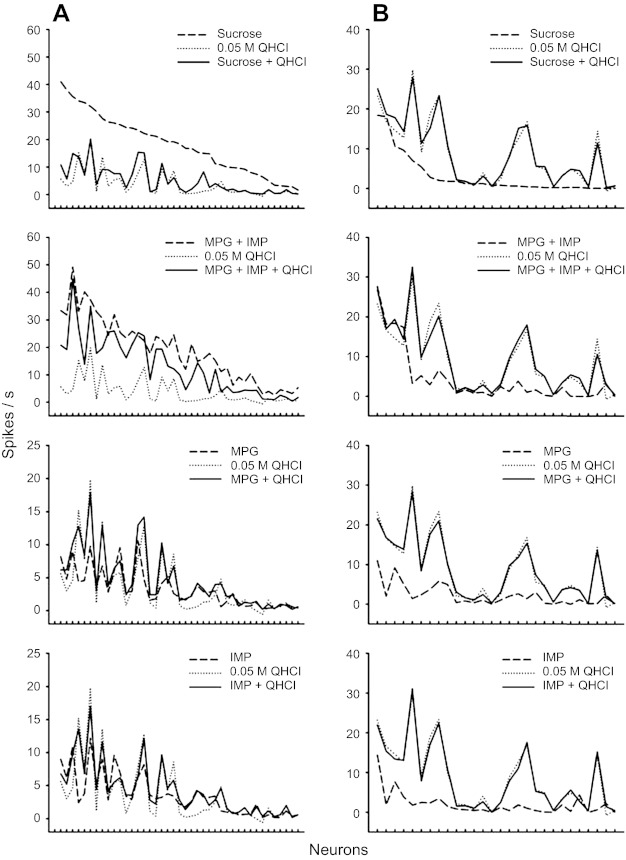
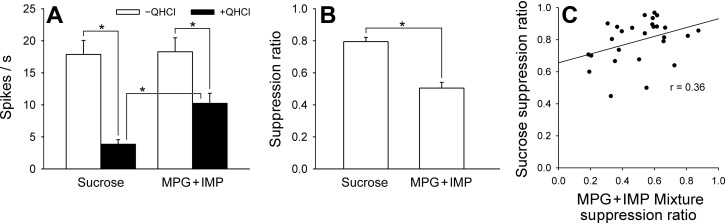
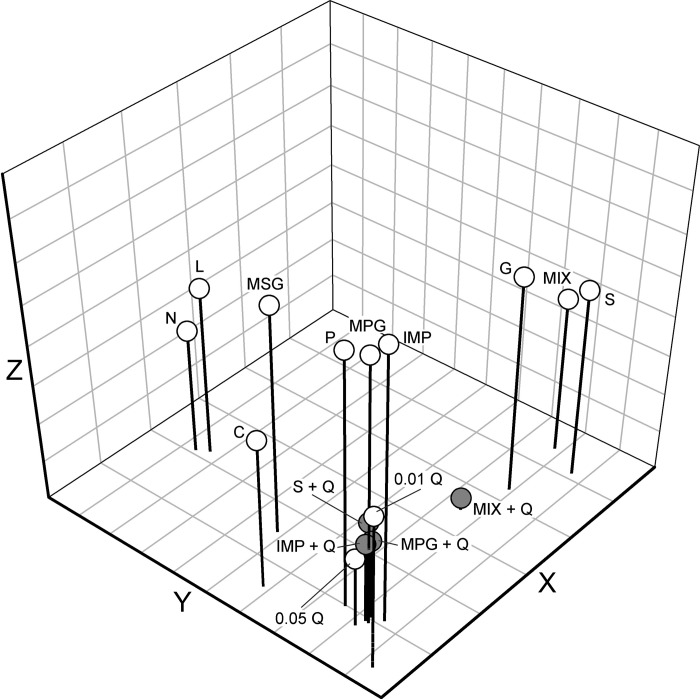
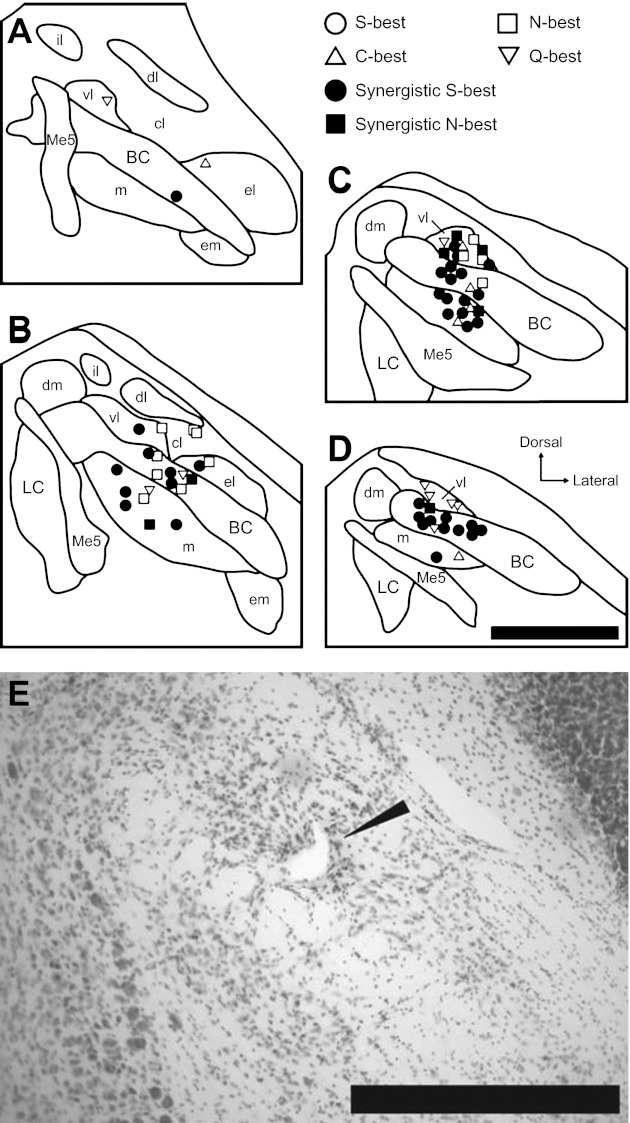
We investigated sweet-bitter and umami-bitter mixture taste interactions by presenting sucrose or umami stimuli mixed with quinine hydrochloride (QHCl) while recording single-unit activity of neurons in the parabrachial nucleus (PbN) of urethane-anesthetized C57BL/6J mice. A total of 70 taste-responsive neurons were classified according to which stimulus evoked the greatest net response (36 sucrose-best, 19 NaCl-best, 6 citric acid-best, and 9 QHCl-best). Although no neurons responded best to monopotassium glutamate (MPG) or inosine 5'-monophosphate (IMP), the combination of these two stimuli evoked a synergistic response (i.e., response > 120% of the sum of the component responses) in all sucrose-best and some NaCl-best neurons (n = 43). Adding QHCl to sucrose or MPG + IMP resulted in suppression of the response (responses to mixture < responses to the more effective component) in 41 of 43 synergistic neurons. Neurons showing QHCl suppression were classified into two types: an "MS1" type (n = 27) with suppressed responses both to sucrose and MPG + IMP and an "MS2" type (n = 14) that showed suppressed responses only to sucrose. No neuron displayed suppressed responses to MPG or IMP alone. The suppression ratio (1 - mixture response/sucrose or MPG + IMP response) of sucrose and MPG + IMP in MS1 neurons had a weak positive correlation (r = 0.36). The pattern of reconstructed recording sites of neuron types suggested chemotopic organization in the PbN. Although a peripheral basis for QHCl suppression has been demonstrated, our results suggest that convergence in the PbN plays a role in shaping responses to taste mixtures.
Figures

References
-
- Adachi A, Aoyama M. Neuronal responses of the nucleus tractus solitarius to oral stimulation with umami substances. Physiol Behav 49: 935–941, 1991 - PubMed
-
- Boughter JD, Jr, Smith DV. Amiloride blocks acid responses in NaCl-best gustatory neurons of the hamster solitary nucleus. J Neurophysiol 80: 1362–1372, 1998 - PubMed
-
- Bradley RM, Mistretta CM. Developmental changes in neurophysiological taste responses from the medulla in sheep. Brain Res 191: 21–34, 1980 - PubMed
-
- Chaudhari N, Landin AM, Roper SD. A metabotropic glutamate receptor variant functions as a taste receptor. Nat Neurosci 3: 113–119, 2000 - PubMed
Publication types
MeSH terms
Substances
Grants and funding
LinkOut - more resources
Full Text Sources
