. 2012 Sep;23(18):3499-510.
doi: 10.1091/mbc.E12-05-0385. Epub 2012 Jul 25.

Large G3BP-induced granules trigger eIF2α phosphorylation

Affiliations

Large G3BP-induced granules trigger eIF2α phosphorylation

Lucas C Reineke et al. Mol Biol Cell. 2012 Sep.

Abstract

Stress granules are large messenger ribonucleoprotein (mRNP) aggregates composed of translation initiation factors and mRNAs that appear when the cell encounters various stressors. Current dogma indicates that stress granules function as inert storage depots for translationally silenced mRNPs until the cell signals for renewed translation and stress granule disassembly. We used RasGAP SH3-binding protein (G3BP) overexpression to induce stress granules and study their assembly process and signaling to the translation apparatus. We found that assembly of large G3BP-induced stress granules, but not small granules, precedes phosphorylation of eIF2α. Using mouse embryonic fibroblasts depleted for individual eukaryotic initiation factor 2α (eIF2α) kinases, we identified protein kinase R as the principal kinase that mediates eIF2α phosphorylation by large G3BP-induced granules. These data indicate that increasing stress granule size is associated with a threshold or switch that must be triggered in order for eIF2α phosphorylation and subsequent translational repression to occur. Furthermore, these data suggest that stress granules are active in signaling to the translational machinery and may be important regulators of the innate immune response.


Figures
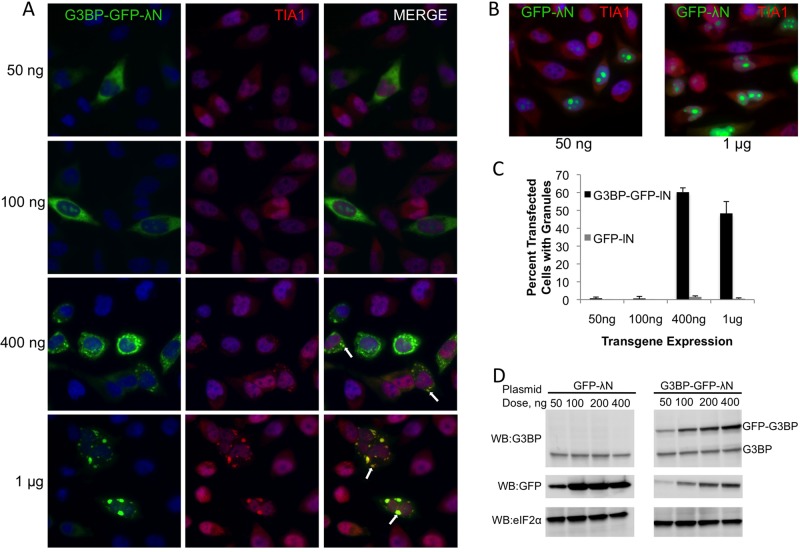
FIGURE 1:
FIGURE 1:
G3BP granules are induced in a dose-dependent manner in HeLa cells. HeLa cells were transfected with the indicated amounts of either G3BP-GFP-λN (A) or GFP-λN (B) plasmid and stained for Tia1 as indicated in Materials and Methods. (C) Between 125 and 150 transfected cells were manually counted and scored for Tia1-positive stress granules and are presented as percentage transfected cells with stress granules. Error bars represent SD from three independent counts. (D) Immunoblots showing levels of GFP-G3BP-λN or GFP-λN transgene relative to endogenous G3BP and eIF2α levels.
FIGURE 2:
FIGURE 2:
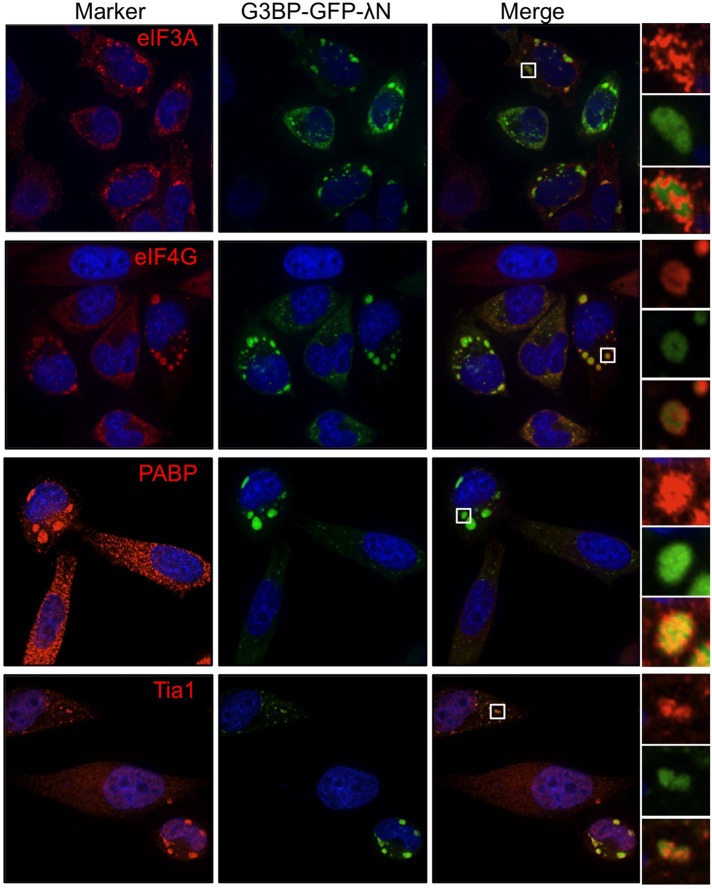
G3BP-induced stress granules colocalize with initiation factors and RNA-binding proteins. HeLa cells were transfected with G3BP-GFP-λN and stained for the indicated markers of stress granules as detailed in Materials and Methods. Cells were imaged with deconvolution microscopy.
FIGURE 3:
FIGURE 3:
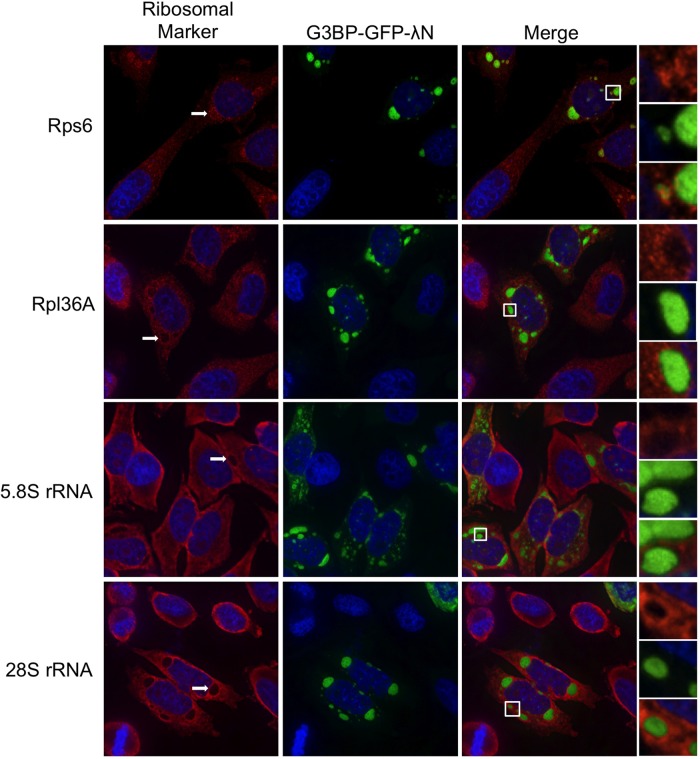
G3BP-induced stress granules differentially stain for 40 and 60S ribosome markers. HeLa cells were transfected with G3BP-GFP-λN and stained for either the 40S (rps6) or the 60S (rpl36A) ribosomal subunits. Fluorescence in situ hybridization was conducted with probes directed against 5.8S and 28S rRNA as indicated in Materials and Methods. After staining, cells were imaged using deconvolution microscopy.
FIGURE 4:
FIGURE 4:
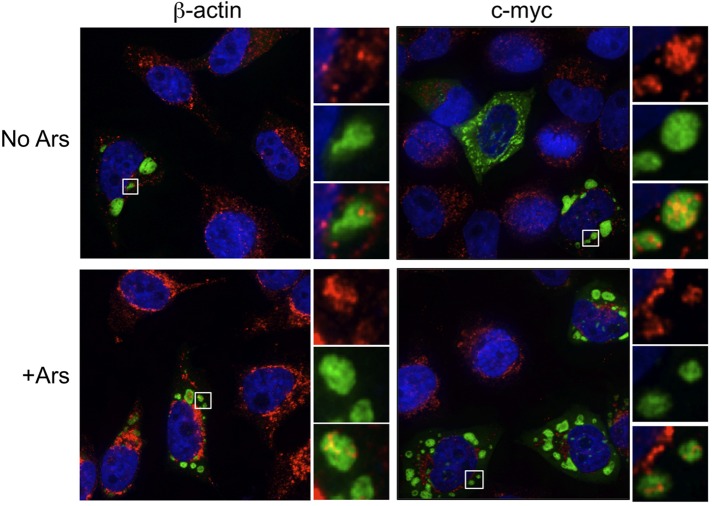
G3BP-induced stress granules colocalize with mRNAs. HeLa cells were transfected with G3BP-GFP-λN, and c-myc or β-actin mRNAs were detected by fluorescence in situ hybridization as indicated. Transfected cells were either left untreated (no Ars) or treated with 200 μM arsenite (+Ars) 30 min before fixation and processing. Cells were imaged using deconvolution microscopy.
FIGURE 5:
FIGURE 5:
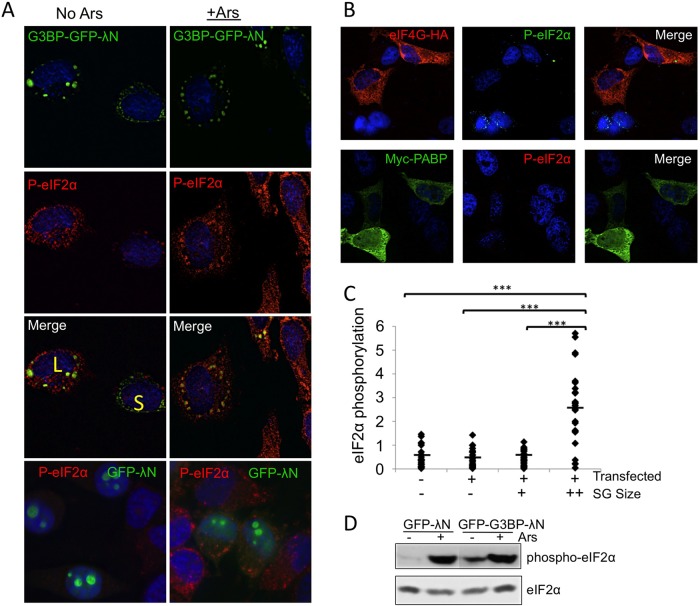
Large G3BP-induced stress granules induce eIF2α phosphorylation. HeLa cells were transfected with G3BP-GFP-λN (A, C), GFP-λN (A), or PABP or eIF4G (B) and stained with antibodies that detect eIF2α phosphorylation before deconvolution imaging. Arsenite stress was applied as described in Materials and Methods. Cells with large or small granules are indicated with a yellow L or S, respectively. Color channels are switched for eIF4G staining because of antibody availability. (C) Intensities of eIF2α phosphorylation in G3BP-expressing HeLa cells were quantified with Pipeline Pilot analysis tools, and a Student's t test was conducted. Untransfected and transfected cells (− or +) and stress granule size groups (−, no granules; +, small granules; ++, large granules) are indicated. The y-axis represents (phosphorylated eIF2α intensity [arbitrary units]/cell area × 1000). ***p ≤ 0.001. The minimum threshold size for large granules was ∼1.4 μM2. (D) Immunoblots for eIF2α or phosphorylated eIF2α in cells expressing indicated transgenes. Cells were also treated with arsenite as indicated.
FIGURE 6:
FIGURE 6:
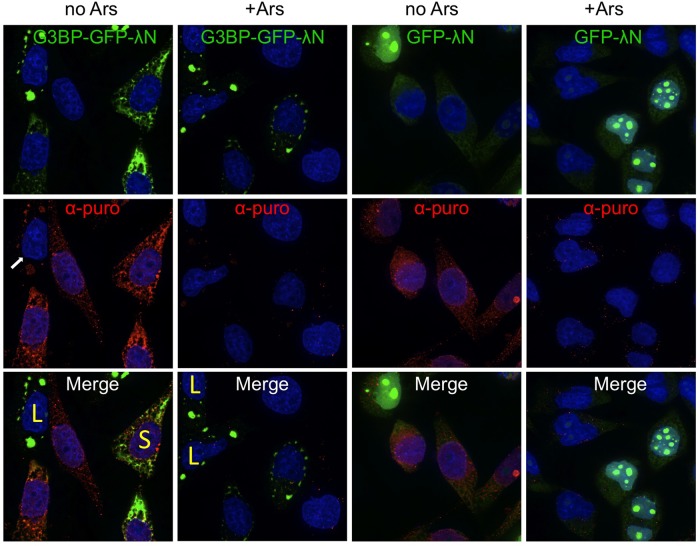
RPA analysis of cells containing G3BP-induced stress granules. G3BP-GFP-λN or GFP-λN plasmids were transfected into HeLa cells, and RPA analysis was conducted as indicated in Materials and Methods. Translation is represented by α-puro. For each transfected plasmid, cells were either treated without (no Ars) or with (+Ars) to control for antibody specificity. Cells with large or small granules are indicated with a yellow L or S, respectively. Cells were imaged with a deconvolution microscope.
FIGURE 7:
FIGURE 7:
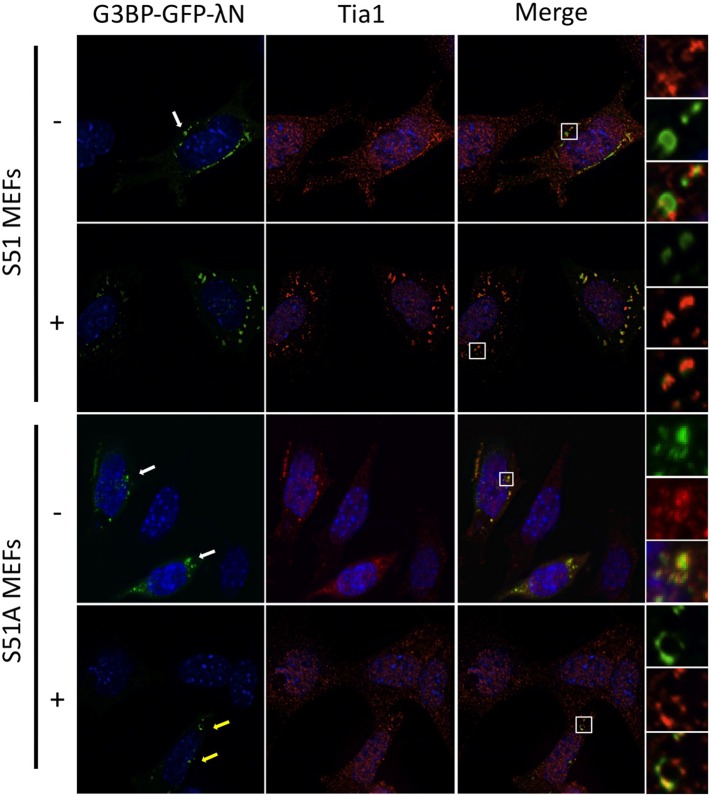
eIF2α mutant S51A MEFs are capable of forming G3BP-induced stress granules. Both S51 and S51A eIF2α mutant MEFs were transfected with G3BP-GFP-λN. Transfected S51 and S51A MEFs were either left untreated (−) or treated for 30 min with 200 μM arsenite (+) followed by fixation and staining for Tia1 before deconvolution imaging.
FIGURE 8:
FIGURE 8:
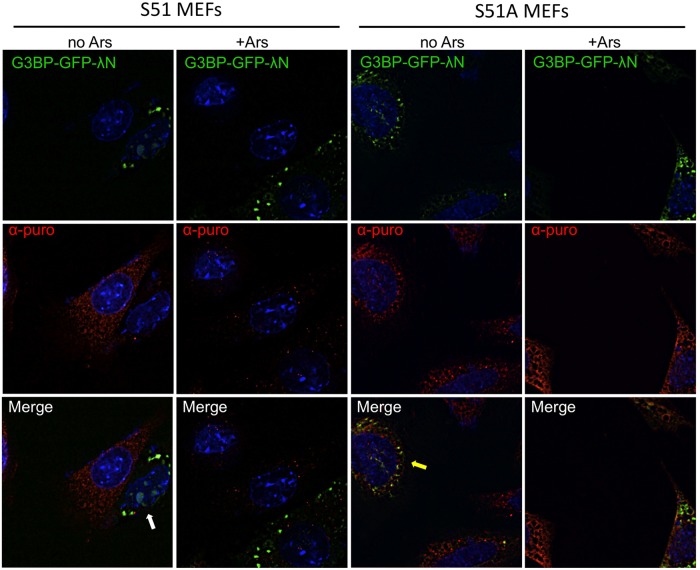
RPA analysis of eIF2α mutant S51A MEFs indicates S51A MEFs are translating despite the presence of G3BP-induced stress granules. Puromycin stain indicates nascent polypeptide synthesis. S51 and S51A MEFs, as indicated, were transfected with G3BP-GFP- λN and either left untreated (no Ars) or treated (+Ars) for 30 min with 200 μM arsenite before fixation and staining for translating ribosomes (α-puro). Cells were imaged by deconvolution microscopy.
FIGURE 9:
FIGURE 9:
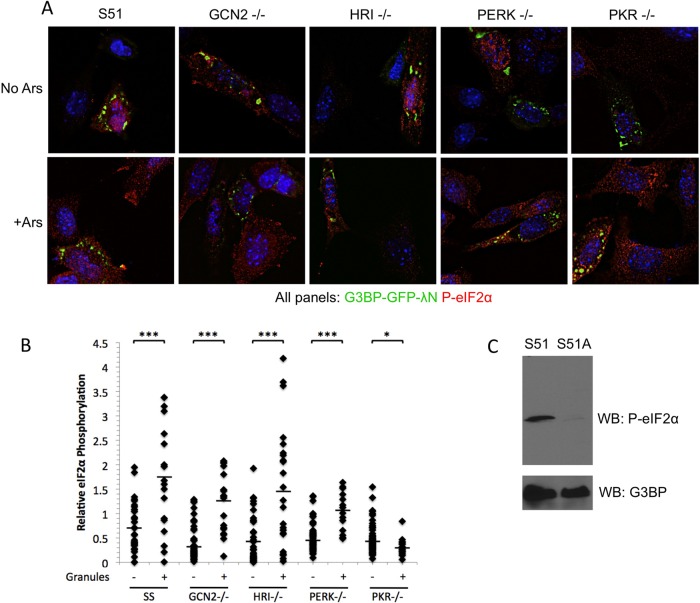
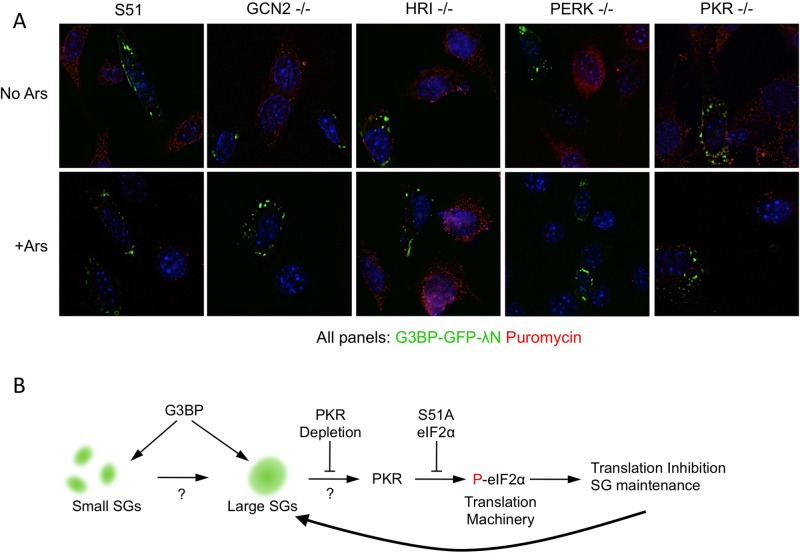
PKR mediates eIF2α phosphorylation by G3BP-induced stress granules. (A) Mouse embryonic fibroblasts expressing wild-type eIF2α (S51) or deleted for eIF2α kinases (−/−) were transfected with G3BP-GFP-λN and either left untreated (no Ars) or treated (+Ars) for 30 min with 200 μM arsenite. Subsequently, cells were fixed and stained for phosphorylated eIF2α (red) and imaged with deconvolution microscopy. (B) Cells in >25 fields for each genotype and each condition were imaged and quantified for eIF2α phosphorylation. Cells were classified based on the absence (−) or presence (+) of granules, and the two groups for each genotype were statistically compared using an equivariant, two-tailed Student's t test. ***p ≤ 0.001; *p ≤ 0.05. (C) Immunoblot of S51 and S51A MEFs treated with 200 μM arsenite for 30 min, showing phosphorylated eIF2α and endogenous G3BP as a loading control.
FIGURE 10:
FIGURE 10:
Translation persists in PKR-knockout MEFs despite the presence of G3BP-induced stress granules. (A) Cells were transfected with G3BP-GFP-λN and either left untreated (no Ars) or treated (+Ars) with arsenite as described in Materials and Methods. RPA was then performed to detect translating ribosomes (α-puromycin; red). (B) Schematic illustration of G3BP-induced granule formation and subsequent eIF2α phosphorylation by PKR. G3BP induction of both small and large SGs is illustrated with arrows toward both sizes of granules. Points of the pathway that have not been further elucidated are depicted with question marks.

References

    1. Anderson P, Kedersha N. Visibly stressed: the role of eIF2, TIA-1, and stress granules in protein translation. Cell Stress Chaperones. 2002;7:213–221. - PMC - PubMed
    1. Arimoto K, Fukuda H, Imajoh-Ohmi S, Saito H, Takekawa M. Formation of stress granules inhibits apoptosis by suppressing stress-responsive MAPK pathways. Nat Cell Biol. 2008;10:1324–1332. - PubMed
    1. Buchan JR, Yoon JH, Parker R. Stress-specific composition, assembly and kinetics of stress granules in Saccharomyces cerevisiae. J Cell Sci. 2011;124:228–239. - PMC - PubMed
    1. Dang Y, Kedersha N, Low WK, Romo D, Gorospe M, Kaufman R, Anderson P, Liu JO. Eukaryotic initiation factor 2alpha-independent pathway of stress granule induction by the natural product pateamine A. J Biol Chem. 2006;281:32870–32878. - PubMed
    1. David A, Netzer N, Strader MB, Das SR, Chen CY, Gibbs J, Pierre P, Bennink JR, Yewdell JW. RNA binding targets aminoacyl-tRNA synthetases to translating ribosomes. J Biol Chem. 2011;286:20688–20700. - PMC - PubMed

Publication types

MeSH terms

LinkOut - more resources