Review
. 2012 Feb;3(2):263-76.
doi: 10.4155/tde.11.151.

Targeted interception of signaling reactive oxygen species in the vascular endothelium

Affiliations
Review

Targeted interception of signaling reactive oxygen species in the vascular endothelium

Jingyan Han et al. Ther Deliv. 2012 Feb.

Abstract

Reactive oxygen species (ROS) are implicated as injurious and as signaling agents in human maladies including inflammation, hyperoxia, ischemia-reperfusion and acute lung injury. ROS produced by the endothelium play an important role in vascular pathology. They quench, for example, nitric oxide, and mediate pro-inflammatory signaling. Antioxidant interventions targeted for the vascular endothelium may help to control these mechanisms. Animal studies have demonstrated superiority of targeting ROS-quenching enzymes catalase and superoxide dismutase to endothelial cells over nontargeted formulations. A diverse arsenal of targeted antioxidant formulations devised in the last decade shows promising results for specific quenching of endothelial ROS. In addition to alleviation of toxic effects of excessive ROS, these targeted interventions suppress pro-inflammatory mechanisms, including endothelial cytokine activation and barrier disruption. These interventions may prove useful in experimental biomedicine and, perhaps, in translational medicine.


Figures
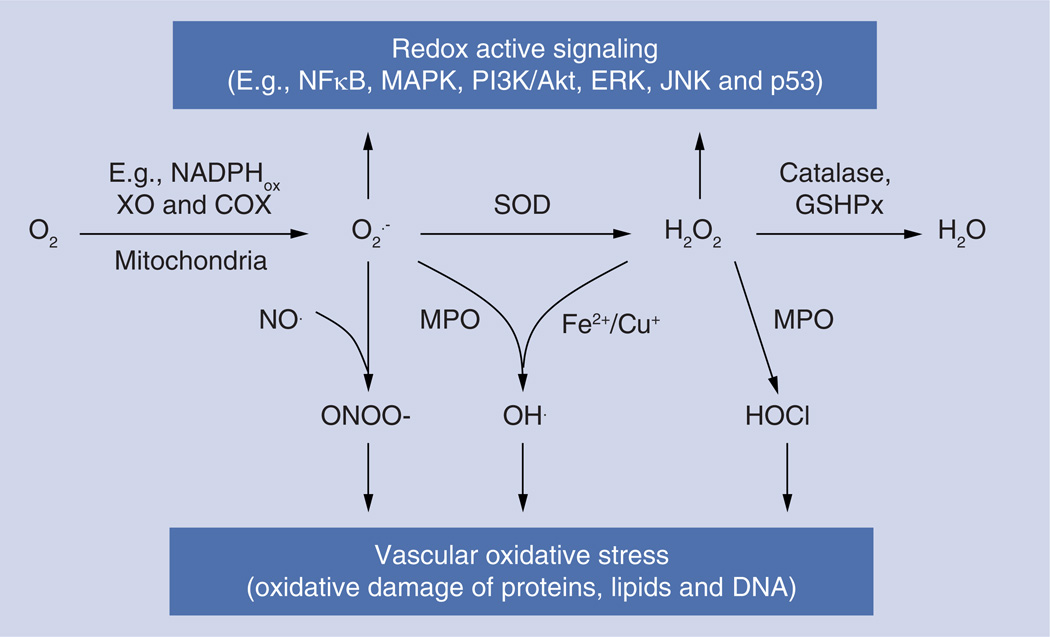
Figure 1
Figure 1. The metabolism and role of reactive oxygen species in signaling and vascular oxidative stress
COX: Cycloxigenase; GSHPx: Glutathione peroxidase; MPO: Myeloperoxidase; SOD: Superoxide dismutase; XO: Xanthine oxidase.
Figure 2
Figure 2. Molecular mechanisms of reactive oxygen species signaling
ROS produced by a family of NADPH oxidase enzymes or by mitochondria (complexes I and III of the respiratory chain) are able to oxidize cysteine residues of several components of signaling pathways. This can cause an increase in ion-channel activity or activation of kinase activity. The most studied ROS signaling mechanism is the inhibition of phosphatase activity by H2O2, which in turn leads to kinase activation. ROS can also increase DNA binding to the transcription factor. NOX: NADPH oxidase; ROS: Reactive oxygen species.
Figure 3
Figure 3. Mechanism of AngII-induced hypertension
AngII binds to its receptor AT1, which activates NOX2 and results in superoxide generation. Other systems that produce superoxide in an AngII responsive manner include the mitochondrial respiration chain and nitric oxide synthase uncoupling and NOX1, induced in pathological conditions. Superoxide scavenges NO, a critical vasodilator. Consequent depletion of NO causes development of hypertension. NOX: NADPH oxidase; ROS: Reactive oxygen species.
Figure 4
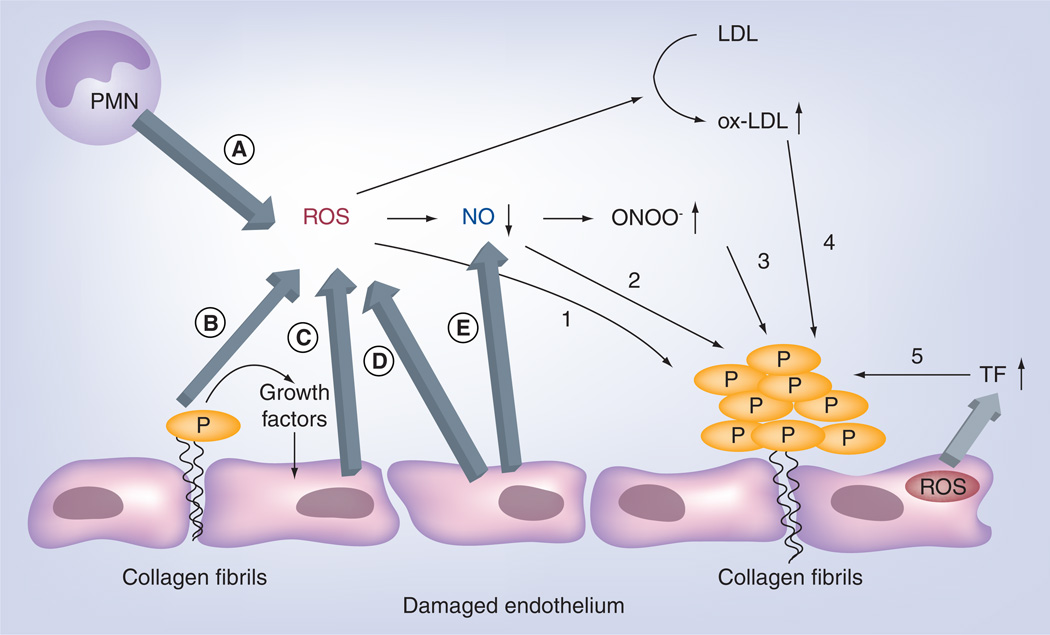
Figure 4. The involvement of vascular reactive oxygen species in thrombosis
ROS in vascular lumen are derived from various vascular cells, including (A) activated leukocytes, (B) adherent platelets and (C,D) endothelial cells. ROS themselves can directly stimulate platelet activation and aggregation (1). ROS can also indirectly regulate formation of thrombosis by decreasing bioavailability of NO (2), which is generated by endothelial cells (E), increasing the levels of ONOO (3), oxidized LDL (4) and TF that initiates explosive coagulation cascade (5). LDL: Low-density lipoprotein; NOX: NADPH oxidase; Ox-LDL: Oxidized LDL; P: Platelet; PMN: Polymorphonuclear leukocyte; ROS: Reactive oxygen species; TF: Tissue factor.
Figure 5
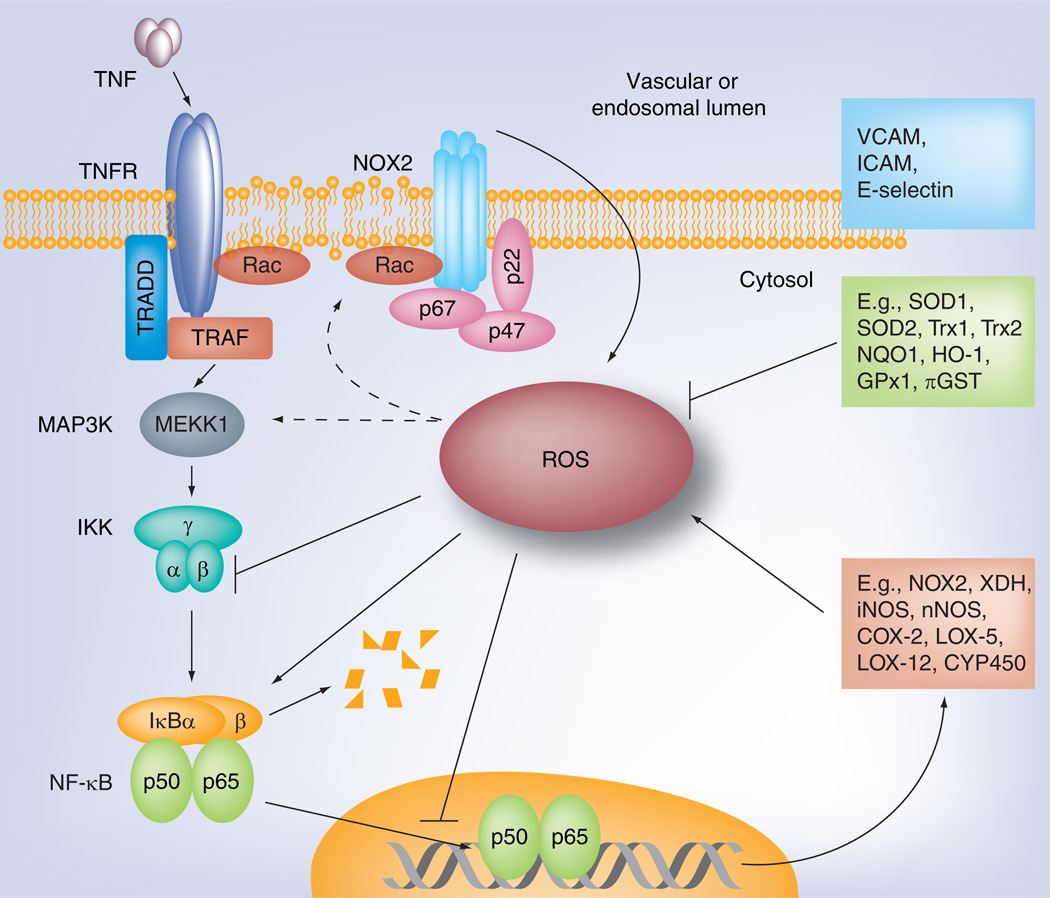
Figure 5. Relationship between reactive oxygen species and inflammatory NF-κB signaling
The activation of NF-κB produces cell-specific set of target proteins, including cell adhesion molecules (specific for endothelial cells, top box), antioxidant proteins (middle box) and pro-oxidant proteins (bottom box). ROS may modulate NF-κB function by either its activation or, in some cases, by inhibition. Outcome of NF-κB regulation by ROS will depend on cell type and its redox status, localization, production time and type of ROS. COX: Cycloxigenase; ICAM: Intercellular adhesion molecule; NOX: NADPH oxidase; ROS: Reactive oxygen species; TRADD: Tumor necrosis factor receptor type 1-associated death domain protein; TRAF: Tumor necrosis factor receptor-associated factor; VCAM: Vascular cell adhesion molecule-1.
Figure 6
Figure 6. Involvement of reactive oxygen species in the regulation of endothelial barrier function
ROS derived from activated PMNs and endothelial cells in response to permeability enhancers (thrombin and VEGF) are involved in multiple signaling pathways leading to endothelial barrier disruption. Vascular ROS stimulate intracellular Ca2+, RhoA activity and phosphorylation of MLC, resulting in stress-fiber formation and increased contractility. ROS increase several kinase activities (e.g., p38 MAP kinase, protein kinase C and tyrosine kinase Pyk2) that are implicated in cytoskeletal remodeling and destabilization of intercellular junctions. MLC: Myosin light chain; MMP: Matrix metalloproteinase; NOX: NADPH oxidase; PMN: Polymorphonuclear leukocyte; ROS: Reactive oxygen species; ZO: Zona occludens.
Figure 7
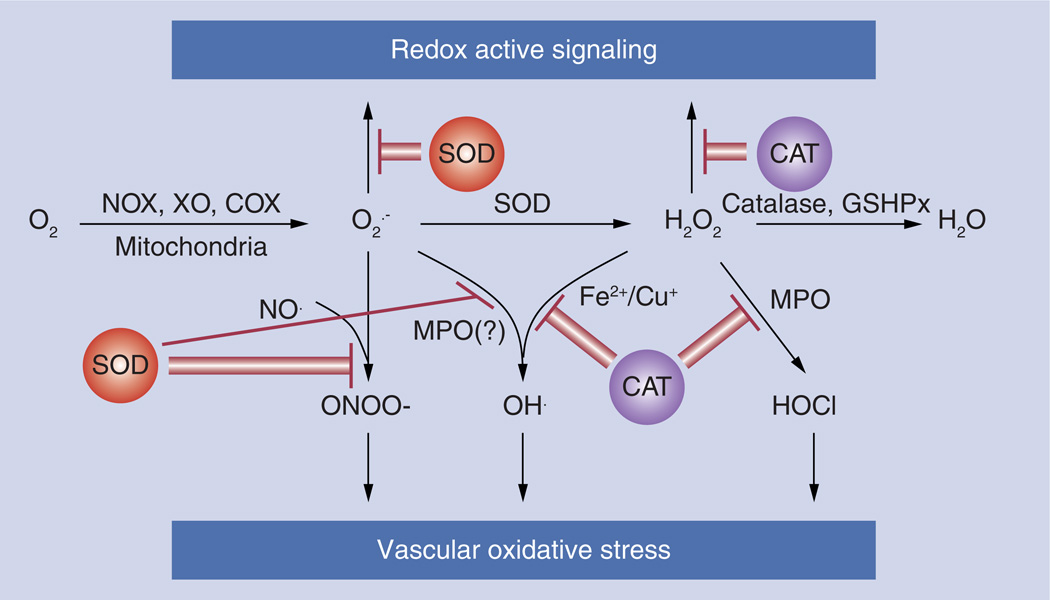
Figure 7. Targeted antioxidant interventions
SOD or CAT conjugated with antibody to the endothelial target, specifically binds to endothelial cells and efficiently degrades the superoxide anion and hydrogen peroxide, respectively. Reactive oxygen species removal protects cells against oxidative stress or inhibits unwanted signaling. CAT: Catalase; COX: Cycloxigenase; GSHPx: Glutathione peroxidase; MPO: Myeloperoxidase; NOX: NADPH oxidase; SOD: Superoxide dismutase; XO: Xanthine oxidase.
Figure 8
Figure 8. Endothelial delivery of antioxidant enzymes alleviates reactive oxygen species-mediated endothelial barrier dysfunction
AOEs including catalase and superoxide dismutase targeted to endothelials can quench extracellular and intracellular ROS that are generated in response to stimulation of permeability enhancers (thrombin and VEGF) or released from activated PMNs. Thus, endothelial delivery of AOEs can inhibit ROS-induced cytoskeletal remodeling and disassembly of intercellular junctions, protecting endothelial barrier function. AOE: Antioxidant enzyme; NOX: NADPH oxidase; PMN: Polymorphonuclear leukocyte; ROS: Reactive oxygen species.

References

    1. Forman HJ, Maiorino M, Ursini F. Signaling functions of reactive oxygen species. Biochemistry. 2010;49(5):835–842. - PMC - PubMed
    1. Thomas SR, Witting PK, Drummond GR. Redox control of endothelial function and dysfunction. molecular mechanisms and therapeutic opportunities. Antioxid. Redox Signal. 2008;10(10):1713–1765. ▪▪ Comprehensive review on mechanism of endothelial dysfunction with detailed description of reactive oxygen species (ROS) generating systems and control of endothelial function.

    1. Ichimura H, Parthasarathi K, Quadri S, Issekutz AC, Bhattacharya J. Mechano-oxidative coupling by mitochondria induces proinflammatory responses in lung venular capillaries. J. Clin. Invest. 2003;111(5):691–699. - PMC - PubMed
    1. Zimmerman MC, Dunlay RP, Lazartigues E, et al. Requirement for Rac1-dependent NADPH oxidase in the cardiovascular and dipsogenic actions of angiotensin II in the brain. Circ. Res. 2004;95(5):532–539. - PubMed
    1. McCord JM, Roy RS, Schaffer SW. Free radicals and myocardial ischemia. The role of xanthine oxidase. Adv. Myocardiol. 1985;5:183–189. - PubMed

MeSH terms