Negative pressure pulmonary edema with laryngeal mask airway use: Recognition, pathophysiology and treatment modalities
- PMID: 22837897
- PMCID: PMC3401823
- DOI: 10.4103/2229-5151.97275
Negative pressure pulmonary edema with laryngeal mask airway use: Recognition, pathophysiology and treatment modalities
Abstract
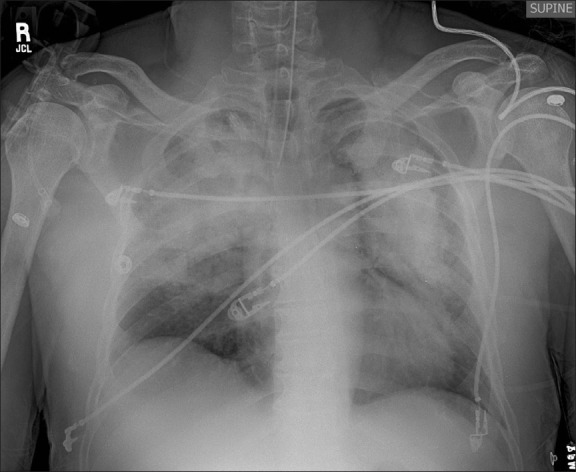
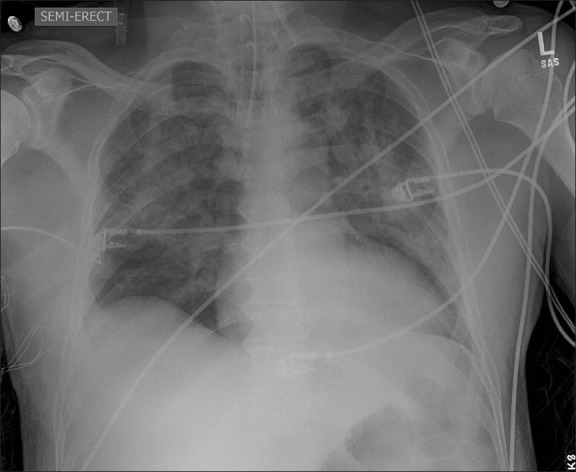
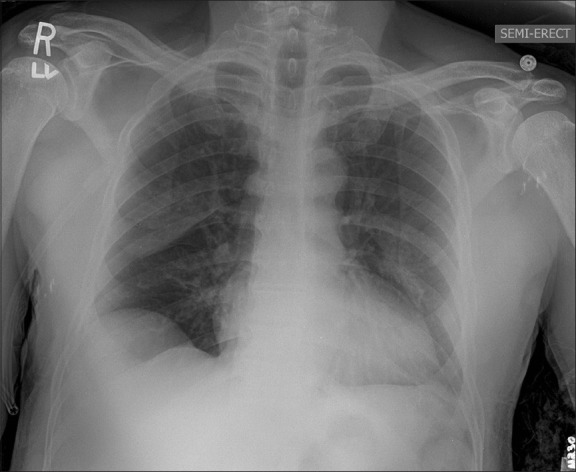
Negative pressure pulmonary edema (NPPE) following the use of the laryngeal mask airway (LMA) is an uncommon and under-reported event. We present a case of a 58-year-old male, who developed NPPE following LMA use. After biting vigorously on his LMA, the patient developed stridor upon emergence, with concurrent appearance of blood-tinged, frothy sputum and pulmonary edema. He subsequently required three days of mechanical ventilation. After discontinuation of mechanical ventilation the patient continued to require additional pulmonary support using continuous positive airway pressure, with a full facemask, to correct the persistent hypoxemia. His roentgenographic findings demonstrated an accelerated improvement with judicious administration of intravenous furosemide.
Keywords: Airway; edema; education; hypoxia; ventilation.
Conflict of interest statement
Figures
References
-
- Olsson GL, Hallen B. Laryngospasm during anaesthesia. A computer-aided incidence study in 136,929 patients. Acta Anaesthesiol Scand. 1984;28:567–75. - PubMed
-
- McConkey PP. Postobstructive pulmonary oedema--a case series and review. Anaesth Intensive Care. 2000;28:72–6. - PubMed
-
- Patton WC, Baker CL., Jr Prevalence of negative-pressure pulmonary edema at an orthopaedic hospital. J South Orthop Assoc. 2000;9:248–53. - PubMed
-
- Ezri T, Priscu V, Szmuk P, Soroker D. Laryngeal mask and pulmonary edema. Anesthesiology. 1993;78:219. - PubMed
-
- Bhavani-Shankar K, Hart NS, Mushlin PS. Negative pressure induced airway and pulmonary injury. Can J Anaesth. 1997;44:78–81. - PubMed