


Effects of antenatal corticosteroids on the hypothalamic-pituitary-adrenocortical axis of the fetus and newborn: experimental findings and clinical considerations
- PMID: 22840973
- PMCID: PMC3485443
- DOI: 10.1016/j.ajog.2012.06.012
Effects of antenatal corticosteroids on the hypothalamic-pituitary-adrenocortical axis of the fetus and newborn: experimental findings and clinical considerations
Abstract
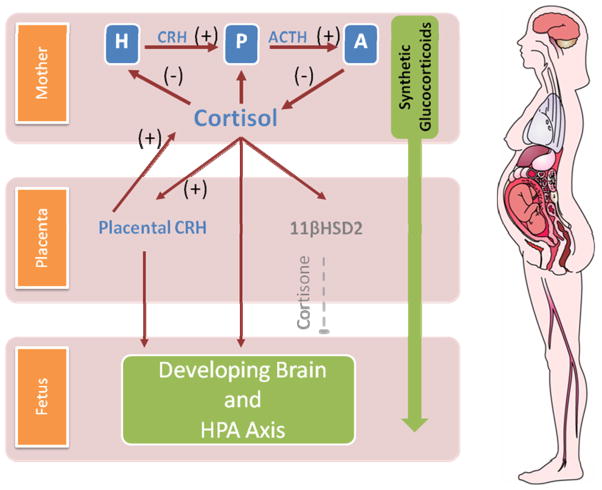
The hypothalamic-pituitary-adrenocortical (HPA) axis is a major neuroendocrine pathway that modulates the stress response. The glucocorticoid, cortisol, is the principal end product of the HPA axis in humans and plays a fundamental role in maintaining homeostasis and in fetal maturation and development. Antenatal administration of synthetic glucocorticoids (GCs) accelerates fetal lung maturation and has significantly decreased neonatal mortality and morbidity in infants born before 34 weeks of gestation. Exposure to excess levels of endogenous GCs and exogenous GCs (betamethasone and dexamethasone) has been shown to alter the normal development trajectory. The development and regulation of the fetal HPA axis is discussed and the experimental animal evidence presented suggests long-term adverse consequences of altered HPA function. The clinical data in infants exposed to GCs also suggest altered HPA axis function over the short term. The longer-term consequences of antenatal GC exposure on HPA axis function and subtler neurodevelopmental outcomes including adaptation to stress, cognition, behavior, and the cardiovascular and immune responses are poorly understood. Emerging clinical strategies and interventions may help in the selection of mothers at risk for preterm delivery who would benefit from existing or future formulations of antenatal GCs with a reduction in the associated risk to the fetus and newborn. Detailed longitudinal long-term follow-up of those infants exposed to synthetic GCs are needed.
Copyright © 2012 Mosby, Inc. All rights reserved.
Conflict of interest statement
DISCLOSURE: The authors report no conflict of interest.
Figures
References
-
- Liggins GC, Howie RN. A controlled trial of antepartum glucocorticoid treatment for prevention of the respiratory distress syndrome in premature infants. Pediatrics. 1972;50:515–25. - PubMed
-
- Crowley P, Chalmers I, Keirse MJ. The effects of corticosteroid administration before preterm delivery: an overview of the evidence from controlled trials. Brit J Obstet Gynaec. 1990;97:11–25. - PubMed
-
- Roberts D, Dalziel S. Antenatal corticosteroids for accelerating fetal lung maturation for women at risk of preterm birth. Cochrane Database Syst Rev. 2006;3:CD004454. - PubMed
-
- Crowther CA, Harding JE. Repeat doses of prenatal corticosteroids for women at risk of preterm birth for preventing neonatal respiratory disease. Cochrane Database Syst Rev. 2007:CD003935. - PubMed
Publication types
MeSH terms
Substances
Grants and funding
LinkOut - more resources
Full Text Sources
Medical
Miscellaneous
