


What pharmacological interventions indicate concerning the role of the perirhinal cortex in recognition memory
- PMID: 22841990
- PMCID: PMC3500694
- DOI: 10.1016/j.neuropsychologia.2012.07.034
What pharmacological interventions indicate concerning the role of the perirhinal cortex in recognition memory
Abstract
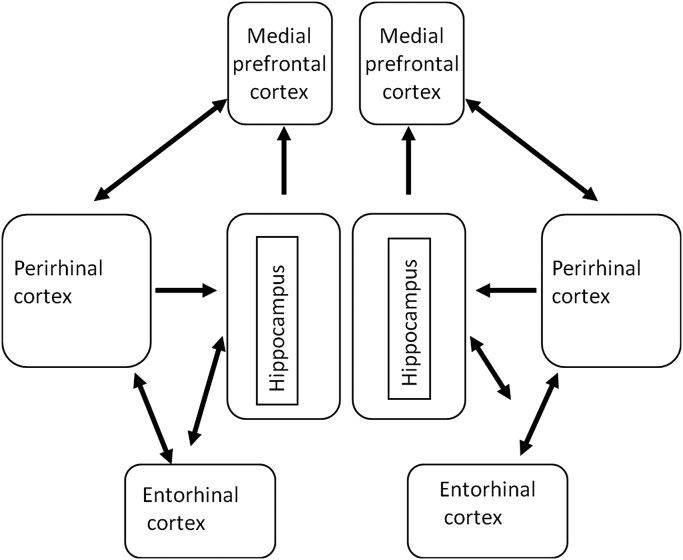
Findings of pharmacological studies that have investigated the involvement of specific regions of the brain in recognition memory are reviewed. The particular emphasis of the review concerns what such studies indicate concerning the role of the perirhinal cortex in recognition memory. Most of the studies involve rats and most have investigated recognition memory for objects. Pharmacological studies provide a large body of evidence supporting the essential role of the perirhinal cortex in the acquisition, consolidation and retrieval of object recognition memory. Such studies provide increasingly detailed evidence concerning both the neurotransmitter systems and the underlying intracellular mechanisms involved in recognition memory processes. They have provided evidence in support of synaptic weakening as a major synaptic plastic process within perirhinal cortex underlying object recognition memory. They have also supplied confirmatory evidence that that there is more than one synaptic plastic process involved. The demonstrated necessity to long-term recognition memory of intracellular signalling mechanisms related to synaptic modification within perirhinal cortex establishes a central role for the region in the information storage underlying such memory. Perirhinal cortex is thereby established as an information storage site rather than solely a processing station. Pharmacological studies have also supplied new evidence concerning the detailed roles of other regions, including the hippocampus and the medial prefrontal cortex in different types of recognition memory tasks that include a spatial or temporal component. In so doing, they have also further defined the contribution of perirhinal cortex to such tasks. To date it appears that the contribution of perirhinal cortex to associative and temporal order memory reflects that in simple object recognition memory, namely that perirhinal cortex provides information concerning objects and their prior occurrence (novelty/familiarity).
Copyright © 2012 Elsevier Ltd. All rights reserved.
Figures
References
-
- Abe H., Ishida Y., Iwasaki T. Perirhinal N-methyl-d-aspartate and muscarinic systems participate in object recognition in rats. Neuroscience Letters. 2004;356:191–194. - PubMed
-
- Abe H., Iwasaki T. NMDA and muscarinic blockade in the perirhinal cortex impairs object discrimination in rats. Neuroreport. 2001;12:3375–3379. - PubMed
-
- Aggleton, J. P., Brown, M. W. & Albasser, M. M. Contrasting brain activity patterns for item recognition memory and associative recognition memory: Insights from immediate-early gene functional imaging. Neuropsychologia, 10.1016/j.neuropsychologia.2012.05.018, this issue. - DOI - PubMed
-
- Aggleton J.P., Brown M.W. Interleaving brain systems for episodic and recognition memory. Trends in Cognitive Science. 2006;10:455–463. - PubMed
Publication types
MeSH terms
Substances
Grants and funding
LinkOut - more resources
Full Text Sources
Medical
