


doi: 10.1155/2012/140284.
Epub 2012 Jul 12.
On the discovery, biological effects, and use of Cisplatin and metallocenes in anticancer chemotherapy
Affiliations
- PMID: 22844263
- PMCID: PMC3401524
- DOI: 10.1155/2012/140284
Item in Clipboard
On the discovery, biological effects, and use of Cisplatin and metallocenes in anticancer chemotherapy
Bioinorg Chem Appl.
2012.
Abstract
The purpose of this paper is to summarize mode of action of cisplatin on the tumor cells, a brief outlook on the metallocene compounds as antitumor drugs as well as the future tendencies for the use of the latter in anticancer chemotherapy. Molecular mechanisms of cisplatin interaction with DNA, DNA repair mechanisms, and cellular proteins are discussed. Molecular background of the sensitivity and resistance to cisplatin, as well as its influence on the efficacy of the antitumor immune response was evaluated. Furthermore, herein are summarized some metallocenes (titanocene, vanadocene, molybdocene, ferrocene, and zirconocene) with high antitumor activity.
Figures
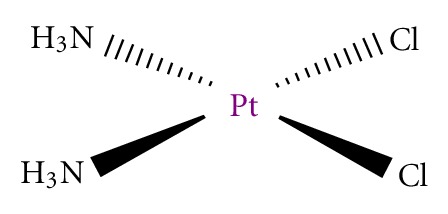
Cisplatin.
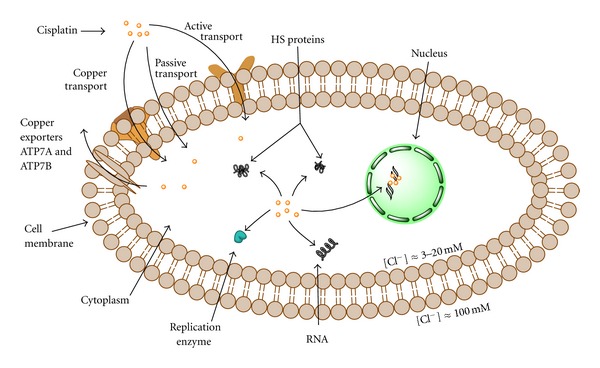
Cisplatin and the cell: transport/export and targets.
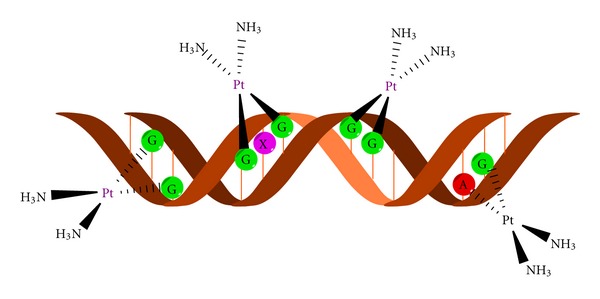
DNA adduct formation with cisplatin moiety.
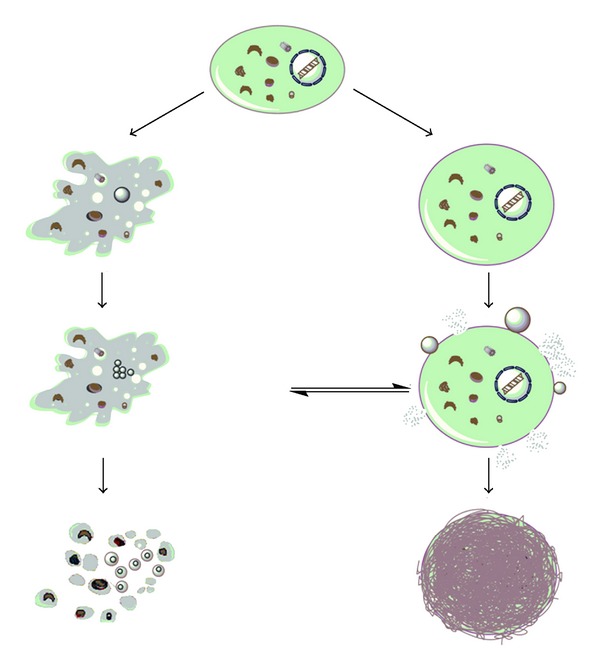
Mode of cell death induced by cisplatin: apoptosis (left) and necrosis (right).
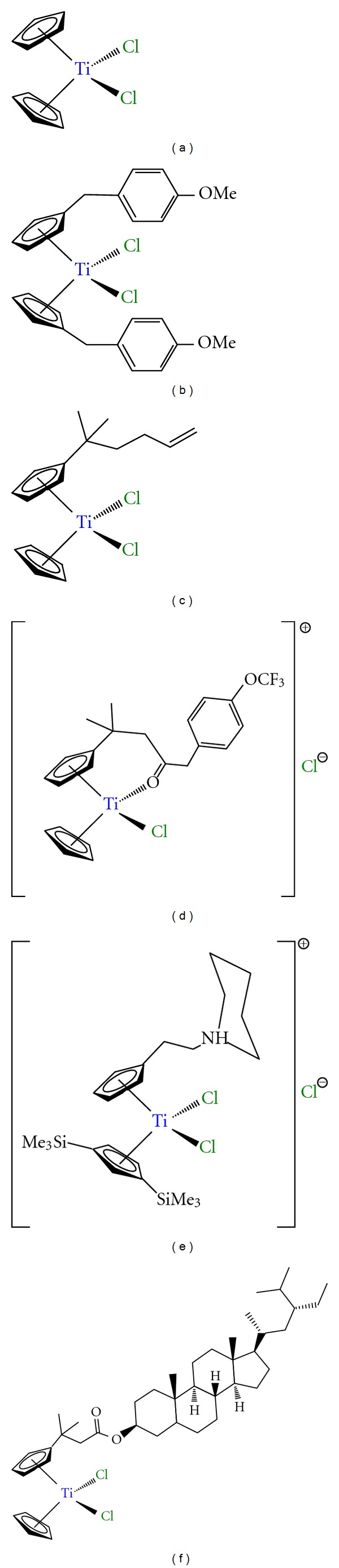
Titanocene derivatives used in preclinical and clinical trials: (a) titanocene dichloride; (b) titanocene-Y; (c) alkenyl-substituted titanocene derivative; (d) titanocenyl complex; (e) titanocene derivative with alkylammonium substituents; (f) steroid-functionalized titanocene derivative.
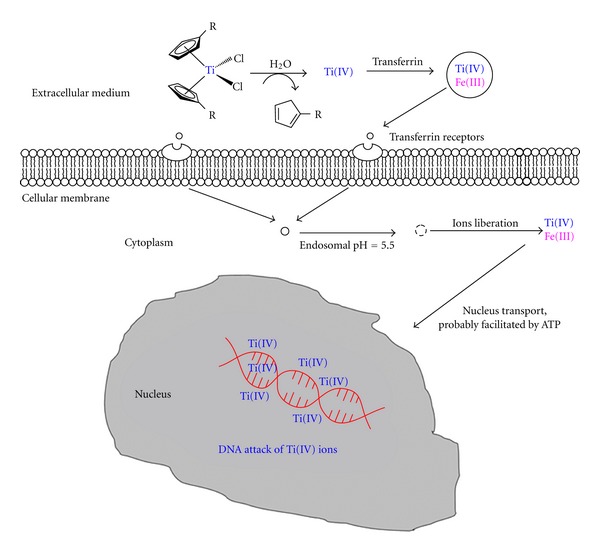
Proposed mechanism of action of titanocene derivatives (adapted from Abeysinghe and Harding, Dalton Trans. 32 (2007) 3474).
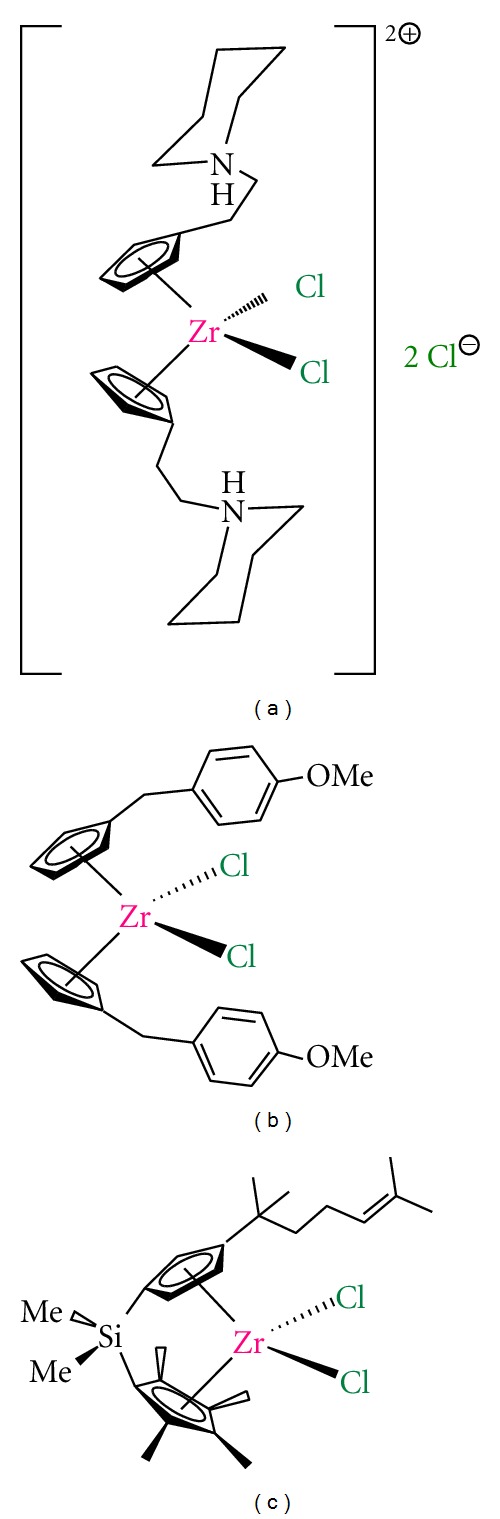
Zirconocene derivatives with anticancer activity: (a) zirconocene derivative with alkylammonium substituents; (b) zirconocene-Y; (c) alkenyl-substituted ansa-zirconocene complex.
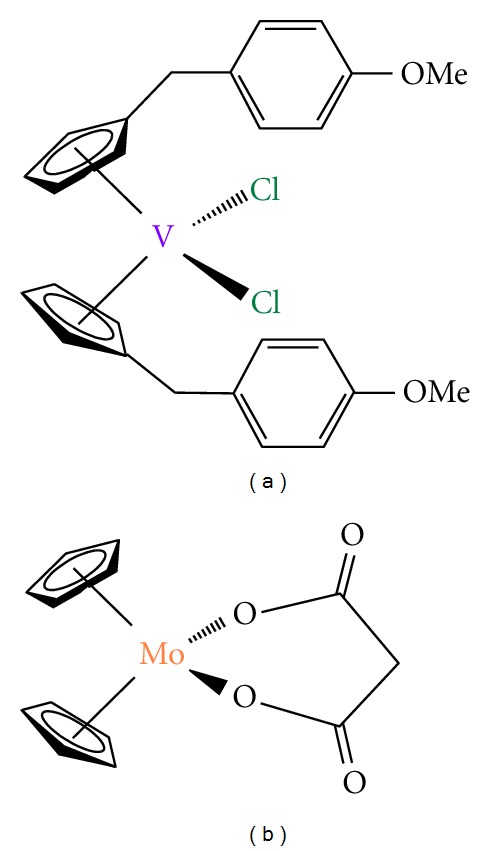
(a) Vanadocene-Y; (b) molybdocene carboxylate derivative.
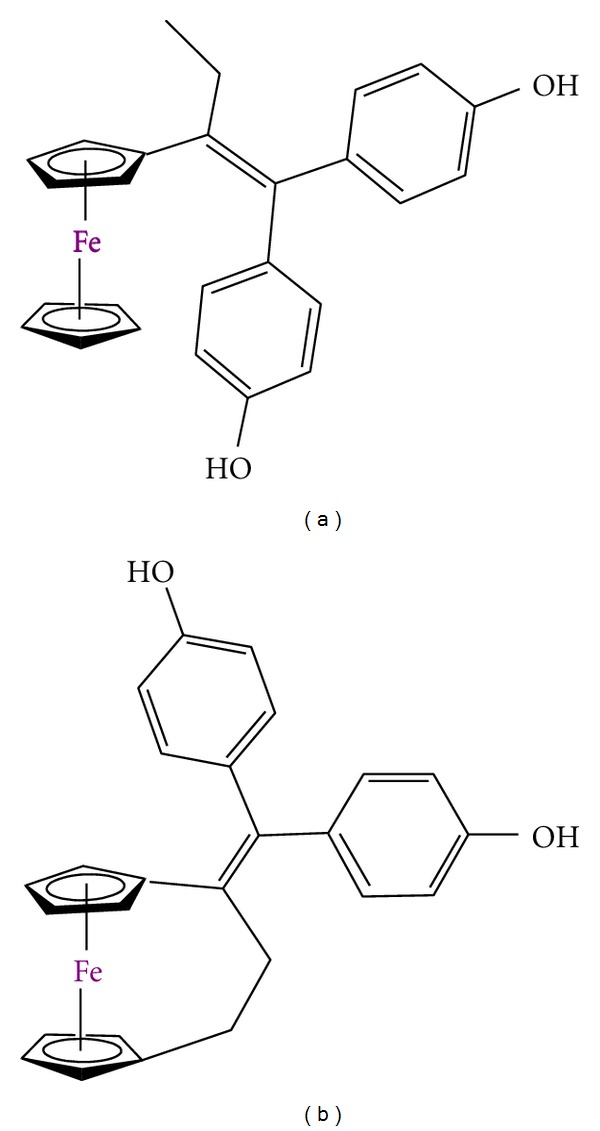
Ferrocene derivatives used in preclinical trials: (a) hydroxyferrocifens; (b) ferrocene complex with a [3] ferrocenophane moiety.
References
-
- Arnesano F, Natile G. Mechanistic insight into the cellular uptake and processing of cisplatin 30 years after its approval by FDA. Coordination Chemistry Reviews. 2009;253(15-16):2070–2081.
-
- Higby DJ, Wallace HJ, Albert DJ, Holland JF. Diaminodichloroplatinum: a phase I study showing responses in testicular and other tumors. Cancer. 1974;33(5):1219–1225. - PubMed
-
- Hambley TW. Developing new metal-based therapeutics: challenges and opportunities. Dalton Transactions. 2007;21(43):4929–4937. - PubMed
-
- Jamieson ER, Lippard SJ. Structure, recognition, and processing of cisplatin-DNA adducts. Chemical Reviews. 1999;99(9):2467–2498. - PubMed
-
- Giaccone G. Clinical perspectives on platinum resistance. Drugs. 2000;59(4):9–17. discussion 37-38. - PubMed
LinkOut - more resources
Full Text Sources
Other Literature Sources
