


Effect of multiple parasitic infections on the tolerance to pollutant contamination
- PMID: 22844535
- PMCID: PMC3406021
- DOI: 10.1371/journal.pone.0041950
Effect of multiple parasitic infections on the tolerance to pollutant contamination
Abstract
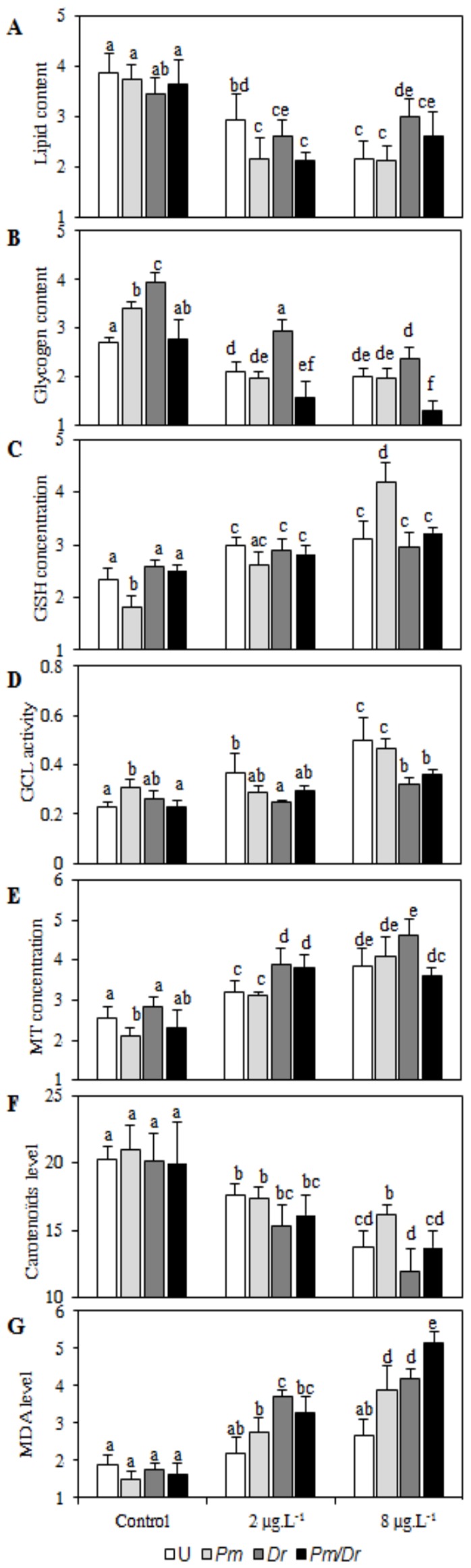
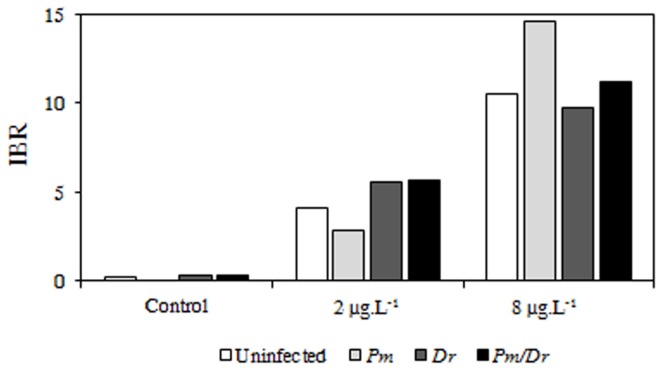
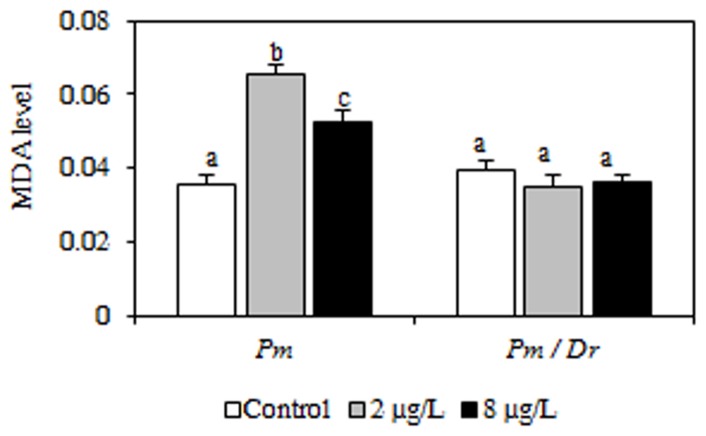
The horizontally-transmitted acanthocephalan parasite Polymorphus minutus and the vertically-transmitted microsporidian parasite Dictyocoela roeselum have both been shown to influence on the antitoxic responses of mono-infected Gammarus roeseli exposed to cadmium. The present study investigates the effect of this co-infection on the antitoxic defence responses of naturally infected females exposed to cadmium stress. Our results revealed that, depending on the cadmium dose, bi-infection induced only slight, significant increased cell damage in G. roeseli as compared to non-infection. In addition, the antitoxic defence pattern of cadmium-exposed bi-infected hosts was similar to the pattern of cadmium-exposed D. roeselum-infected hosts. Reduced glutathione concentrations, carotenoid levels and γ-glutamylcystein ligase activity decreased, while metallothionein concentrations increased. This similar pattern indicates that host physiology can be controlled to some extent by microsporidia under stress conditions. It supports the hypothesis of a disruption of acanthocephalan effects in the presence of microsporidia. However, the global negative effects of bi-infection on host condition should be tested on more biological models, since competition between parasites depends on life history trade-off.
Conflict of interest statement
Figures
References
-
- Vasseur P, Leguille C (2004) Defense systems of benthic invertebrates in response to environmental stressors. Environ Toxicol 19: 433–436 doi:10.1002/tox.20024. - DOI - PubMed
-
- Allan IJ, Vrana B, Greenwood R, Mills GA, Roig B, et al. (2006) A “toolbox” for biological and chemical monitoring requirements for the European Union's Water Framework Directive. Talanta 69: 302–322 doi:10.1016/j.talanta.2005.09.043. - DOI - PubMed
-
- Sures B (2004) Environmental parasitology: relevancy of parasites in monitoring environmental pollution. Trends in Parasitology 20: 170–177 doi:10.1016/j.pt.2004.01.014. - DOI - PubMed
-
- Marcogliese DJ, Pietrock M (2011) Combined effects of parasites and contaminants on animal health: parasites do matter. Trends in Parasitology 27: 123–130 doi:10.1016/j.pt.2010.11.002. - DOI - PubMed
-
- Marcogliese DJ, Brambilla LG, Gagn F, Gendron AD (2005) Joint effects of parasitism and pollution on oxidative stress biomarkers in yellow perch Perca flavescens . Dis Aquat Org 63: 77–84 doi:10.3354/dao063077. - DOI - PubMed
