The COX-2-1195AA Genotype Is Associated with Diffuse-Type Gastric Cancer in Korea
- PMID: 22844559
- PMCID: PMC3404168
- DOI: 10.5009/gnl.2012.6.3.321
The COX-2-1195AA Genotype Is Associated with Diffuse-Type Gastric Cancer in Korea
Abstract
Background/aims: The potential role of the cyclooxygenase (COX)-2 polymorphism has been reported in relation to the risk of gastrointestinal tract malignancies. Therefore, we investigated whether COX-2 polymorphisms are associated with the risk of gastric cancer (GC) in Korea, one of the areas with a high prevalence of this condition.
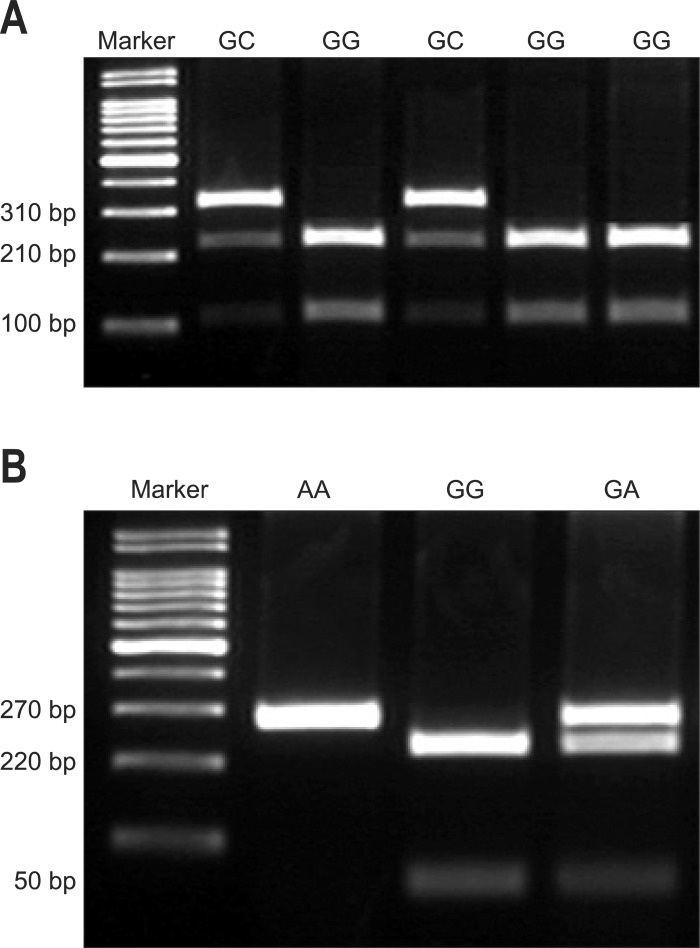
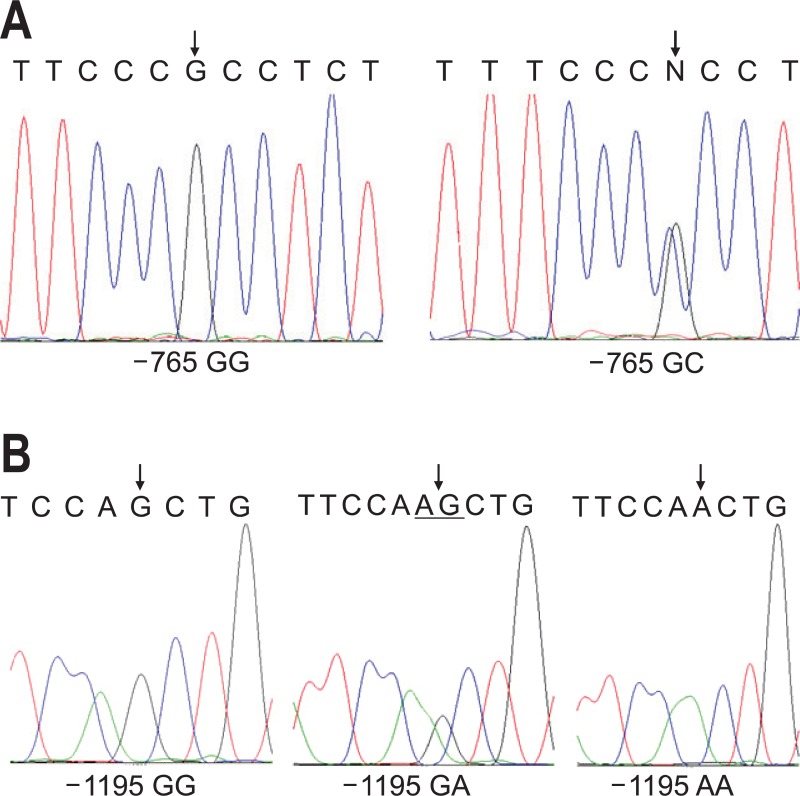
Methods: We evaluated the genotypic frequencies of COX-2-765 and -1195 in 100 peptic ulcer patients, 100 GC patients, and 100 healthy controls. The polymorphisms of the COX-2-765 and -1195 genes were analyzed by polymerase chain reaction and restriction fragment length polymorphisms.
Results: The frequencies of the COX-2-1195 GG, GA, and AA genotype were 20%, 60%, and 20% in intestinal-type GC and 8%, 48%, and 44% in diffuse-type GC, respectively (p=0.021). There were no significant differences in the frequency of COX-2-765 genotypes between intestinal-type GC and diffuse-type GC (p=0.603). Age- and sex-adjusted logistic regression analysis showed that the COX-2-1195 AA genotype was the independent risk factor of diffuse-type GC compared with the COX-2-1195 GG genotype (p=0.041; odds ratio, 6.22; 95% confidence interval, 1.077 to 35.870).
Conclusions: The COX-2-1195 AA genotype may render subjects more susceptible to diffuse-type GC.
Keywords: COX-2; Diffuse type; Polymorphism; Stomach neoplasms.
Conflict of interest statement
No potential conflict of interest relevant to this article was reported.
Figures
References
-
- Uemura N, Okamoto S, Yamamoto S, et al. Helicobacter pylori infection and the development of gastric cancer. N Engl J Med. 2001;345:784–789. - PubMed
-
- International Agency for Research on Cancer; WHO/IARC Expert Committee on Cancer Statistics; IARC, editors; WHO/IARC Expert Committee on Cancer Statistics, editors. IARC monographs on the evaluation of carcinogenic risks to humans: schistosomes, liver flukes and Helicobacter pylori. Volume 61. Lyon: IARC; 1994. Infection with Helicobacter pylori; pp. 177–240.
-
- El-Omar EM, Carrington M, Chow WH, et al. Interleukin-1 polymorphisms associated with increased risk of gastric cancer. Nature. 2000;404:398–402. - PubMed
-
- El-Omar EM, Rabkin CS, Gammon MD, et al. Increased risk of noncardia gastric cancer associated with proinflammatory cytokine gene polymorphisms. Gastroenterology. 2003;124:1193–1201. - PubMed
-
- Machado JC, Figueiredo C, Canedo P, et al. A proinflammatory genetic profile increases the risk for chronic atrophic gastritis and gastric carcinoma. Gastroenterology. 2003;125:364–371. - PubMed
LinkOut - more resources
Full Text Sources
Research Materials
Miscellaneous