


doi: 10.1017/S204579601200039X.
Epub 2012 Jul 30.
What is the WHO essential medicines list?
Affiliations
- PMID: 22846155
- PMCID: PMC6998134
- DOI: 10.1017/S204579601200039X
Item in Clipboard
What is the WHO essential medicines list?
Epidemiol Psychiatr Sci.
2012 Dec.
Abstract
This article briefly presents the main characteristics of the World Health Organization (WHO) essential medicines list (EML), a register of minimum medicine needs for every health-care system. The idea behind the list is that the use of a limited number of well-known and cost-effective medicines may lead to improved long-term medicine supply, lower costs and better health care provision.
Figures
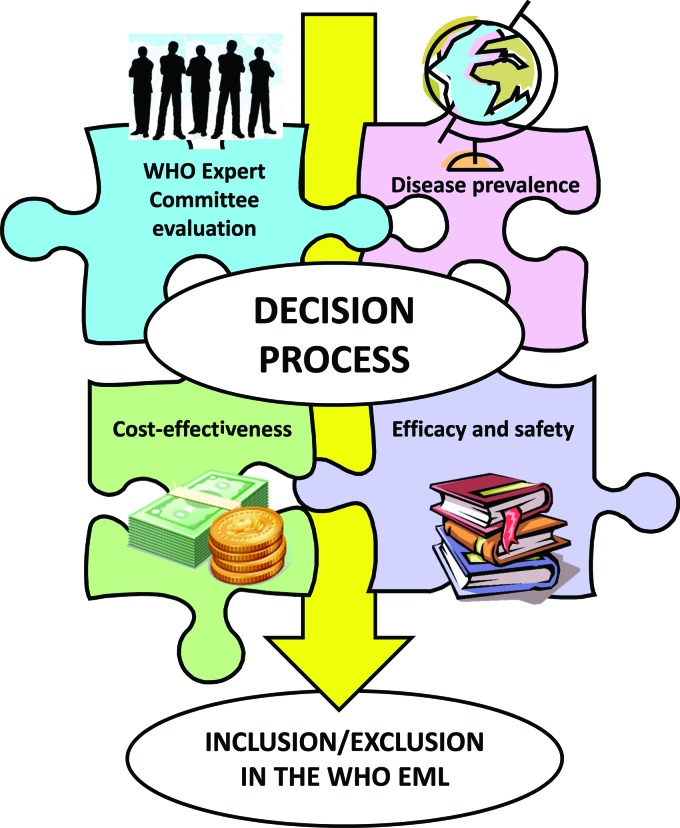
Factors considered by the WHO in the selection of medicines for the WHO EML.
References
-
- Bloom BR (2011). WHO needs change. Nature 473, 143–145. - PubMed
-
- Hutchings J, Neroutsos K, Donnelly K (2010). Making the list: the role of essential medicines lists in reproductive health. International Perspectives on Sexual and Reproductive Health 36, 205–208. - PubMed
-
- Laing R, Waning B, Gray A, Ford N, Hoen E (2003). 25 years of the WHO essential medicines lists: progress and challenges. Lancet 361, 1723–1729. - PubMed
-
- Liberati A (2011). The Cochrane Collaboration as key player in the struggle for better and more relevant patients- and system-oriented research. Epidemiology and Psychiatric Sciences 20, 225–230. - PubMed
MeSH terms
Substances
LinkOut - more resources
Full Text Sources
