


An audit to assess the perspectives of U.S. wound care specialists regarding the importance of proteases in wound healing and wound assessment
- PMID: 22846380
- PMCID: PMC7950550
- DOI: 10.1111/j.1742-481X.2012.01040.x
An audit to assess the perspectives of U.S. wound care specialists regarding the importance of proteases in wound healing and wound assessment
Abstract
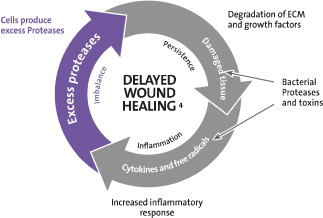
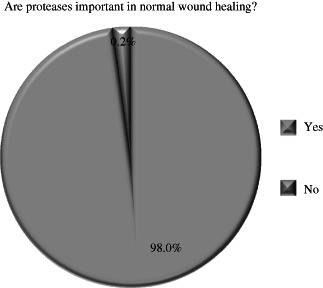
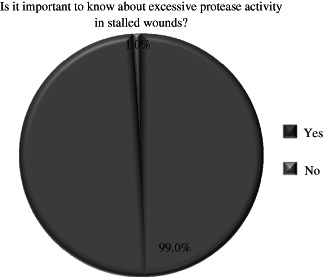
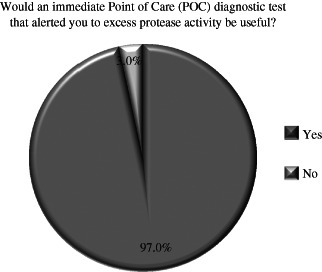
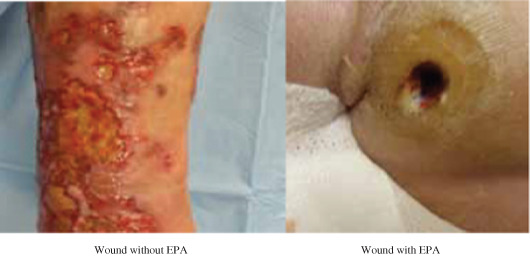
Chronic wounds represent an aberrant biochemistry that creates a toxic proteolytic milieu which can be detrimental to the healing process. Rebalancing the wound microenvironment and addressing elevated protease activity (EPA) could therefore help facilitate healing. To understand how clinicians currently diagnose and manage excessive proteolytic activity, 183 survey responses from US wound specialists were collated and analysed to find out their perceptions on the role of proteases. The majority of respondents (>98%) believed proteases were important in wound healing and that a point-of-care (POC) protease test could be useful. This study yielded a low response rate (7.1%, n = 183); however, there were adequate data to draw significant conclusions. Specialists perceived that fibrin, slough, granulation tissue and rolled wound edges could indicate EPA. About 43% of respondents, however, failed to give a correct response when asked to review photographs to determine if excessive protease activity was present, and the perceived visual signs for EPA did not correlate with the wounds that had EPA; no statistical differences between professions were observed. Respondents chose debridement, wound cleansing and advanced therapies as important in reducing excessive protease activity. It was concluded that specialists have a need for POC diagnostic tests. On the basis of the responses to wound photos, it was determined that there were no visual cues clinicians could use in determining excessive protease activity. Additional research is recommended to evaluate the efficacy of a POC diagnostic test for protease activity and the treatments and therapies applied when EPA is found.
Keywords: Human neutrophil elastase; Matrix metalloproteases; Point‐of‐care diagnostic tests; Proteases; Serine proteases; Wound care.
© 2012 The Authors. International Wound Journal © 2012 John Wiley & Sons Ltd and Medicalhelplines.com Inc.
Figures



References
-
- Clark R. Cutaneous tissue repair: basic biological considerations. J Am Acad Dermatol 1985;13:701–25. - PubMed
-
- Mast BA, Schultz GS. Interactions of cytokines, growth factors, and proteases in acute and chronic wounds. Wound Repair Regen 1996;4: 411–20. - PubMed
-
- Nwomeh BCM, Yager DR, Cohen IK. Physiology of the chronic wound. Clin Plast Surg 1998;25:341. - PubMed
-
- Hackam DJ, Ford HR. Cellular, biochemical and clinical aspects of wound healing. Surg Infect 2002;3:S23–35. - PubMed
-
- Tarnuzzer RW, Schultz GS. Biochemical analysis of acute and chronic wound environments. Wound Repair Regen 2002;4:321–25. - PubMed
Publication types
MeSH terms
Substances
LinkOut - more resources
Full Text Sources
Medical
Research Materials
