


Blue light for infectious diseases: Propionibacterium acnes, Helicobacter pylori, and beyond?
- PMID: 22846406
- PMCID: PMC3438385
- DOI: 10.1016/j.drup.2012.07.001
Blue light for infectious diseases: Propionibacterium acnes, Helicobacter pylori, and beyond?
Abstract
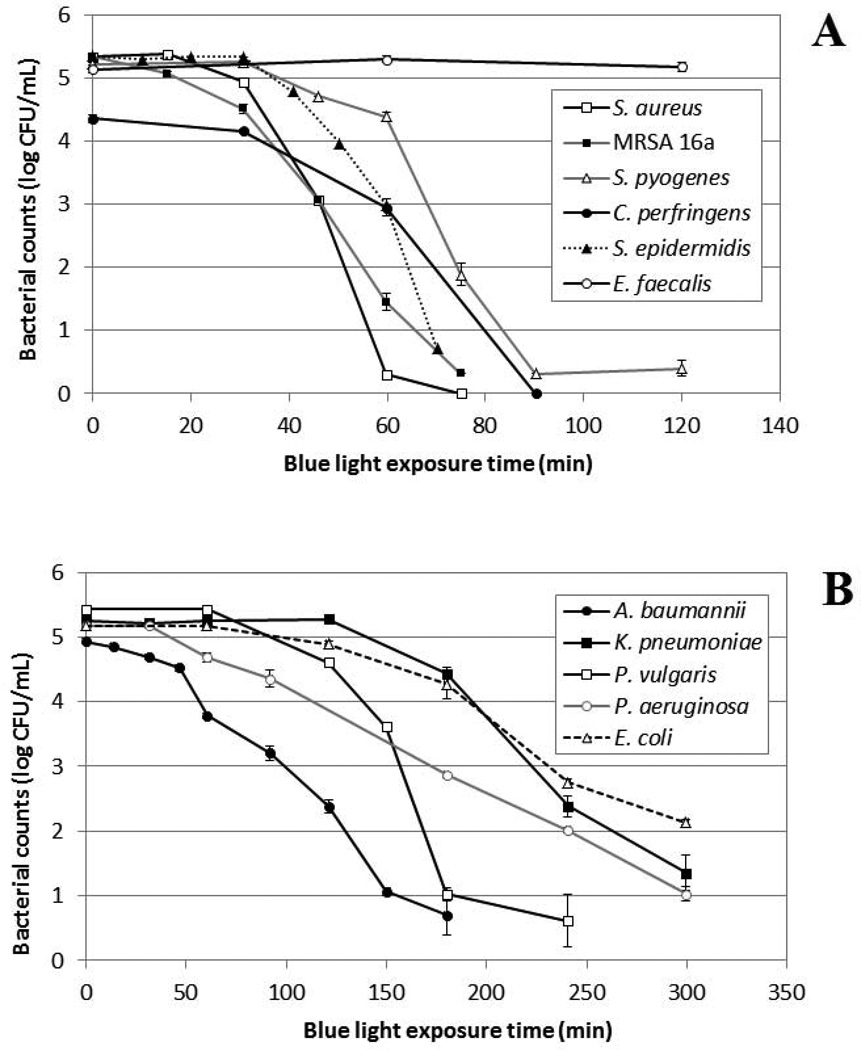
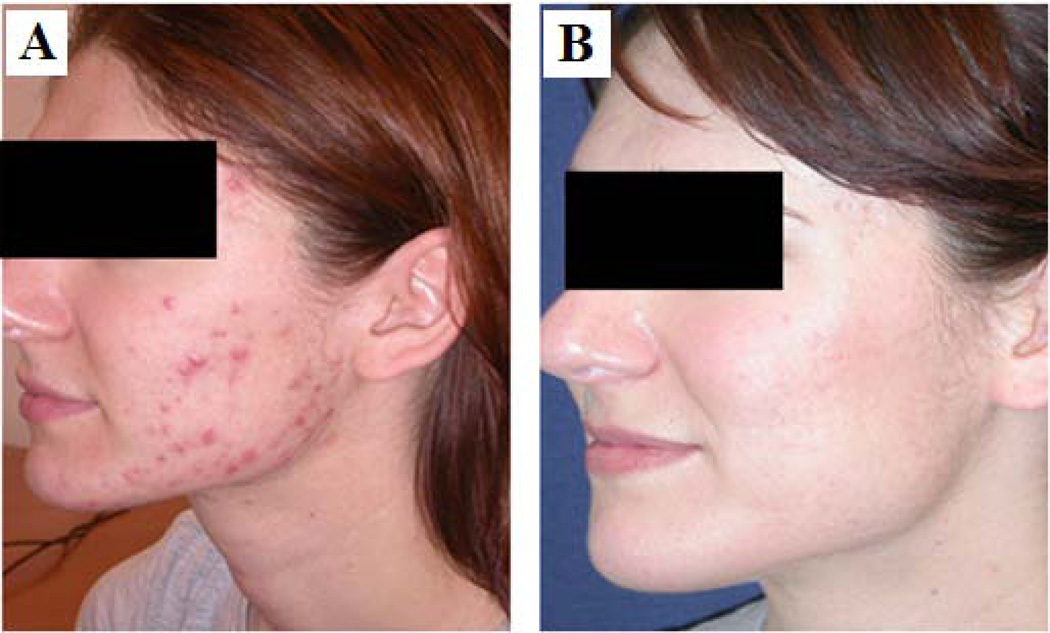
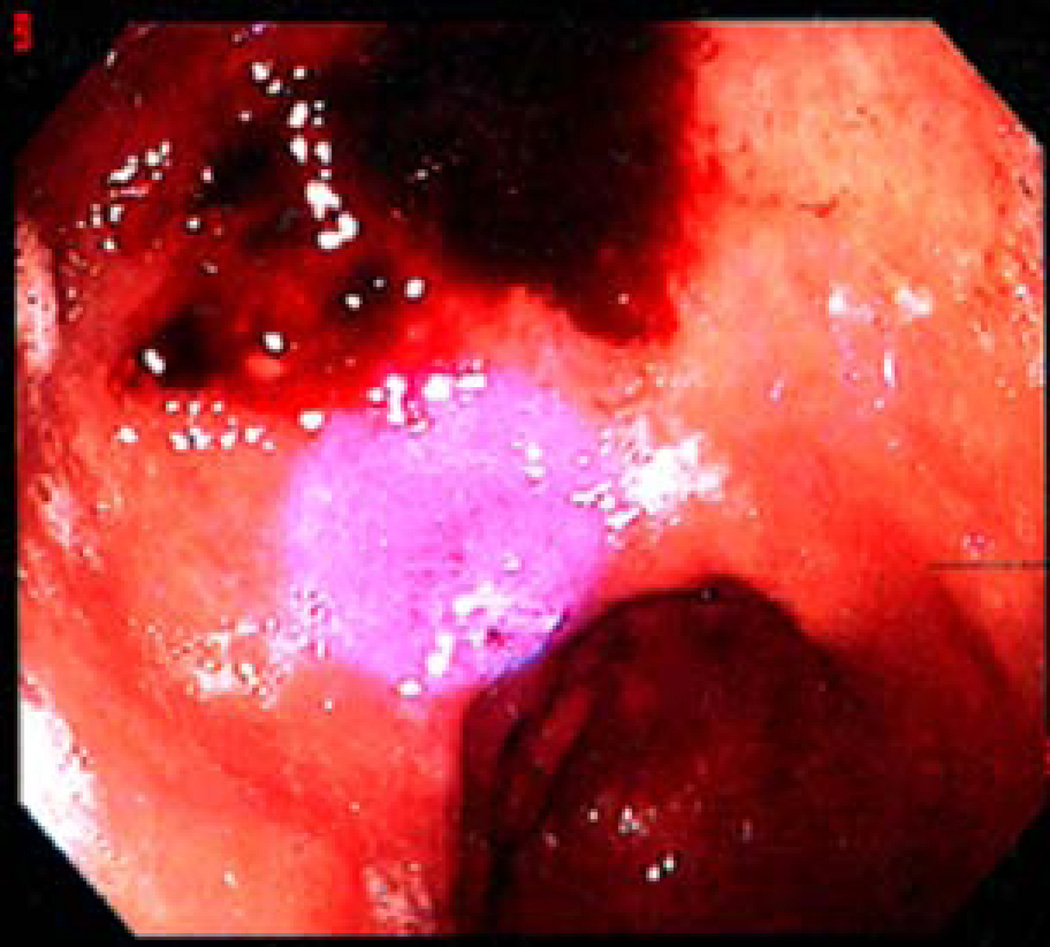
Blue light, particularly in the wavelength range of 405-470 nm, has attracted increasing attention due to its intrinsic antimicrobial effect without the addition of exogenous photosensitizers. In addition, it is commonly accepted that blue light is much less detrimental to mammalian cells than ultraviolet irradiation, which is another light-based antimicrobial approach being investigated. In this review, we discussed the blue light sensing systems in microbial cells, antimicrobial efficacy of blue light, the mechanism of antimicrobial effect of blue light, the effects of blue light on mammalian cells, and the effects of blue light on wound healing. It has been reported that blue light can regulate multi-cellular behavior involving cell-to-cell communication via blue light receptors in bacteria, and inhibit biofilm formation and subsequently potentiate light inactivation. At higher radiant exposures, blue light exhibits a broad-spectrum antimicrobial effect against both Gram-positive and Gram-negative bacteria. Blue light therapy is a clinically accepted approach for Propionibacterium acnes infections. Clinical trials have also been conducted to investigate the use of blue light for Helicobacter pylori stomach infections and have shown promising results. Studies on blue light inactivation of important wound pathogenic bacteria, including Staphylococcus aureus and Pseudomonas aeruginosa have also been reported. The mechanism of blue light inactivation of P. acnes, H. pylori, and some oral bacteria is proved to be the photo-excitation of intracellular porphyrins and the subsequent production of cytotoxic reactive oxygen species. Although it may be the case that the mechanism of blue light inactivation of wound pathogens (e.g., S. aureus, P. aeruginosa) is the same as that of P. acnes, this hypothesis has not been rigorously tested. Limited and discordant results have been reported regarding the effects of blue light on mammalian cells and wound healing. Under certain wavelengths and radiant exposures, blue light may cause cell dysfunction by the photo-excitation of blue light sensitizing chromophores, including flavins and cytochromes, within mitochondria or/and peroxisomes. Further studies should be performed to optimize the optical parameters (e.g., wavelength, radiant exposure) to ensure effective and safe blue light therapies for infectious disease. In addition, studies are also needed to verify the lack of development of microbial resistance to blue light.
Copyright © 2012 Elsevier Ltd. All rights reserved.
Figures
References
-
- Adamskaya N, Dungel P, Mittermayr R, Hartinger J, Feichtinger G, Wassermann K, Redl H, van Griensven M. Light therapy by blue LED improves wound healing in an excision model in rats. Injury. 2011;42:917–921. - PubMed
-
- Ammad S, Gonzales M, Edwards C, Finlay AY, Mills C. An assessment of the efficacy of blue light phototherapy in the treatment of acne vulgaris. J Cosmet Dermatol. 2008;7:180–188. - PubMed
-
- Ankri R, Lubart R, Taitelbaum H. Estimation of the optimal wavelengths for laser-induced wound healing. Lasers Surg Med. 2010;42:760–764. - PubMed
-
- Ashkenazi H, Malik Z, Harth Y, Nitzan Y. Eradication of Propionibacterium acnes by its endogenic porphyrins after illumination with high intensity blue light. FEMS Immunol Med Microbiol. 2003;35:17–24. - PubMed
-
- Bache SE, Maclean M, Macgregor SJ, Anderson JG, Gettinby G, Coia JE, Taggart I. Clinical studies of the High-Intensity Narrow-Spectrum light Environmental Decontamination System (HINS-light EDS), for continuous disinfection in the burn unit inpatient and outpatient settings. Burns. 2011 - PubMed
Publication types
MeSH terms
Grants and funding
LinkOut - more resources
Full Text Sources
Other Literature Sources
Medical
