Lipemia retinalis - an unusual cause of visual acuity deterioration
- PMID: 22847206
- PMCID: PMC3560707
- DOI: 10.12659/msm.883257
Lipemia retinalis - an unusual cause of visual acuity deterioration
Abstract
Background: Hyperlipidemia is an identified factor of premature vessel atherosclerosis. Lipemia retinalis is an unusual retinal manifestation of hyperlipidemia and is thought to be directly correlated with the serum triglyceride level.
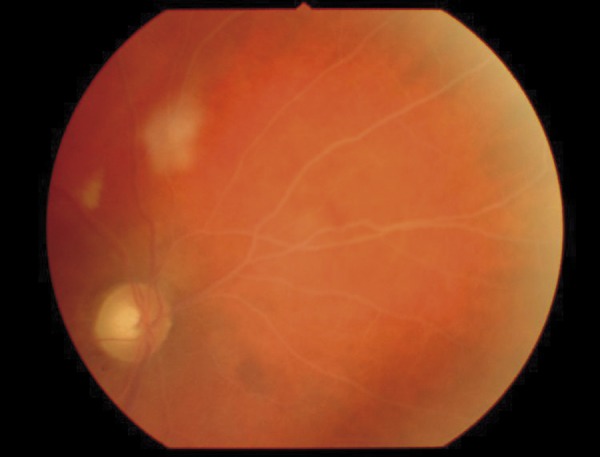
Case report: This paper discusses the case of a 55-year-old patient with lipemia retinalis, which deteriorated his visual acuity. The patient had an extremely high serum cholesterol level (1053 mg/dl) and a very high level of triglycerides (1513 mg/dl). The normalization of serum lipids, reversion of retinal vessels alterations and visual acuity improvement was achieved after an intensive statin lipid-lowering therapy. Pathological changes of the patient's retina, connected with lipemia retinalis, disappeared completely.
Conclusions: Hyperlipidemia can cause lipemia retinalis, which is characterized by the hyperlipidemic vascular lesions-whitish color of vessels, lipid infiltration into the retina and decrease of visual acuity. The lipid-lowering therapy may lead to the normalization of the appearance of the fundus and restore the visual acuity.
Figures


References
-
- Leaf DA. Chylomicronemia and the chylomicronemia syndrome: a practical approach to management. Am J Med. 2008;121:10–12. - PubMed
-
- Nagra PK, Ho AC, Dugan JD. Lipemia retinalis associated with branch retinal vein occlusion. Am J Ophthalmol. 2003;135:539–42. - PubMed
-
- Park YH, Lee YC. Images in clinical medicine. Lipemia retinalis associated with secondary hyperlipidemia. N Engl J Med. 2007;357(10):e11. - PubMed
Publication types
MeSH terms
Substances
LinkOut - more resources
Full Text Sources
Medical