A novel bionic design of dental implant for promoting its long-term success using nerve growth factor (NGF): utilizing nano-springs to construct a stress-cushioning structure inside the implant
- PMID: 22847209
- PMCID: PMC3560710
- DOI: 10.12659/msm.883253
A novel bionic design of dental implant for promoting its long-term success using nerve growth factor (NGF): utilizing nano-springs to construct a stress-cushioning structure inside the implant
Abstract
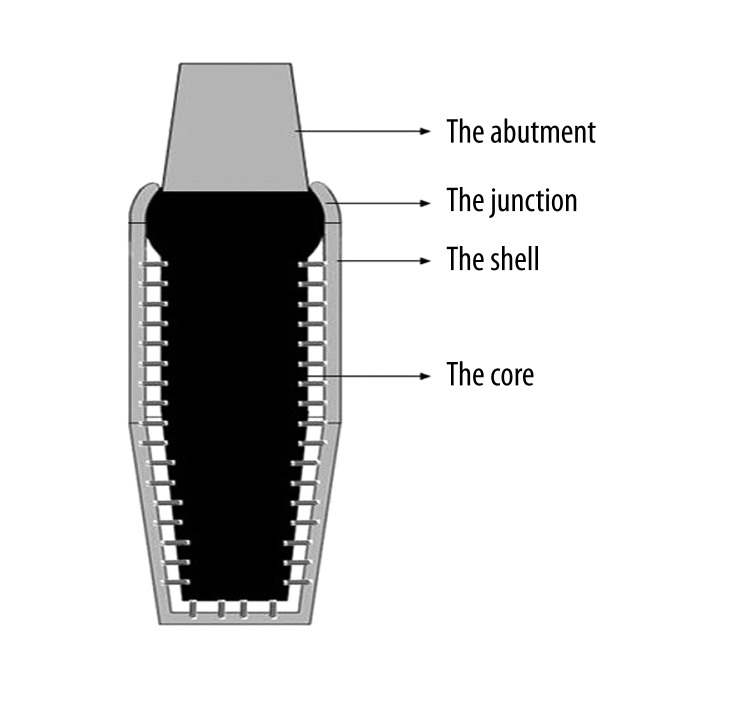
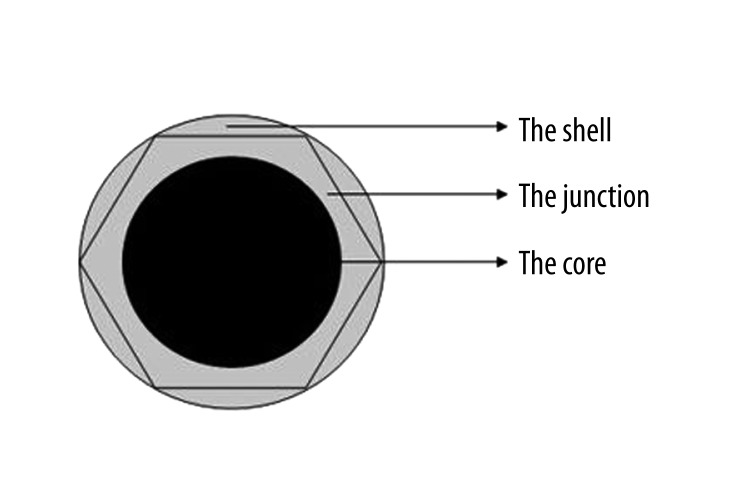
The absence of periodontium causes masticatory load in excess of the self-repairing potential of peri-implant bone; peri-implant bone loss caused by occlusal overload is not uncommon in patients and greatly diminishes chances of long-term success. Regenerative treatments may be useful in inducing peri-implant bone regeneration, but are only stopgap solutions to the aftermaths caused by the imperfect biomechanical compatibility of the dental implant. Despite promising success, the tissue-engineered periodontal ligament still needs a period of time to be perfected before being clinically applied. Hence, we propose a novel design of dental implant that utilizes nano-springs to construct a stress-cushioning structure inside the implant. Many studies have shown that NGF, a neurotrophin, is effective for nerve regeneration in both animal and clinical studies. Moreover, NGF has the potential to accelerate bone healing in patients with fracture and fracture nonunion and improve osseointegration of the implant. The key point of the design is to reduce stress concentrated around peri-implant bone by cushioning masticatory forces and distributing them to all the peri-implant bone through nano-springs, and promote osseoperception and osseointegration by NGF-induced nerve regeneration and new bone formation. This design, which transfers the main biomechanical interface of the implant from outside to inside, if proven to be valid, may to some extent compensate for the functions of lost periodontium in stress cushioning and proprioception.
Figures
References
-
- Muhlbradt L, Ulrich R, Mohlmann H, Schmid H. Mechanoperception of natural teeth versus endosseous implants revealed by magnitude estimation. Int J Oral Maxillofac Implants. 1989;4:125–30. - PubMed
-
- Misch CE, Suzuki JB, Misch-Dietsh FM, Bidez MW. A positive correlation between occlusal trauma and peri-implant bone loss: literature support. Implant Dent. 2005;14:108–16. - PubMed
-
- Isidor F. Loss of osseointegration caused by occlusal load of oral implants. A clinical and radiographical study in monkeys. Clin Oral Impl Res. 1996;7:143–52. - PubMed
-
- Von Arx T, Kurt B, Hardt N. Treatment of severe peri-implant bone loss using autogenous bone and a resorbable membrane. Case report and literature review. Clin Oral Implants Res. 1997;8:517–26. - PubMed
-
- Büchter A, Kleinheinz J, Meyer U, Joos U. Treatment of severe peri-implant bone loss using autogenous bone and a bioabsorbable polymer that delivered doxycycline (Atridox) Br J Oral Maxillofac Surg. 2004;42(5):454–56. - PubMed
MeSH terms
Substances
LinkOut - more resources
Full Text Sources