


Occurrence of natural vertical transmission of dengue-2 and dengue-3 viruses in Aedes aegypti and Aedes albopictus in Fortaleza, Ceará, Brazil
- PMID: 22848479
- PMCID: PMC3405123
- DOI: 10.1371/journal.pone.0041386
Occurrence of natural vertical transmission of dengue-2 and dengue-3 viruses in Aedes aegypti and Aedes albopictus in Fortaleza, Ceará, Brazil
Erratum in
- PLoS One. 2012;7(8). doi: 10.1371/annotation/bc186d1e-f2fc-4dff-8084-a25cf32b9388. Kamimura, Michel Tott [corrected to Kamimura, Michel Toth] doi: 10.1371/annotation/bc186d1e-f2fc-4dff-8084-a25cf32b9388
Abstract
Background: Aedes aegypti and Aedes albopictus perform an important role in the transmission of the dengue virus to human populations, particularly in the tropical and subtropical regions of the world. Despite a lack of understanding in relation to the maintenance of the dengue virus in nature during interepidemic periods, the vertical transmission of the dengue virus in populations of A. aegypti and A. albopictus appears to be of significance in relation to the urban scenario of Fortaleza.
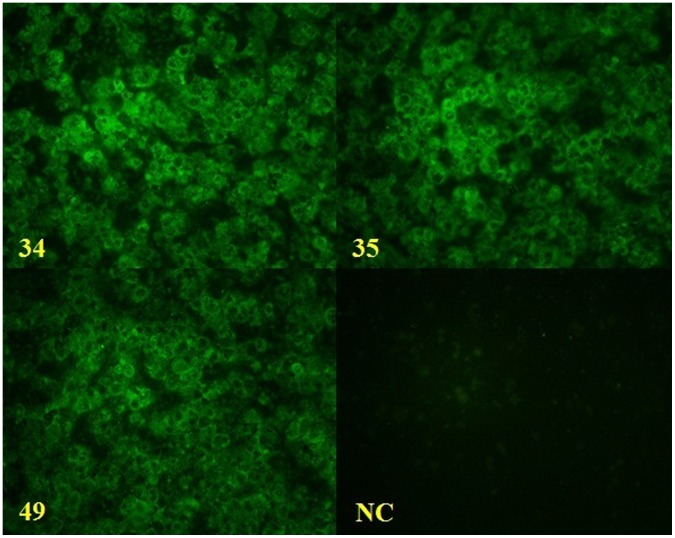
Methods: From March 2007 to July 2009 collections of larvae and pupae of Aedes spp were carried out in 40 neighborhoods of Fortaleza. The collections yielded 3,417 (91%) A. aegypti mosquitoes and 336 (9%) A. albopictus mosquitoes. Only pools containing females, randomly chosen, were submitted to the following tests indirect immunofluorescence (virus isolation), RT-PCR/nested-PCR and nucleotide sequencing at the C-prM junction of the dengue virus genome.
Results: The tests on pool 34 (35 A. albopictus mosquitoes) revealed with presence of DENV-3, pool 35 (50 A. aegypti mosquitoes) was found to be infected with DENV-2, while pool 49 (41 A. albopictus mosquitoes) revealed the simultaneous presence of DENV-2 and DENV-3. Based on the results obtained, there was a minimum infection rate of 0.5 for A. aegypti and 9.4 for A. albopictus. The fragments of 192 bp and 152 bp related to DENV-3, obtained from pools 34 and 49, was registered in GenBank with the access codes HM130699 and JF261696, respectively.
Conclusions: This study recorded the first natural evidence of the vertical transmission of the dengue virus in populations of A. aegypti and A. albopictus collected in Fortaleza, Ceará State, Brazil, opening a discuss on the epidemiological significance of this mechanism of viral transmission in the local scenario, particularly with respect to the maintenance of these viruses in nature during interepidemic periods.
Conflict of interest statement
Figures


References
-
- Kyle JL, Harris E. Global spread and persistence of dengue. Annu Rev Microbiol. 2008;62:71–92. - PubMed
-
- World Health Organization. Dengue and Dengue haemorrhagic fever. Fact sheet No. 117, Geneva. 2009.
-
- Teixeira MG, Costa MCN, Barreto F, Barreto ML. Dengue: vinte e cinco anos da reemergência no Brasil. Cad. Saúde Pública, Rio de Janeiro, 25 Sup. 2009;1:S7–S18. - PubMed
-
- Fortaleza Municipality Health. Plano de Contingência para o Controle da Dengue no Município de Fortaleza. Available: http//sms.fortaleza.ce.gov.br/sms. Accessed 11 Oct 2010. 2009.
-
- Chambers TJ, Hahn C, Galler R, Rice CM. Flavivirus genome organization, expression and replication. Annu Rev Microbiol. 1990;44:649–688. - PubMed
Publication types
MeSH terms
LinkOut - more resources
Full Text Sources
Miscellaneous
