


Long chain polyunsaturated fatty acids alter oxytocin signaling and receptor density in cultured pregnant human myometrial smooth muscle cells
- PMID: 22848573
- PMCID: PMC3406084
- DOI: 10.1371/journal.pone.0041708
Long chain polyunsaturated fatty acids alter oxytocin signaling and receptor density in cultured pregnant human myometrial smooth muscle cells
Abstract
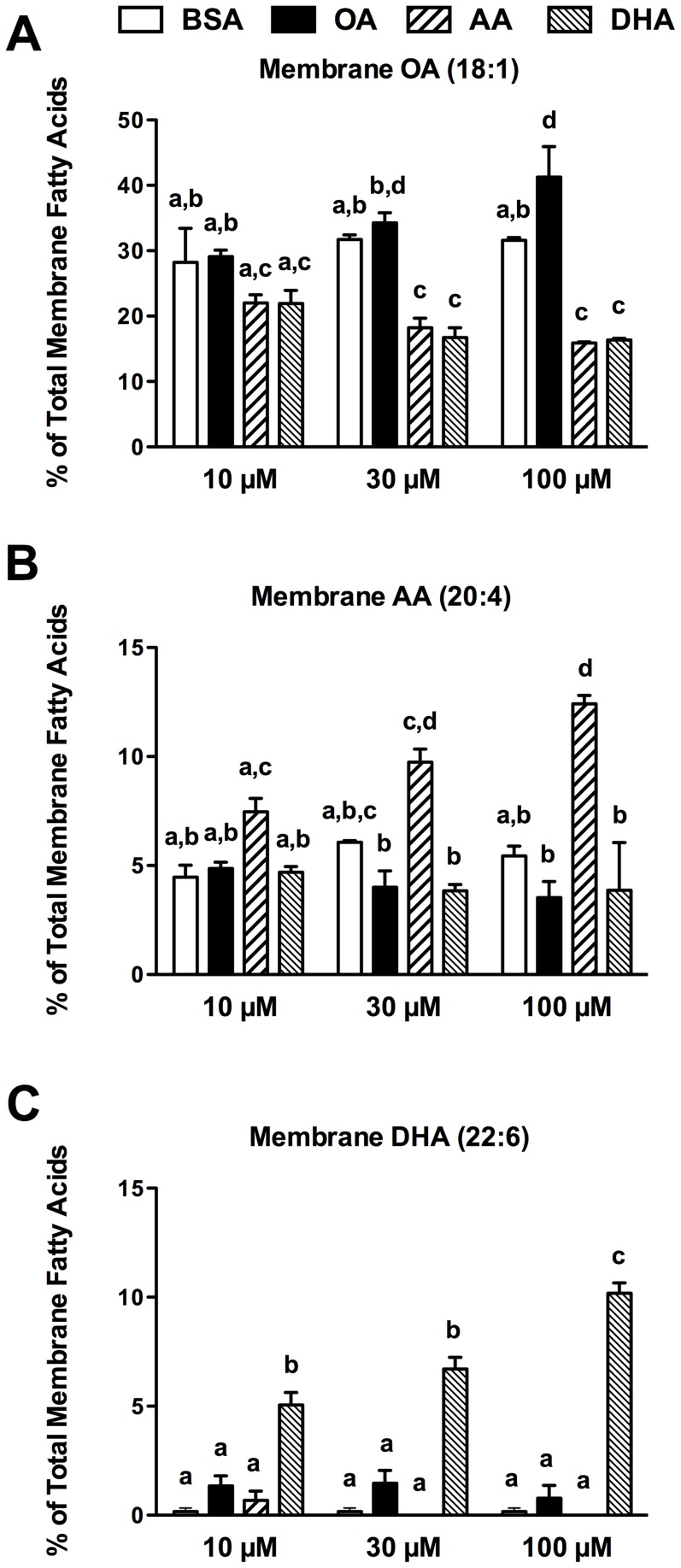
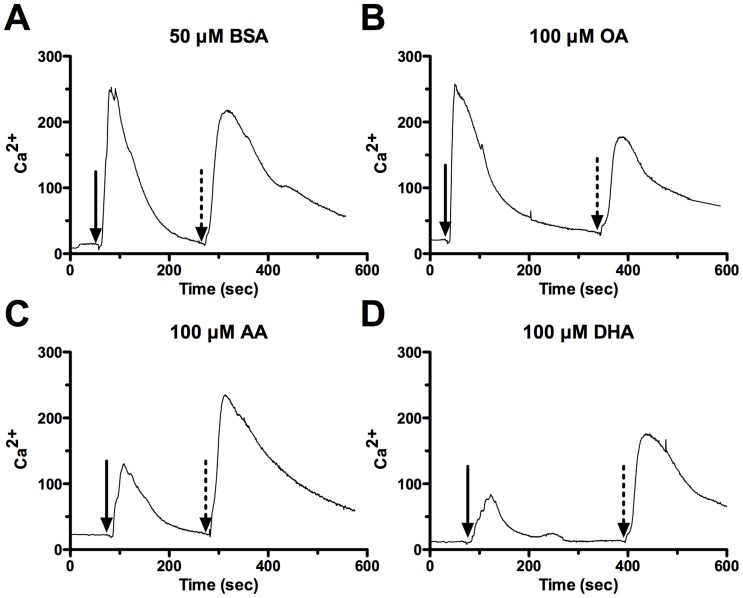
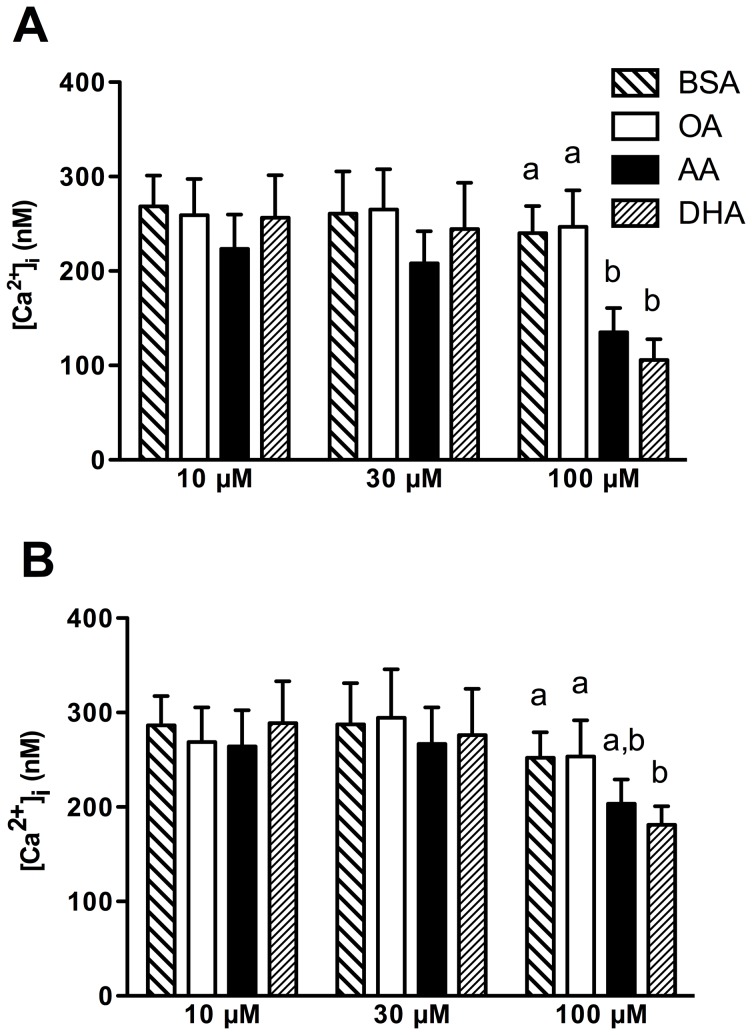
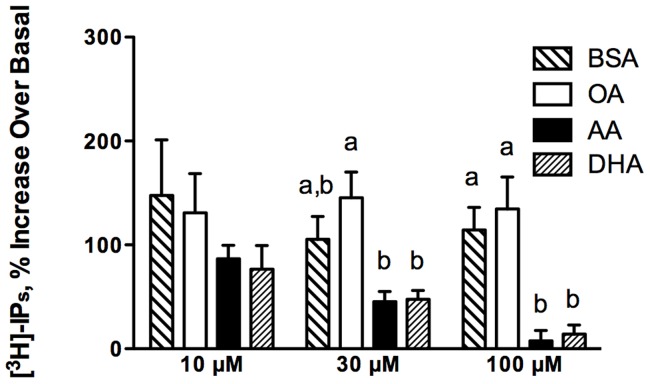
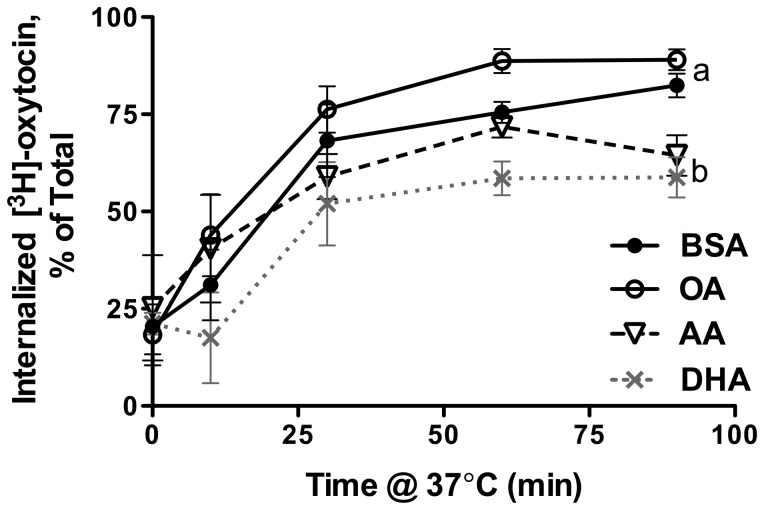
Epidemiological studies and interventional clinical trials indicate that consumption of long chain n-3 polyunsaturated fatty acids (LC n-3 PUFA) such as docosahexaenoic acid (DHA) lengthen gestational duration. Although the mechanisms are not well understood, prostaglandins (PG) of the 2-series are known to play a role in the initiation and progress of labor. In animal studies, modest DHA provision has been shown to reduce placental and uterine PGE(2) and PGF(2α), matrix metalloproteinase (MMP)-2 and MMP-9 expression, and placental collagenase activity. However, modulation of PG biosynthesis may not account for all the effects of LC n-3 PUFAs in labor. We investigated one potential PG-independent mechanism of LC PUFA action using cultured pregnant human myometrial smooth muscle cells. Our goal was to characterize the effect of LC PUFA treatment on oxytocin signaling, a potent uterotonic hormone involved in labor. The addition of 10 µM-100 µM DHA or arachidonic acid (AA) to the culture media for 48 h resulted in dose dependent enrichment of these fatty acids in membrane lipid. DHA and AA significantly inhibited phosphatidylinositol turnover and [Ca(2+)](i) mobilization with oxytocin stimulation compared to bovine serum albumin control and equimolar oleic acid. DHA and AA significantly reduced oxytocin receptor membrane concentration without altering binding affinity or rate of receptor internalization. These findings demonstrate a role for LC n-3 PUFAs in regulation of oxytocin signaling and provide new insight into additional mechanisms pertaining to reports of dietary fish and fish oil consumption prolonging gestation.
Conflict of interest statement
Figures
References
-
- Hamilton BE, Martin JA, Ventura SJ (2011) Births: preliminary data for 2010. Natl Vital Stat Rep 60 (2):1–36. - PubMed
-
- Davidoff MJ, Dias T, Damus K, Russell R, Bettegowda VR, et al. (2006) Changes in the gestational age distribution among U.S. singleton births: impact on rates of late preterm birth, 1992 to 2002. Semin Perinatol 30 (1):8–15. - PubMed
-
- McCormick MC (1985) The contribution of low birth weight to infant mortality and childhood morbidity. N Engl J Med 312 (2):82–90. - PubMed
-
- Kramer MS, Demissie K, Yang H, Platt RW, Sauve R, et al. (2000) The contribution of mild and moderate preterm birth to infant mortality. Fetal and Infant Health Study Group of the Canadian Perinatal Surveillance System. Jama 284 (7):843–849. - PubMed
-
- Allen KG, Harris MA (2001) The role of n-3 fatty acids in gestation and parturition. Exp Biol Med (Maywood) 226 (6):498–506. - PubMed
Publication types
MeSH terms
Substances
Grants and funding
LinkOut - more resources
Full Text Sources
Miscellaneous
