


PGC-1α is dispensable for exercise-induced mitochondrial biogenesis in skeletal muscle
- PMID: 22848618
- PMCID: PMC3404101
- DOI: 10.1371/journal.pone.0041817
PGC-1α is dispensable for exercise-induced mitochondrial biogenesis in skeletal muscle
Abstract
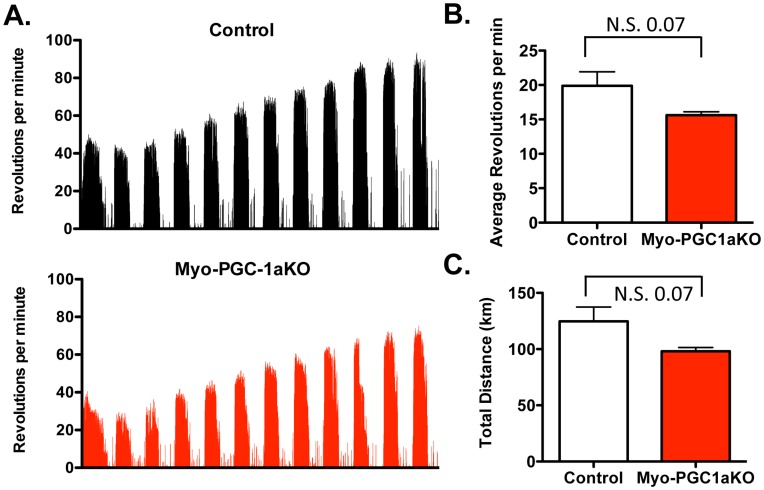
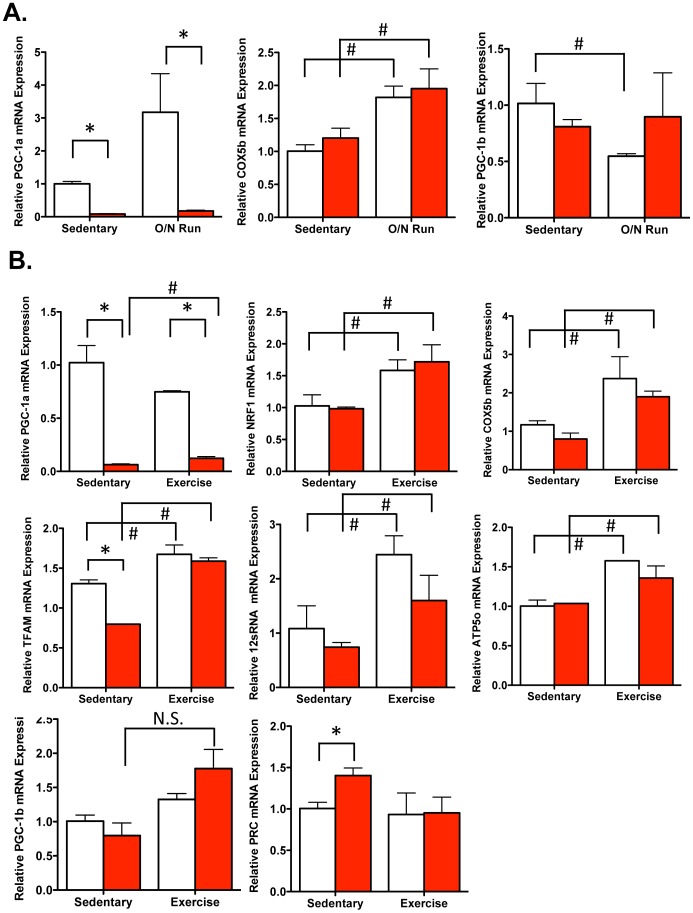
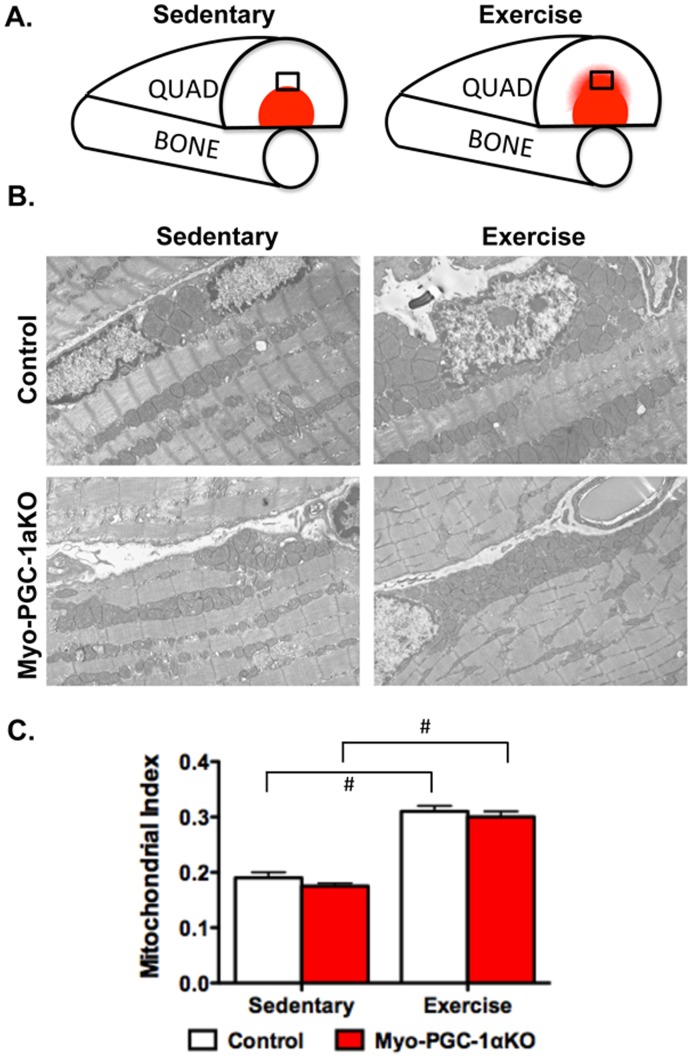
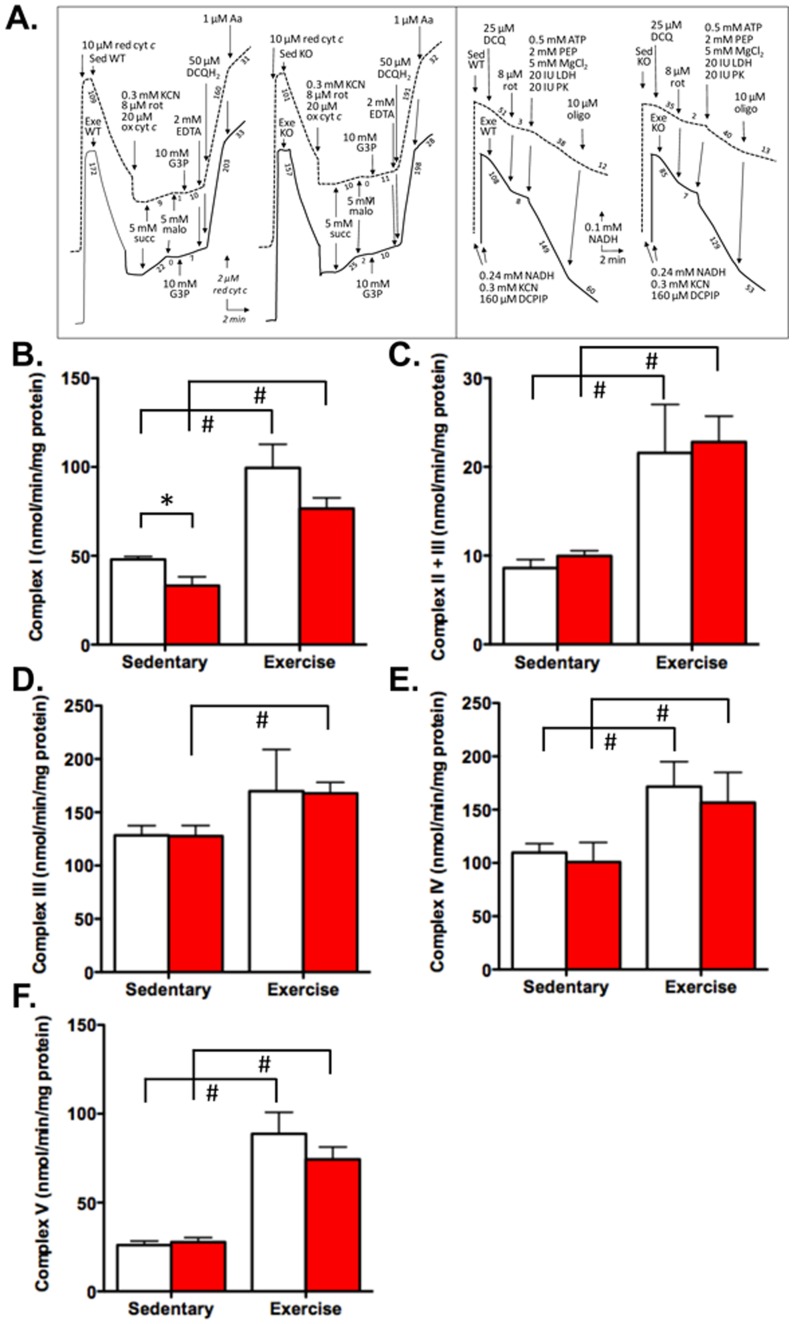
Exercise confers numerous health benefits, many of which are thought to stem from exercise-induced mitochondrial biogenesis (EIMB) in skeletal muscle. The transcriptional coactivator PGC-1α, a potent regulator of metabolism in numerous tissues, is widely believed to be required for EIMB. We show here that this is not the case. Mice engineered to lack PGC-1α specifically in skeletal muscle (Myo-PGC-1αKO mice) retained intact EIMB. The exercise capacity of these mice was comparable to littermate controls. Induction of metabolic genes after 2 weeks of in-cage voluntary wheel running was intact. Electron microscopy revealed no gross abnormalities in mitochondria, and the mitochondrial biogenic response to endurance exercise was as robust in Myo-PGC-1αKO mice as in wildtype mice. The induction of enzymatic activity of the electron transport chain by exercise was likewise unperturbed in Myo-PGC-1αKO mice. These data demonstrate that PGC-1α is dispensable for exercise-induced mitochondrial biogenesis in skeletal muscle, in sharp contrast to the prevalent assumption in the field.
Conflict of interest statement
Figures
References
-
- Gollnick PD, King DW. Effect of exercise and training on mitochondria of rat skeletal muscle. The American journal of physiology. 1969;216:1502–1509. - PubMed
-
- Freyssenet D, Berthon P, Denis C. Mitochondrial biogenesis in skeletal muscle in response to endurance exercises. Arch Physiol Biochem. 1996;104:129–141. - PubMed
-
- Little JP, Safdar A, Benton CR, Wright DC. Skeletal muscle and beyond: the role of exercise as a mediator of systemic mitochondrial biogenesis. Applied physiology, nutrition, and metabolism = Physiologie appliquee, nutrition et metabolisme. 2011;36:598–607. - PubMed
-
- Ostergard T, Andersen JL, Nyholm B, Lund S, Nair KS, et al. Impact of exercise training on insulin sensitivity, physical fitness, and muscle oxidative capacity in first-degree relatives of type 2 diabetic patients. American journal of physiology Endocrinology and metabolism. 2006;290:E998–1005. - PubMed
Publication types
MeSH terms
Substances
Grants and funding
LinkOut - more resources
Full Text Sources
Other Literature Sources
Molecular Biology Databases
