


Safety of the recombinant cholera toxin B subunit, killed whole-cell (rBS-WC) oral cholera vaccine in pregnancy
- PMID: 22848772
- PMCID: PMC3404114
- DOI: 10.1371/journal.pntd.0001743
Safety of the recombinant cholera toxin B subunit, killed whole-cell (rBS-WC) oral cholera vaccine in pregnancy
Abstract
Introduction: Mass vaccinations are a main strategy in the deployment of oral cholera vaccines. Campaigns avoid giving vaccine to pregnant women because of the absence of safety data of the killed whole-cell oral cholera (rBS-WC) vaccine. Balancing this concern is the known higher risk of cholera and of complications of pregnancy should cholera occur in these women, as well as the lack of expected adverse events from a killed oral bacterial vaccine.
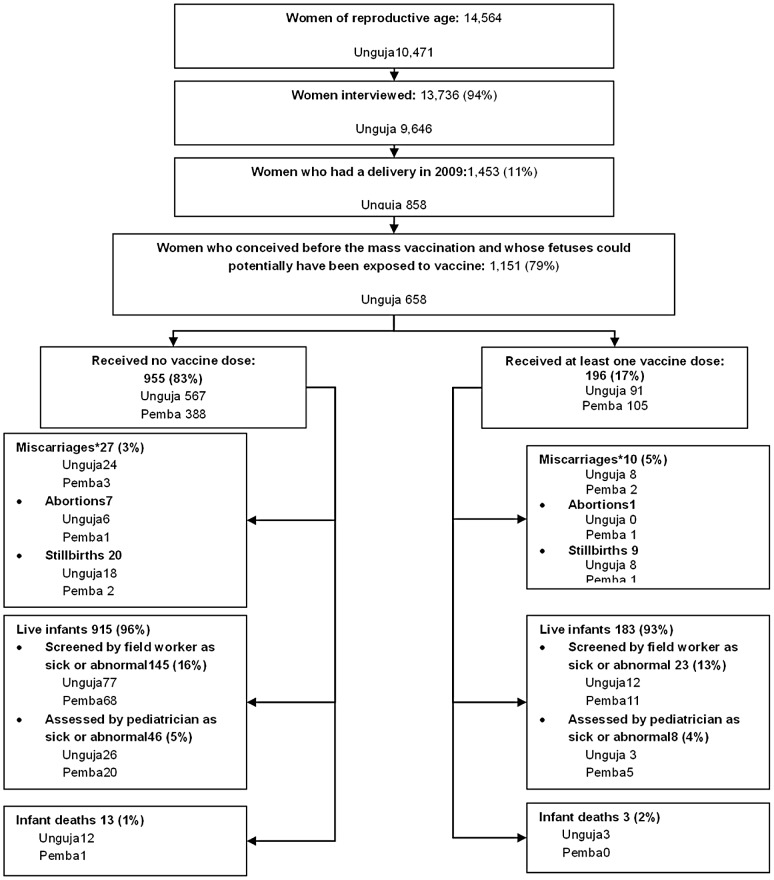
Methodology/principal findings: From January to February 2009, a mass rBS-WC vaccination campaign of persons over two years of age was conducted in an urban and a rural area (population 51,151) in Zanzibar. Pregnant women were advised not to participate in the campaign. More than nine months after the last dose of the vaccine was administered, we visited all women between 15 and 50 years of age living in the study area. The outcome of pregnancies that were inadvertently exposed to at least one oral cholera vaccine dose and those that were not exposed was evaluated. 13,736 (94%) of the target women in the study site were interviewed. 1,151 (79%) of the 1,453 deliveries in 2009 occurred during the period when foetal exposure to the vaccine could have occurred. 955 (83%) out of these 1,151 mothers had not been vaccinated; the remaining 196 (17%) mothers had received at least one dose of the oral cholera vaccine. There were no statistically significant differences in the odds ratios for birth outcomes among the exposed and unexposed pregnancies.
Conclusions/significance: We found no statistically significant evidence of a harmful effect of gestational exposure to the rBS-WC vaccine. These findings, along with the absence of a rational basis for expecting a risk from this killed oral bacterial vaccine, are reassuring but the study had insufficient power to detect infrequent events.
Trial registration: ClinicalTrials.gov NCT00709410.
Conflict of interest statement
The authors have declared that no competing interests exist.
Figures
References
-
- Clemens JD, Sack DA, Harris JR, Chakraborty J, Khan MR, et al. Field trial of oral cholera vaccines in Bangladesh. Lancet. 1986;2:124–127. - PubMed
-
- Clemens JD, Sack DA, Harris JR, Van Loon F, Chakraborty J, et al. Field trial of oral cholera vaccines in Bangladesh: results from three-year follow-up. Lancet. 1990;335:270–273. - PubMed
-
- Lucas ME, Deen JL, von Seidlein L, Wang XY, Ampuero J, et al. Effectiveness of mass oral cholera vaccination in Beira, Mozambique. N Engl J Med. 2005;352:757–767. - PubMed
-
- Jelinek T, Kollaritsch H. Vaccination with Dukoral against travelers' diarrhea (ETEC) and cholera. Expert Rev Vaccines. 2008;7:561–567. - PubMed
-
- WHO. Meeting of the Diarrhoeal and Enteric Vaccines Advisory Committee, October 2008–executive summary. Wkly Epidemiol Rec. 2009;84:30–36. - PubMed
Publication types
MeSH terms
Substances
Associated data
LinkOut - more resources
Full Text Sources
Medical
