


Regulation of adherens junction dynamics by phosphorylation switches
- PMID: 22848810
- PMCID: PMC3403498
- DOI: 10.1155/2012/125295
Regulation of adherens junction dynamics by phosphorylation switches
Abstract
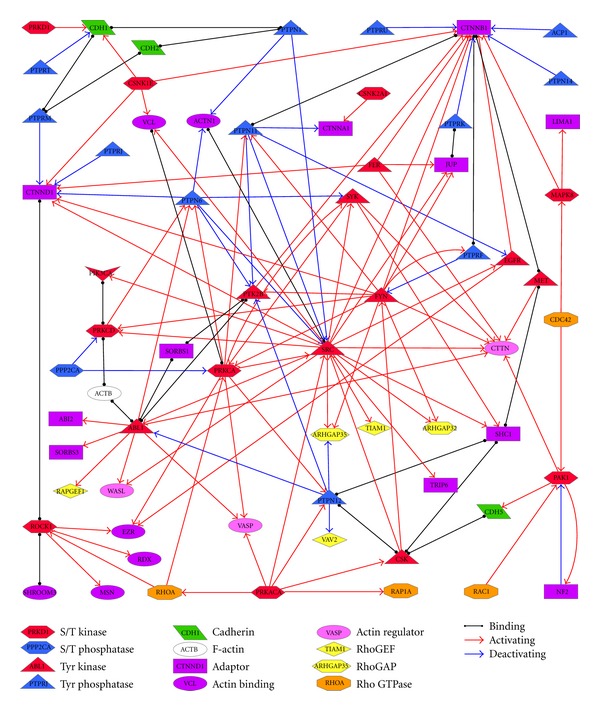
Adherens junctions connect the actin cytoskeleton of neighboring cells through transmembrane cadherin receptors and a network of adaptor proteins. The interactions between these adaptors and cadherin as well as the activity of actin regulators localized to adherens junctions are tightly controlled to facilitate cell junction assembly or disassembly in response to changes in external or internal forces and/or signaling. Phosphorylation of tyrosine, serine, or threonine residues acts as a switch on the majority of adherens junction proteins, turning "on" or "off" their interactions with other proteins and/or their enzymatic activity. Here, we provide an overview of the kinases and phosphatases regulating phosphorylation of adherens junction proteins and bring examples of phosphorylation events leading to the assembly or disassembly of adherens junctions, highlighting the important role of phosphorylation switches in regulating their dynamics.
Figures
References
-
- Takeichi M. Cadherin cell adhesion receptors as a morphogenetic regulator. Science. 1991;251(5000):1451–1455. - PubMed
-
- St Johnston D, Sanson B. Epithelial polarity and morphogenesis. Current Opinion in Cell Biology. 2011;23(5):540–546. - PubMed
-
- Yonemura S, Wada Y, Watanabe T, Nagafuchi A, Shibata M. α-Catenin as a tension transducer that induces adherens junction development. Nature Cell Biology. 2010;12(6):533–542. - PubMed
LinkOut - more resources
Full Text Sources
