


Receptor tyrosine kinases: molecular switches regulating CNS axon regeneration
- PMID: 22848811
- PMCID: PMC3405719
- DOI: 10.1155/2012/361721
Receptor tyrosine kinases: molecular switches regulating CNS axon regeneration
Abstract
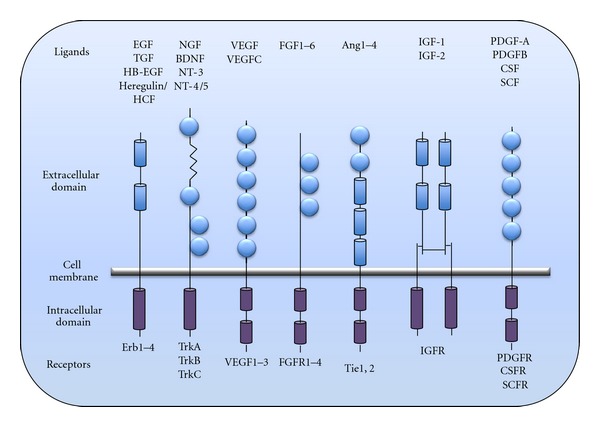
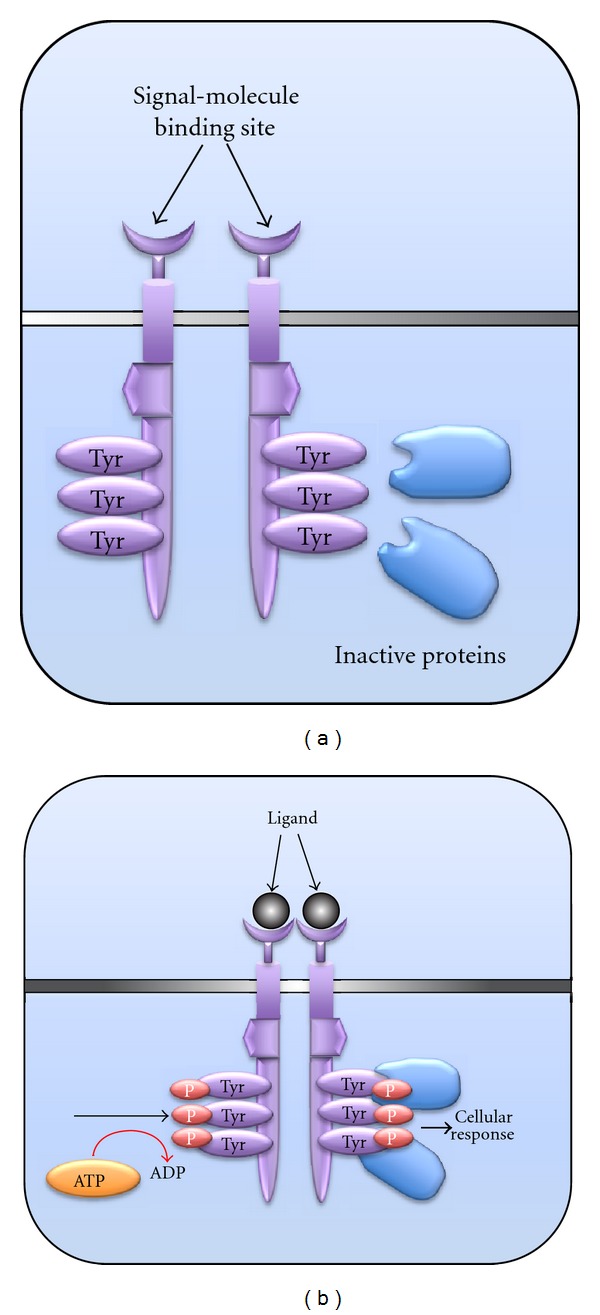
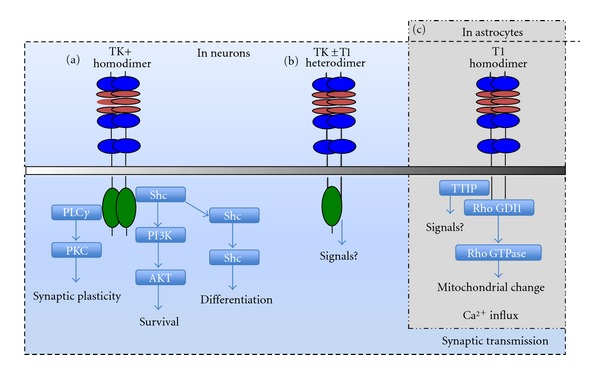
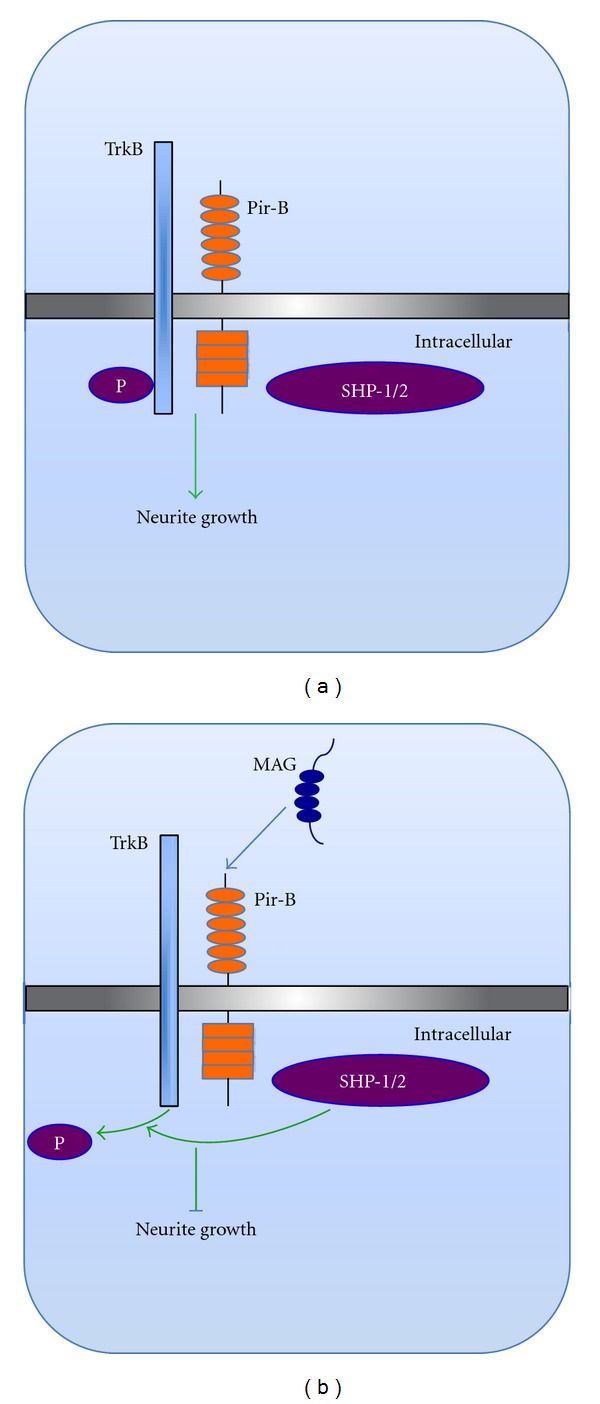
The poor or lack of injured adult central nervous system (CNS) axon regeneration results in devastating consequences and poor functional recovery. The interplay between the intrinsic and extrinsic factors contributes to robust inhibition of axon regeneration of injured CNS neurons. The insufficient or lack of trophic support for injured neurons is considered as one of the major obstacles contributing to their failure to survive and regrow their axons after injury. In the CNS, many of the signalling pathways associated with neuronal survival and axon regeneration are regulated by several classes of receptor tyrosine kinases (RTK) that respond to a variety of ligands. This paper highlights and summarises the most relevant recent findings pertinent to different classes of the RTK family of molecules, with a particular focus on elucidating their role in CNS axon regeneration.
Figures
References
-
- Li Y, Raisman G. Sprouts from cut corticospinal axons persist in the presence of astrocytic scarring in long-term lesions of the adult rat spinal cord. Experimental Neurology. 1995;134(1):102–111. - PubMed
-
- Horner PJ, Gage FH. Regenerating the damaged central nervous system. Nature. 2000;407(6807):963–970. - PubMed
-
- Cao Z, Gao Y, Deng K, Williams G, Doherty P, Walsh FS. Receptors for myelin inhibitors: structures and therapeutic opportunities. Molecular and Cellular Neuroscience. 2010;43(1):1–14. - PubMed
Grants and funding
LinkOut - more resources
Full Text Sources
