


PGI2 as a regulator of inflammatory diseases
- PMID: 22851816
- PMCID: PMC3407649
- DOI: 10.1155/2012/926968
PGI2 as a regulator of inflammatory diseases
Abstract
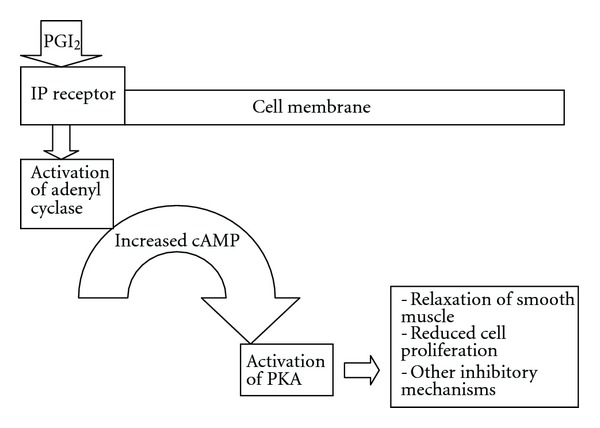
Prostacyclin, or PGI(2), is an end product derived from the sequential metabolism of arachidonic acid via cyclooxygenase and PGI synthase (PGIS). The receptor for PGI(2), IP, can be found on a variety of cell types and signaling through this receptor exhibits broad physiological effects. Historically, PGI(2) has been understood to play a role in cardiovascular health, specifically having powerful vasodilatory effects via relaxation of smooth muscle and inhibiting of platelet aggregation. For these reasons, PGI(2) has a long history of use for the treatment of pulmonary arterial hypertension (PAH). Only recently, its importance as an immunomodulatory agent has been investigated. PGI(2) regulates both the innate and adaptive immune systems and its effects are, for the most part, thought to be anti-inflammatory or immunosuppressive in nature, which may have implications for its further clinical use.
References
-
- Needleman P, Moncada S, Bunting S, Vane JR, Hamberg M, Samuelsson B. Identification of an enzyme in platelet microsomes which generates thromboxane A2 from prostaglandin endoperoxides. Nature. 1976;261(5561):558–560. - PubMed
-
- Camacho M, Rodríguez C, Salazar J, et al. Retinoic acid induces PGI synthase expression in human endothelial cells. Journal of Lipid Research. 2008;49(8):1707–1714. - PubMed
-
- Jaffar Z, Wan KS, Roberts K. A key role for prostaglandin I2 in limiting lung mucosal Th2, but not Th1, responses to inhaled allergen. Journal of Immunology. 2002;169(10):5997–6004. - PubMed
Publication types
MeSH terms
Substances
Grants and funding
LinkOut - more resources
Full Text Sources
Other Literature Sources
Medical
