


Current knowledge on esophageal atresia
- PMID: 22851858
- PMCID: PMC3406418
- DOI: 10.3748/wjg.v18.i28.3662
Current knowledge on esophageal atresia
Abstract
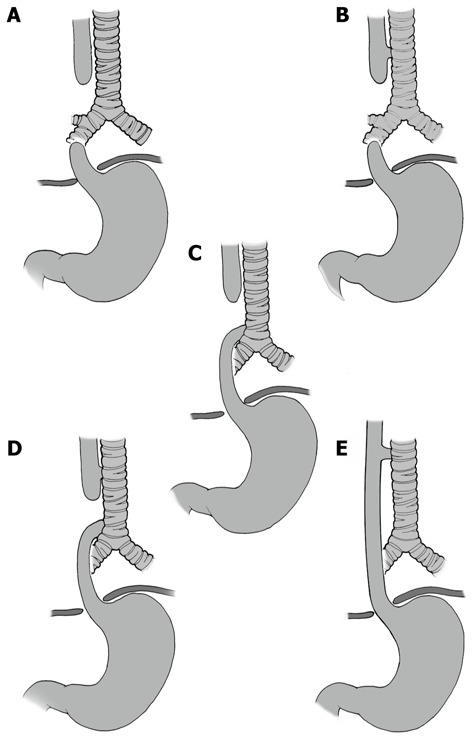
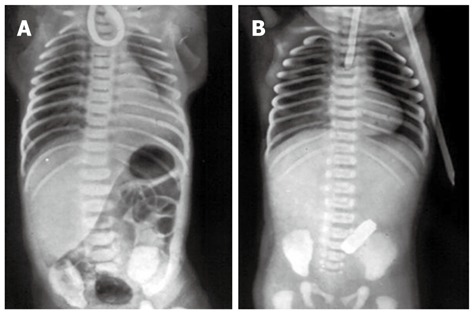
Esophageal atresia (EA) with or without tracheoesophageal fistula (TEF) is the most common congenital anomaly of the esophagus. The improvement of survival observed over the previous two decades is multifactorial and largely attributable to advances in neonatal intensive care, neonatal anesthesia, ventilatory and nutritional support, antibiotics, early surgical intervention, surgical materials and techniques. Indeed, mortality is currently limited to those cases with coexisting severe life-threatening anomalies. The diagnosis of EA is most commonly made during the first 24 h of life but may occur either antenatally or may be delayed. The primary surgical correction for EA and TEF is the best option in the absence of severe malformations. There is no ideal replacement for the esophagus and the optimal surgical treatment for patients with long-gap EA is still controversial. The primary complications during the postoperative period are leak and stenosis of the anastomosis, gastro-esophageal reflux, esophageal dysmotility, fistula recurrence, respiratory disorders and deformities of the thoracic wall. Data regarding long-term outcomes and follow-ups are limited for patients following EA/TEF repair. The determination of the risk factors for the complicated evolution following EA/TEF repair may positively impact long-term prognoses. Much remains to be studied regarding this condition. This manuscript provides a literature review of the current knowledge regarding EA.
Keywords: Esophageal atresia; Esophageal stenosis; Gastro-esophageal reflux; Long-gap; Tracheoesophageal fistula.
Figures
References
-
- Mortell AE, Azizkhan RG. Esophageal atresia repair with thoracotomy: the Cincinnati contemporary experience. Semin Pediatr Surg. 2009;18:12–19. - PubMed
-
- Spitz L. Esophageal atresia. Lessons I have learned in a 40-year experience. J Pediatr Surg. 2006;41:1635–1640. - PubMed
-
- Kovesi T, Rubin S. Long-term complications of congenital esophageal atresia and/or tracheoesophageal fistula. Chest. 2004;126:915–925. - PubMed
-
- Grosfeld JL, Ladd AP. Anomalias congênitas. In: Silva ACS e, Pereira RM, Pinheiro PFM., editors. Cirurgia Pediátrica-Condutas clínicas e cirúrgicas. Rio de Janeiro: Guanabara Koogan; 2005. pp. 291–298.
Publication types
MeSH terms
LinkOut - more resources
Full Text Sources
Other Literature Sources
Medical
Miscellaneous
