


Exploiting the nephrotoxic effects of venom from the sea anemone, Phyllodiscus semoni, to create a hemolytic uremic syndrome model in the rat
- PMID: 22851928
- PMCID: PMC3407933
- DOI: 10.3390/md10071582
Exploiting the nephrotoxic effects of venom from the sea anemone, Phyllodiscus semoni, to create a hemolytic uremic syndrome model in the rat
Abstract
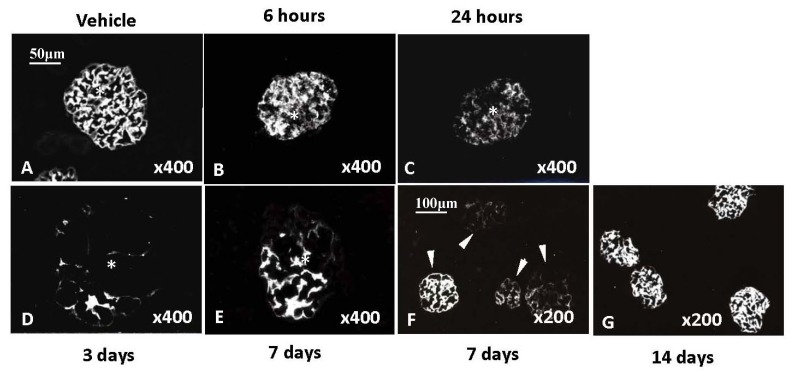
In the natural world, there are many creatures with venoms that have interesting and varied activities. Although the sea anemone, a member of the phylum Coelenterata, has venom that it uses to capture and immobilise small fishes and shrimp and for protection from predators, most sea anemones are harmless to man. However, a few species are highly toxic; some have venoms containing neurotoxins, recently suggested as potential immune-modulators for therapeutic application in immune diseases. Phyllodiscus semoni is a highly toxic sea anemone; the venom has multiple effects, including lethality, hemolysis and renal injuries. We previously reported that venom extracted from Phyllodiscus semoni induced acute glomerular endothelial injuries in rats resembling hemolytic uremic syndrome (HUS), accompanied with complement dysregulation in glomeruli and suggested that the model might be useful for analyses of pathology and development of therapeutic approaches in HUS. In this mini-review, we describe in detail the venom-induced acute renal injuries in rat and summarize how the venom of Phyllodiscus semoni could have potential as a tool for analyses of complement activation and therapeutic interventions in HUS.
Keywords: complement; complement regulators; hemolytic uremic syndrome; marine envenomation; renal failure; sea anemone.
Figures


References
-
- Ratcliffe P.J., Pukrittayakamee S., Ledingham J.G., Warrell D.A. Direct nephrotoxicity of Russell’s viper venom demonstrated in the isolated perfused rat kidney. Am. J. Trop. Med. Hyg. 1989;40:312–319. - PubMed
-
- Yamamoto C., Tsuru D., Oda-Ueda N., Ohno M., Hattori S., Kim S.T. Flavoxobin, a serine protease from Trimeresurus flavoviridis (habu snake) venom, independently cleaves Arg726–Ser727 of human C3 and acts as a novel, heterologous C3 convertase. Immunology. 2002;107:111–117. doi: 10.1046/j.1365-2567.2002.01490.x. - DOI - PMC - PubMed
-
- Luciano M.N., da Silva P.H., Chaim O.M., dos Santos V.L., Franco C.R., Soares M.F., Zanata S.M., Mangili O.C., Gremski W., Veiga S.S. Experimental evidence for a direct cytotoxicity of Loxosceles intermedia (brown spider) venom in renal tissue. J. Histochem. Cytochem. 2004;52:455–467. doi: 10.1177/002215540405200404. - DOI - PubMed
-
- Tambourgi D.V., de F Fernandes Pedrosa M., van den Berg C.W., Gonçalves-de-Andrade R.M., Ferracini M., Paixão-Cavalcante D., Morgan B.P., Rushmere N.K. Molecular cloning, expression, function and immunoreactivities of members of a gene family of sphingomyelinases from Loxosceles venom glands. Mol. Immunol. 2004;41:831–840. doi: 10.1016/j.molimm.2004.03.027. - DOI - PubMed
Publication types
MeSH terms
Substances
LinkOut - more resources
Full Text Sources
