


On the self-stigma of mental illness: stages, disclosure, and strategies for change
- PMID: 22854028
- PMCID: PMC3610943
- DOI: 10.1177/070674371205700804
On the self-stigma of mental illness: stages, disclosure, and strategies for change
Abstract
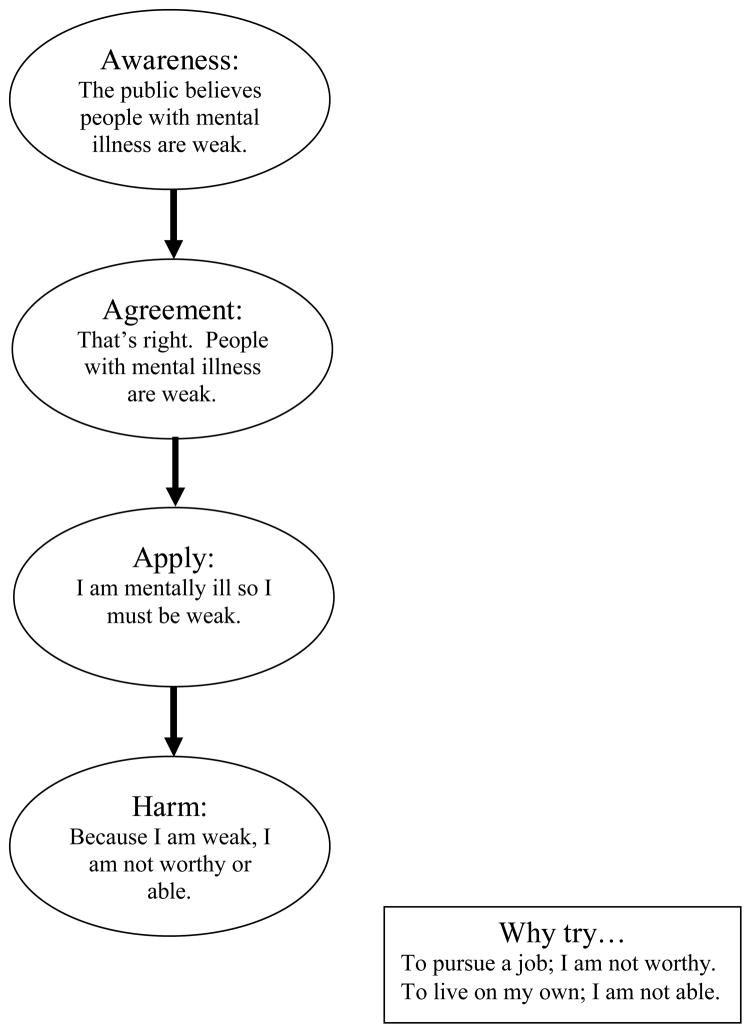
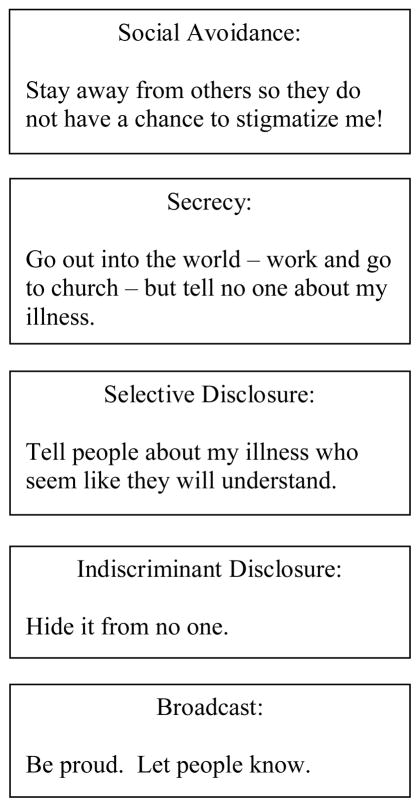
People with mental illness have long experienced prejudice and discrimination. Researchers have been able to study this phenomenon as stigma and have begun to examine ways of reducing this stigma. Public stigma is the most prominent form observed and studied, as it represents the prejudice and discrimination directed at a group by the larger population. Self-stigma occurs when people internalize these public attitudes and suffer numerous negative consequences as a result. In our article, we more fully define the concept of self-stigma and describe the negative consequences of self-stigma for people with mental illness. We also examine the advantages and disadvantages of disclosure in reducing the impact of stigma. In addition, we argue that a key to challenging self-stigma is to promote personal empowerment. Lastly, we discuss individual- and societal-level methods for reducing self-stigma, programs led by peers as well as those led by social service providers.
Figures
References
-
- Corrigan PW. On the stigma of mental illness: Practical strategies for research and social change. American Psychological Association; Washington DC: 2005.
-
- Corrigan PW, Watson A, Barr L. The self-stigma of mental illness: Implications for self-esteem and self-efficacy. Journal of Social & Clinical Psychology. 2006;25(9):875–884.
-
- Sirey JA, Bruce ML, Alexopoulos GS, et al. Stigma as a barrier to recovery: Perceived stigma and patient-rated severity of illness as predictors of antidepressant drug adherence. Psychiatric Services. 2001;52(12):1615–1620. - PubMed
Publication types
MeSH terms
Grants and funding
LinkOut - more resources
Full Text Sources
Medical
