


Fruit and vegetable intake and type 2 diabetes: EPIC-InterAct prospective study and meta-analysis
- PMID: 22854878
- PMCID: PMC3652306
- DOI: 10.1038/ejcn.2012.85
Fruit and vegetable intake and type 2 diabetes: EPIC-InterAct prospective study and meta-analysis
Abstract
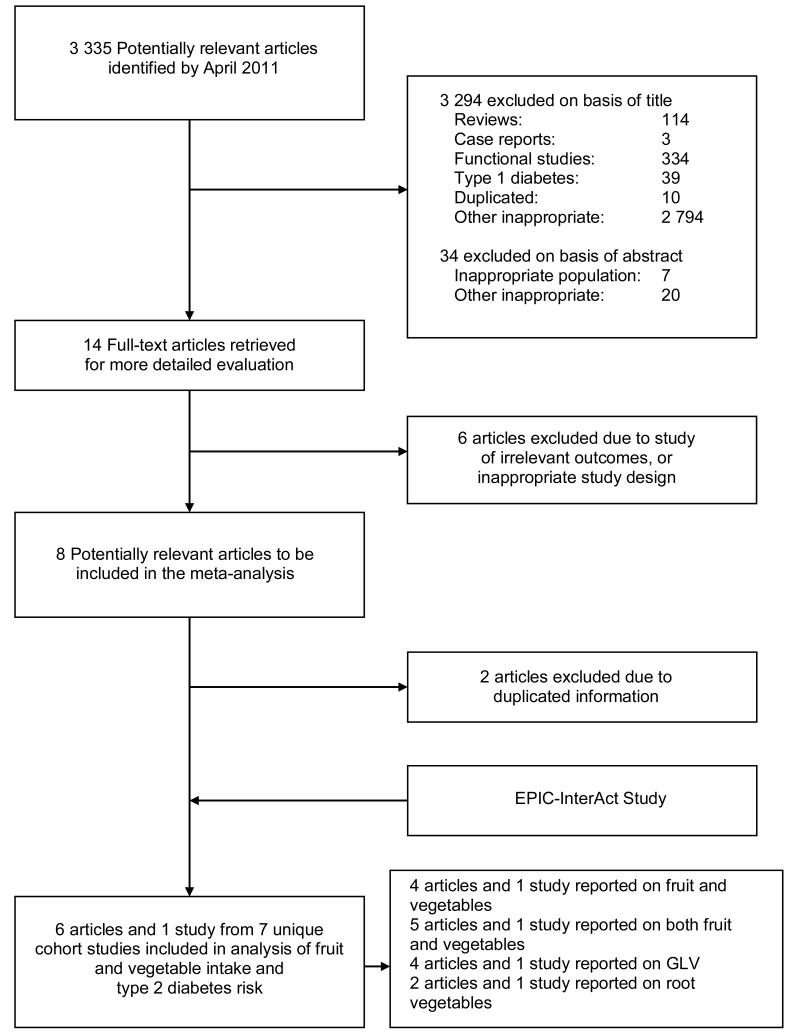
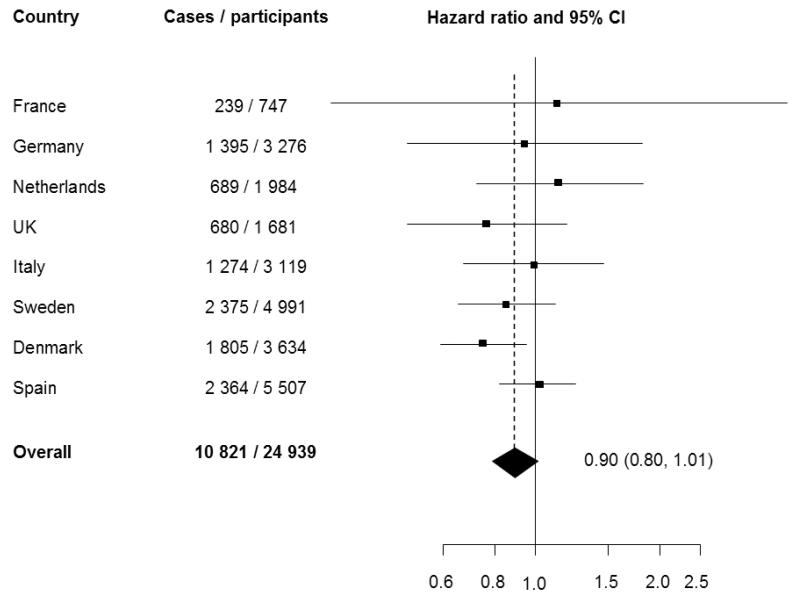
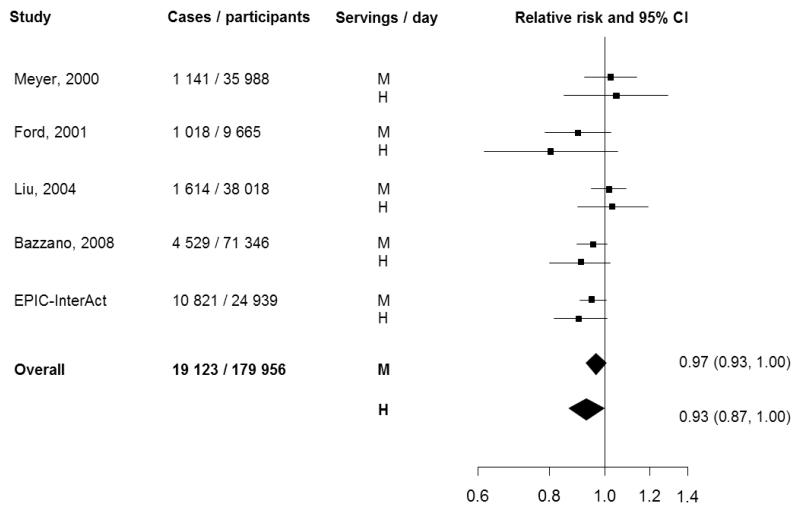
Fruit and vegetable intake (FVI) may reduce the risk of type 2 diabetes (T2D), but the epidemiological evidence is inconclusive. The aim of this study is to examine the prospective association of FVI with T2D and conduct an updated meta-analysis. In the European Prospective Investigation into Cancer-InterAct (EPIC-InterAct) prospective case-cohort study nested within eight European countries, a representative sample of 16,154 participants and 12,403 incident cases of T2D were identified from 340,234 individuals with 3.99 million person-years of follow-up. For the meta-analysis we identified prospective studies on FVI and T2D risk by systematic searches of MEDLINE and EMBASE until April 2011. In EPIC-InterAct, estimated FVI by dietary questionnaires varied more than twofold between countries. In adjusted analyses the hazard ratio (95% confidence interval) comparing the highest with lowest quartile of reported intake was 0.90 (0.80-1.01) for FVI; 0.89 (0.76-1.04) for fruit and 0.94 (0.84-1.05) for vegetables. Among FV subtypes, only root vegetables were inversely associated with diabetes 0.87 (0.77-0.99). In meta-analysis using pooled data from five studies including EPIC-InterAct, comparing the highest with lowest category for FVI was associated with a lower relative risk of diabetes (0.93 (0.87-1.00)). Fruit or vegetables separately were not associated with diabetes. Among FV subtypes, only green leafy vegetable (GLV) intake (relative risk: 0.84 (0.74-0.94)) was inversely associated with diabetes. Subtypes of vegetables, such as root vegetables or GLVs may be beneficial for the prevention of diabetes, while total FVI may exert a weaker overall effect.
Figures
References
-
- Shaw JE, Sicree RA, Zimmet PZ. Global estimates of the prevalence of diabetes for 2010 and 2030. Diabetes Res Clin Pract. 2010;87:4–14. - PubMed
-
- Barclay AW, Petocz P, McMillan-Price J, et al. Glycemic index, glycemic load, and chronic disease risk--a meta-analysis of observational studies. Am J Clin Nutr. 2008;87:627–37. - PubMed
-
- Larsson SC, Wolk A. Magnesium intake and risk of type 2 diabetes: a meta-analysis. J Intern Med. 2007;262:208–14. - PubMed
Publication types
MeSH terms
Grants and funding
LinkOut - more resources
Full Text Sources
Medical
Miscellaneous
