


Retrocyclin inhibits Gardnerella vaginalis biofilm formation and toxin activity
- PMID: 22855857
- PMCID: PMC3494843
- DOI: 10.1093/jac/dks305
Retrocyclin inhibits Gardnerella vaginalis biofilm formation and toxin activity
Abstract
Background: Retrocyclins are cyclic antimicrobial peptides that have been shown to be both broadly active and safe in animal models. RC-101, a synthetic retrocyclin, targets important human pathogens and is a candidate vaginal microbicide. Its activity against microbes associated with bacterial vaginosis is unknown.
Methods: We investigated the effect of RC-101 on toxin activity, bacterial growth and biofilm formation of Gardnerella vaginalis in vitro.
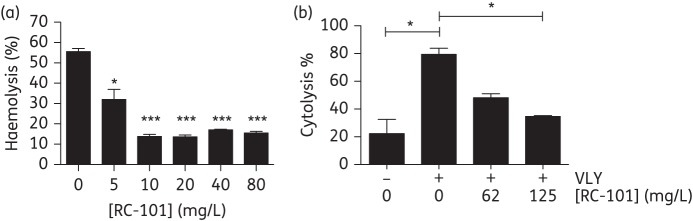
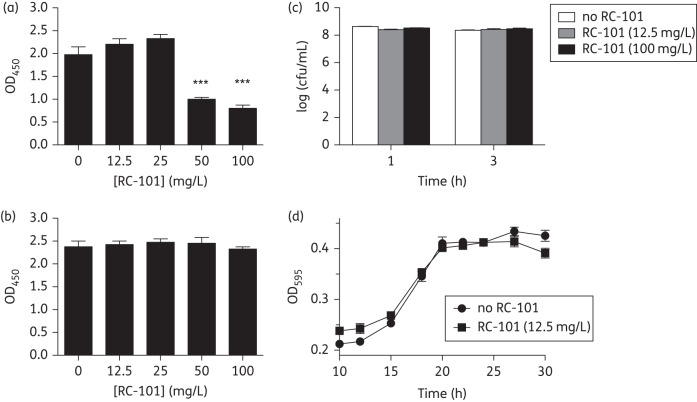
Results: RC-101 potently inhibits the cytolytic activity of vaginolysin, the Gardnerella vaginalis toxin, on both erythrocytes and nucleated cells. RC-101 lacks inhibitory activity against planktonic G. vaginalis but markedly decreases biofilm formation.
Conclusions: These dual properties, toxin inhibition and biofilm retardation, justify further exploration of RC-101 as a candidate agent for bacterial vaginosis prevention.
Figures
References
-
- Swidsinski A, Mendling W, Loening-Baucke V, et al. An adherent Gardnerella vaginalis biofilm persists on the vaginal epithelium after standard therapy with oral metronidazole. Am J Obstet Gynecol. 2008;198:97 e1–6. - PubMed
-
- Swidsinski A, Doerffel Y, Loening-Baucke V, et al. Gardnerella biofilm involves females and males and is transmitted sexually. Gynecol Obstet Invest. 2010;70:256–63. - PubMed
Publication types
MeSH terms
Substances
Grants and funding
LinkOut - more resources
Full Text Sources
Medical
