


Dorsal root ganglion neurons innervating pelvic organs in the mouse express tyrosine hydroxylase
- PMID: 22858598
- PMCID: PMC3491663
- DOI: 10.1016/j.neuroscience.2012.07.043
Dorsal root ganglion neurons innervating pelvic organs in the mouse express tyrosine hydroxylase
Abstract
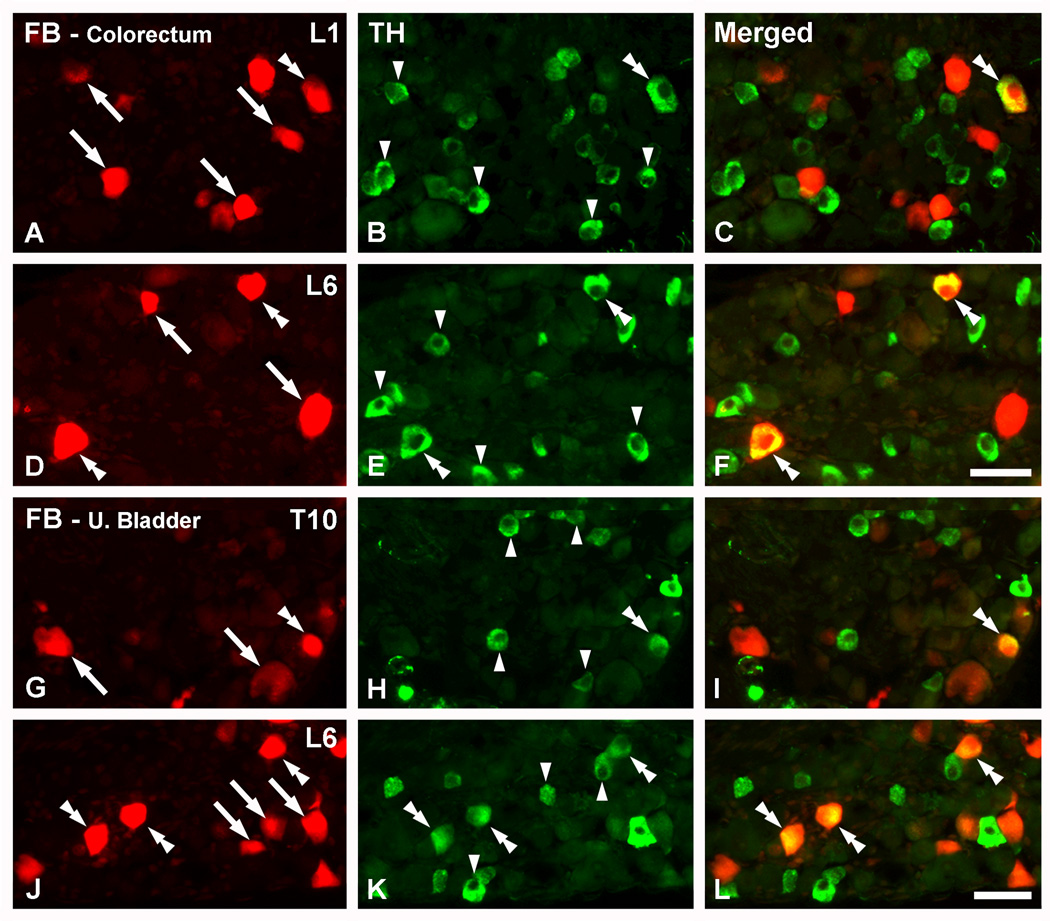
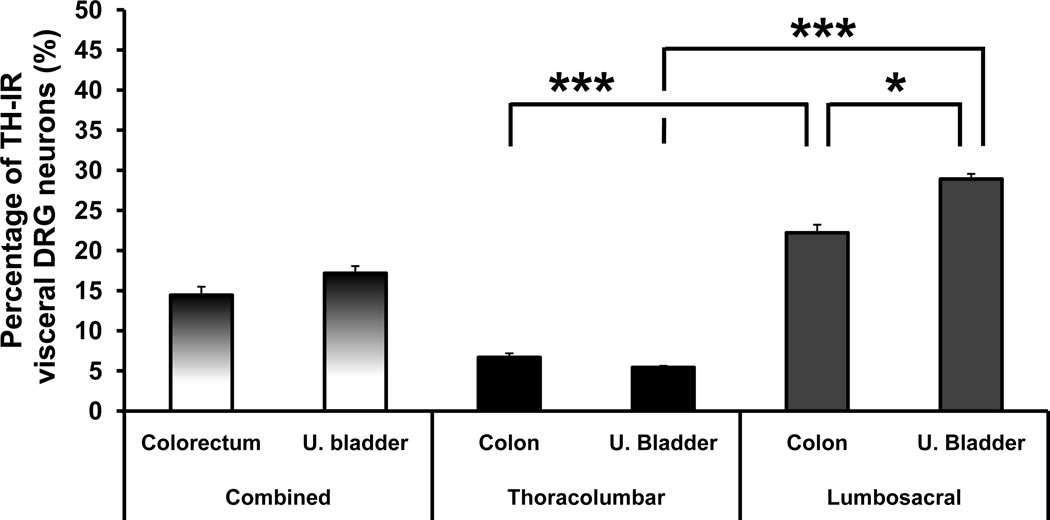
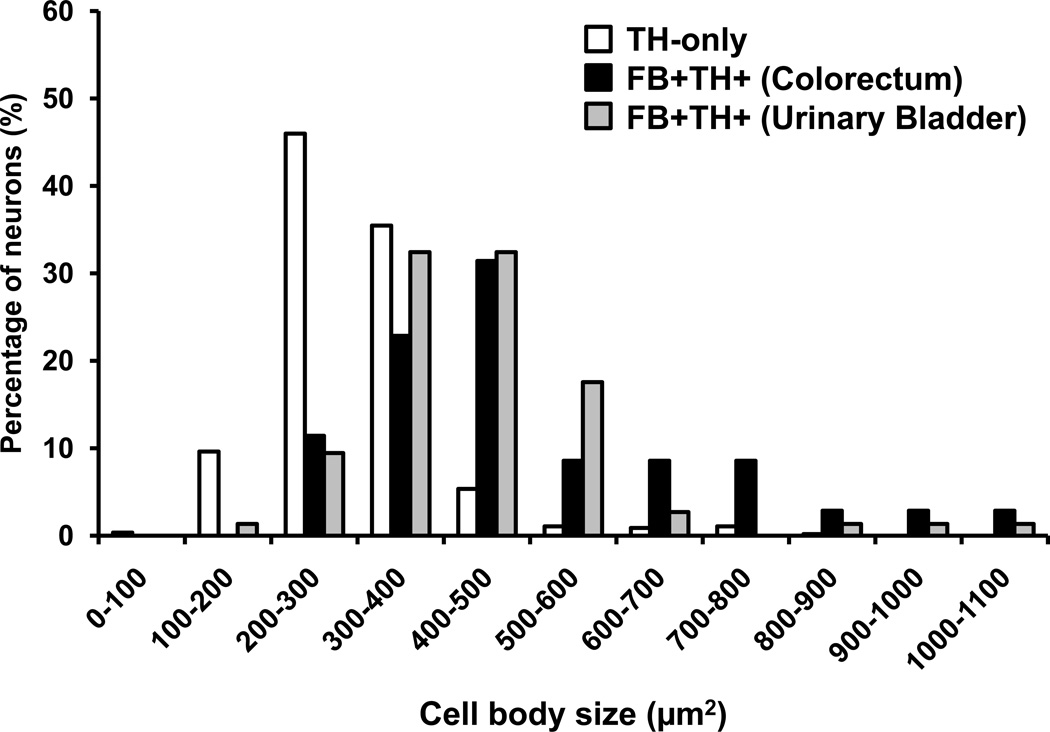
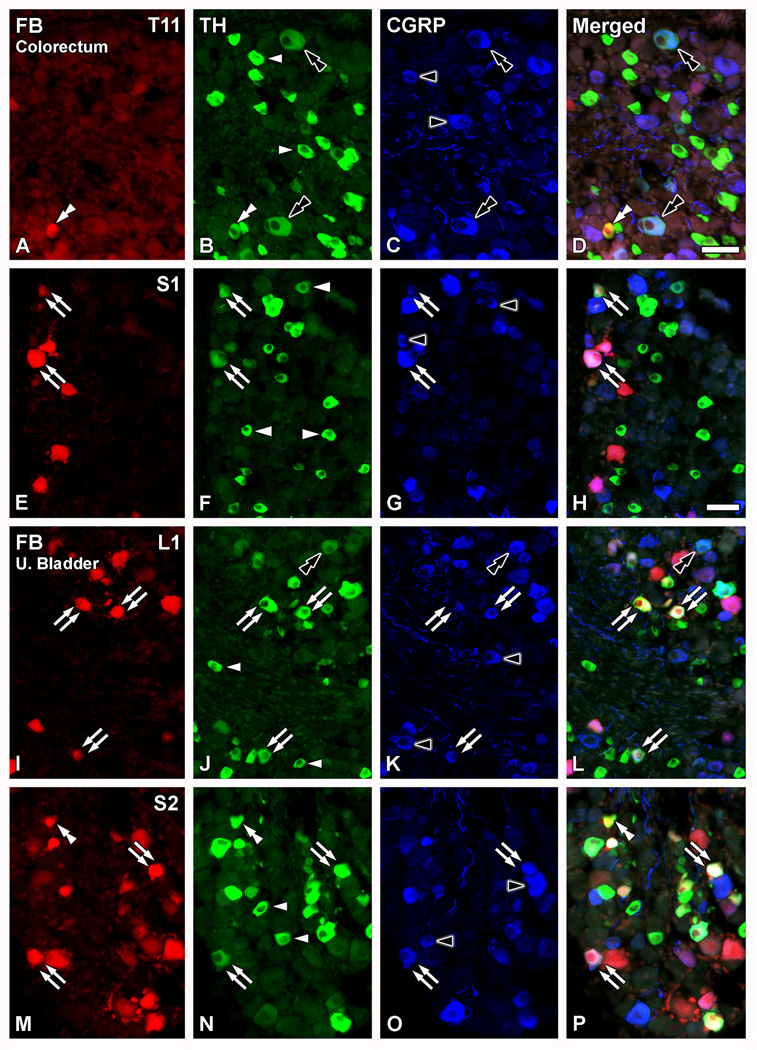
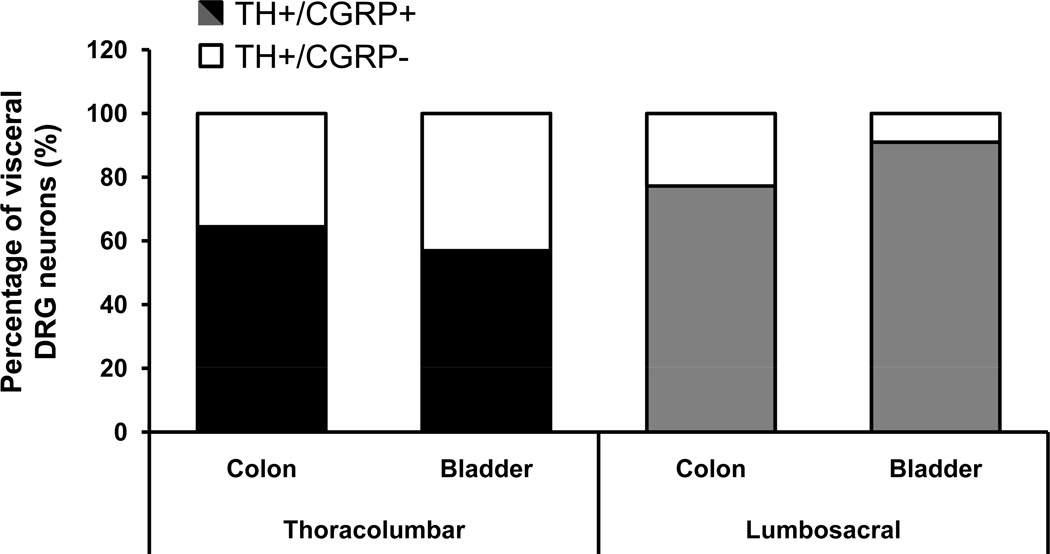
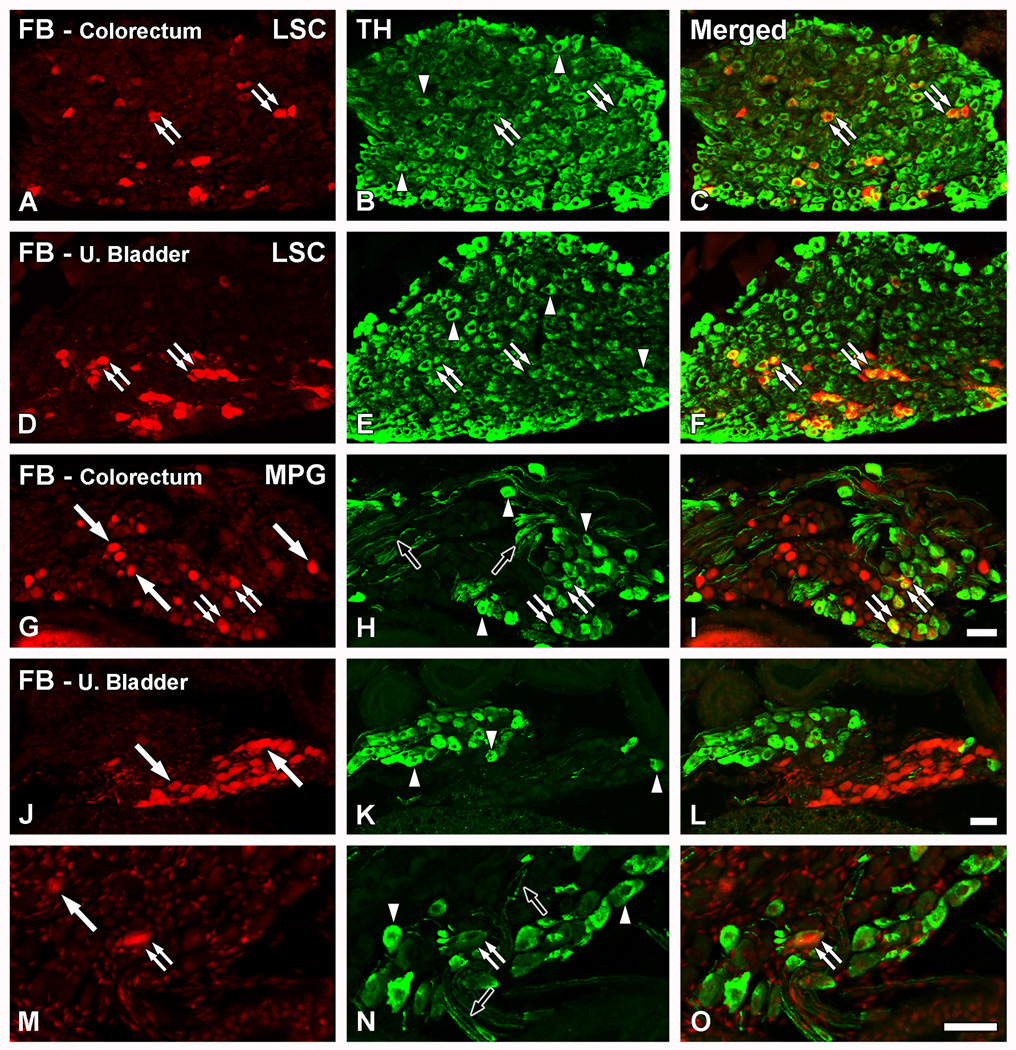
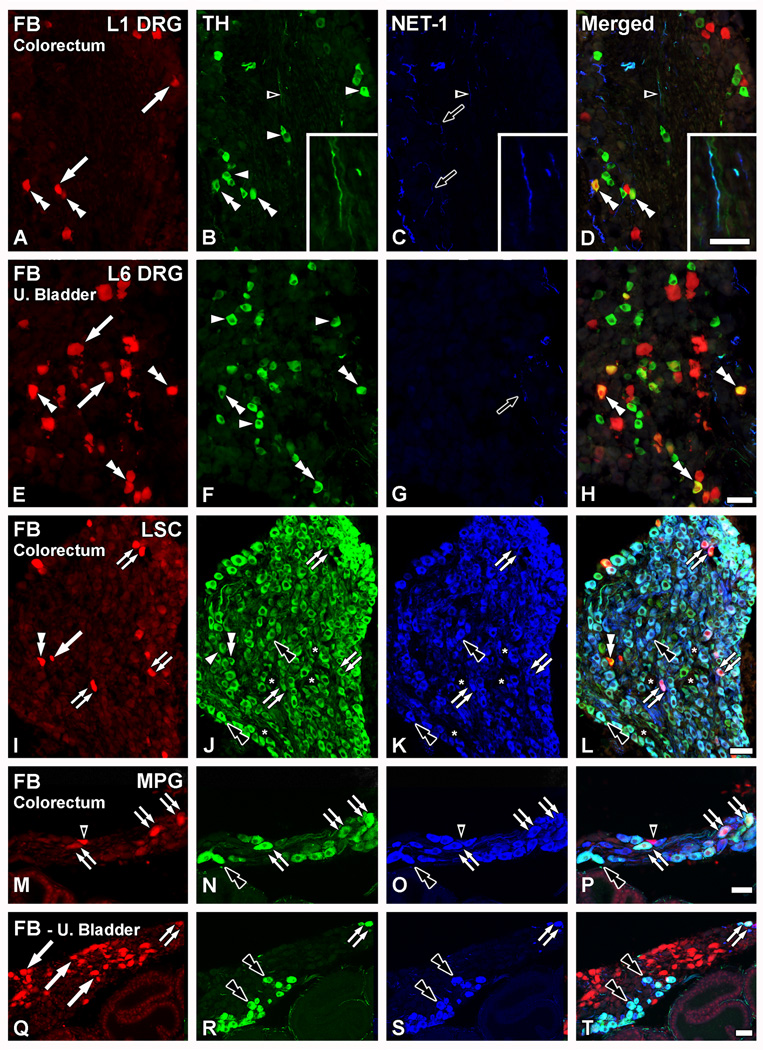
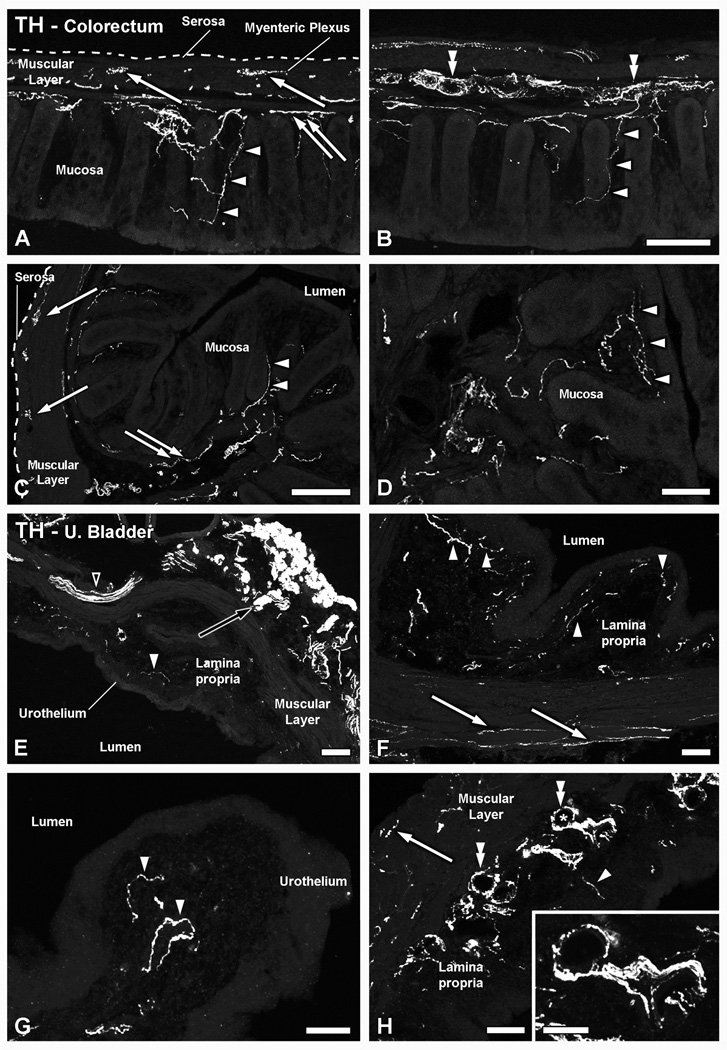
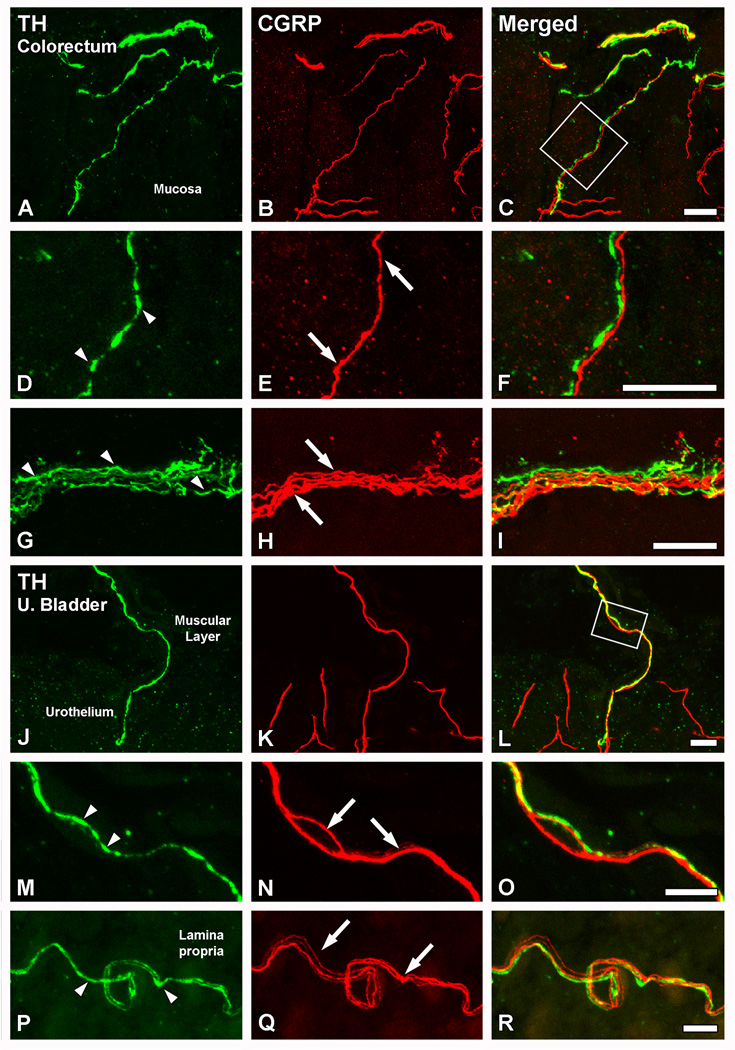
Previous studies in rat and mouse documented that a subpopulation of dorsal root ganglion (DRG) neurons innervating non-visceral tissues express tyrosine hydroxylase (TH). Here we studied whether or not mouse DRG neurons retrogradely traced with Fast Blue (FB) from colorectum or urinary bladder also express immunohistochemically detectable TH. The lumbar sympathetic chain (LSC) and major pelvic ganglion (MPG) were included in the analysis. Previously characterized antibodies against TH, norepinephrine transporter type 1 (NET-1) and calcitonin gene-related peptide (CGRP) were used. On average, ∼14% of colorectal and ∼17% of urinary bladder DRG neurons expressed TH and spanned virtually all neuronal sizes, although more often in the medium-sized to small ranges. Also, they were more abundant in lumbosacral than thoracolumbar DRGs, and often coexpressed CGRP. We also detected several TH-immunoreactive (IR) colorectal and urinary bladder neurons in the LSC and the MPG, more frequently in the former. No NET-1-IR neurons were detected in DRGs, whereas the majority of FB-labeled, TH-IR neurons in the LSC and MPG coexpressed this marker (as did most other TH-IR neurons not labeled from the target organs). TH-IR nerve fibers were detected in all layers of the colorectum and the urinary bladder, with some also reaching the basal mucosal cells. Most TH-IR fibers in these organs lacked CGRP. Taken together, we show: (1) that a previously undescribed population of colorectal and urinary bladder DRG neurons expresses TH, often CGRP but not NET-1, suggesting the absence of a noradrenergic phenotype; and (2) that TH-IR axons/terminals in the colon or urinary bladder, naturally expected to derive from autonomic sources, could also originate from sensory neurons.
Copyright © 2012 IBRO. Published by Elsevier Ltd. All rights reserved.
Figures
References
-
- Adams JC. Biotin amplification of biotin and horseradish peroxidase signals in histochemical stains. J Histochem Cytochem. 1992;40:1457–1463. - PubMed
-
- Biallosterski BT, de Wachter SG, van Koeveringe GA, van Kerrebroeck PE, DE VJ, Mulder MT, Gillespie JI. Changes in bladder innervation in a mouse model of Alzheimer's disease. J. Chem. Neuroanat. 2010;39:204–210. - PubMed
-
- Brierley SM, Jones RC, III, Gebhart GF, Blackshaw LA. Splanchnic and pelvic mechanosensory afferents signal different qualities of colonic stimuli in mice. Gastroenterology. 2004;127:166–178. - PubMed
-
- Brookes SJ, Dinning PG, Gladman MA. Neuroanatomy and physiology of colorectal function and defaecation: from basic science to human clinical studies. Neurogastroenterol. Motil. 2009;21(Suppl 2):9–19. - PubMed
Publication types
MeSH terms
Substances
Grants and funding
LinkOut - more resources
Full Text Sources
Research Materials
