


Transmission dynamics of carbapenemase-producing Klebsiella pneumoniae and anticipated impact of infection control strategies in a surgical unit
- PMID: 22859965
- PMCID: PMC3409200
- DOI: 10.1371/journal.pone.0041068
Transmission dynamics of carbapenemase-producing Klebsiella pneumoniae and anticipated impact of infection control strategies in a surgical unit
Abstract
Background: Carbapenemase-producing Klebsiella pneumoniae (CPKP) has been established as important nosocomial pathogen in many geographic regions. Transmission from patient to patient via the hands of healthcare workers is the main route of spread in the acute-care setting.
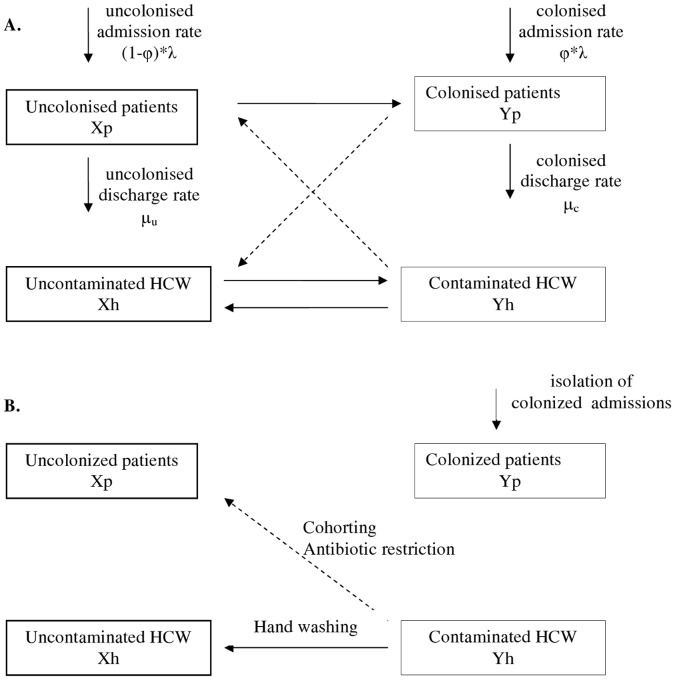
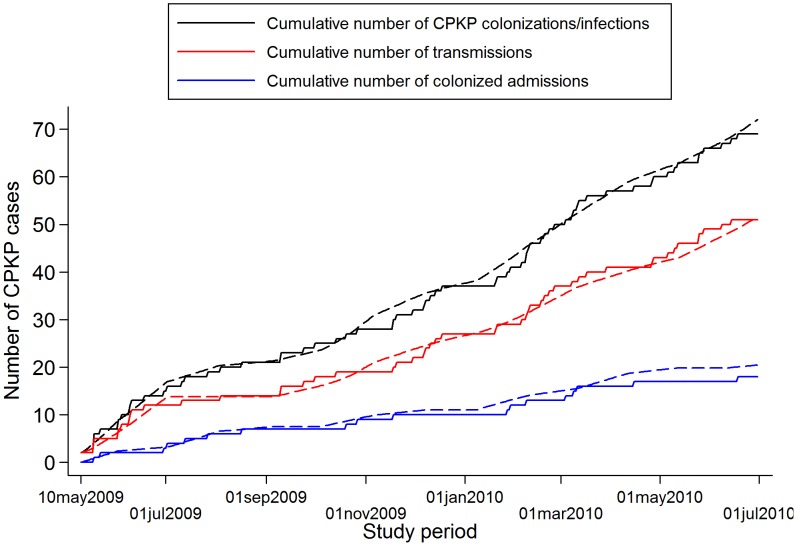
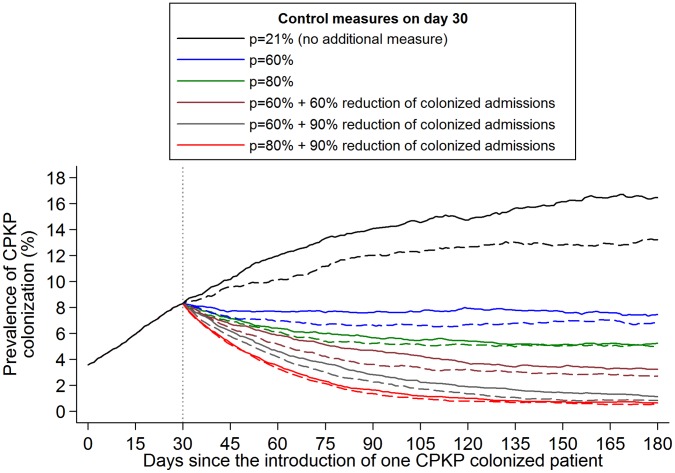
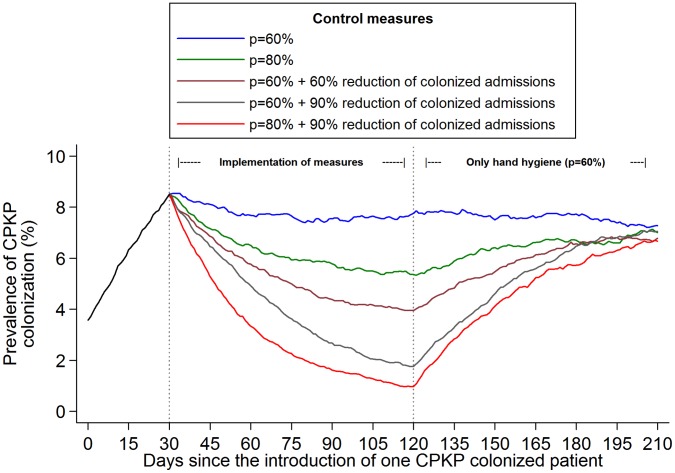
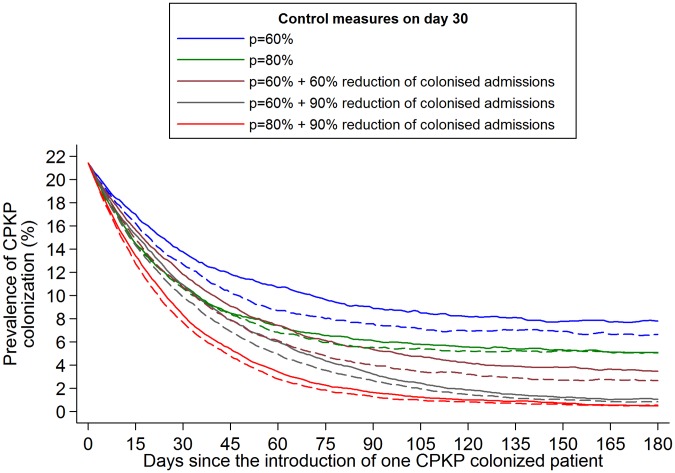
Methodology/principal findings: Epidemiological and infection control data were recorded during a prospective observational study conducted in a surgical unit of a tertiary-care hospital in Greece. Surveillance culture for CPKP were obtained from all patients upon admission and weekly thereafter. The Ross-Macdonald model for vector-borne diseases was applied to obtain estimates for the basic reproduction number R(0) (average number of secondary cases per primary case in the absence of infection control) and assess the impact of infection control measures on CPKP containment in endemic and hyperendemic settings. Eighteen of 850 patients were colonized with CPKP on admission and 51 acquired CPKP during hospilazation. R(0) reached 2 and exceeded unity for long periods of time under the observed hand hygiene compliance (21%). The minimum hand hygiene compliance level necessary to control transmission was 50%. Reduction of 60% to 90% in colonized patients on admission, through active surveillance culture, contact precautions and isolation/cohorting, in combination with 60% compliance in hand hygiene would result in rapid decline in CPKP prevalence within 8-12 weeks. Antibiotics restrictions did not have a substantial benefit when an aggressive control strategy was implemented.
Conclusions/significance: Surveillance culture on admission and isolation/cohorting of colonized patients coupled with moderate hand hygiene compliance and contact precautions may lead to rapid control of CPKP in endemic and hyperendemic healthcare settings.
Conflict of interest statement
Figures

References
-
- Schwaber MJ, Carmeli Y (2008) Carbapenem-resistant Enterobacteriaceae: a potential threat. Jama 300: 2911–2913. - PubMed
-
- Nordmann P, Cuzon G, Naas T (2009) The real threat of Klebsiella pneumoniae carbapenemase-producing bacteria. Lancet Infect Dis 9: 228–236. - PubMed
-
- Cornaglia G, Giamarellou H, Rossolini GM (2011) Metallo-beta-lactamases: a last frontier for beta-lactams? Lancet Infect Dis 11: 381–393. - PubMed
-
- Grundmann H, Livermore DM, Giske CG, Canton R, Rossolini GM, et al. (2010) Carbapenem-non-susceptible Enterobacteriaceae in Europe: conclusions from a meeting of national experts. Euro Surveill 15. - PubMed
Publication types
MeSH terms
Substances
LinkOut - more resources
Full Text Sources
