. 2012 Aug 3;11(2):195-206.
doi: 10.1016/j.stem.2012.04.024.

Regulation of hematopoietic stem and progenitor cell mobilization by cholesterol efflux pathways

Affiliations

Regulation of hematopoietic stem and progenitor cell mobilization by cholesterol efflux pathways

Marit Westerterp et al. Cell Stem Cell. .

Abstract

Intact cholesterol homeostasis helps to maintain hematopoietic stem and multipotential progenitor cell (HSPC) quiescence. Mice with defects in cholesterol efflux pathways due to deficiencies of the ATP binding cassette transporters ABCA1 and ABCG1 displayed a dramatic increase in HSPC mobilization and extramedullary hematopoiesis. Increased extramedullary hematopoiesis was associated with elevated serum levels of G-CSF due to generation of IL-23 by splenic macrophages and dendritic cells. This favored hematopoietic lineage decisions toward granulocytes rather than macrophages in the bone marrow leading to impaired support for osteoblasts and decreased Cxcl12/SDF-1 production by mesenchymal progenitors. Greater HSPC mobilization and extramedullary hematopoiesis were reversed by raising HDL levels in Abca1(-/-)Abcg1(-/-) and Apoe(-/-) mice or in a mouse model of myeloproliferative neoplasm mediated by Flt3-ITD mutation. Our data identify a role of cholesterol efflux pathways in the control of HSPC mobilization. This may translate into therapeutic strategies for atherosclerosis and hematologic malignancies.


Figures

Figure 1
Figure 1. Extramedullary hematopoiesis in Abca1−/−Abcg1−/− mice
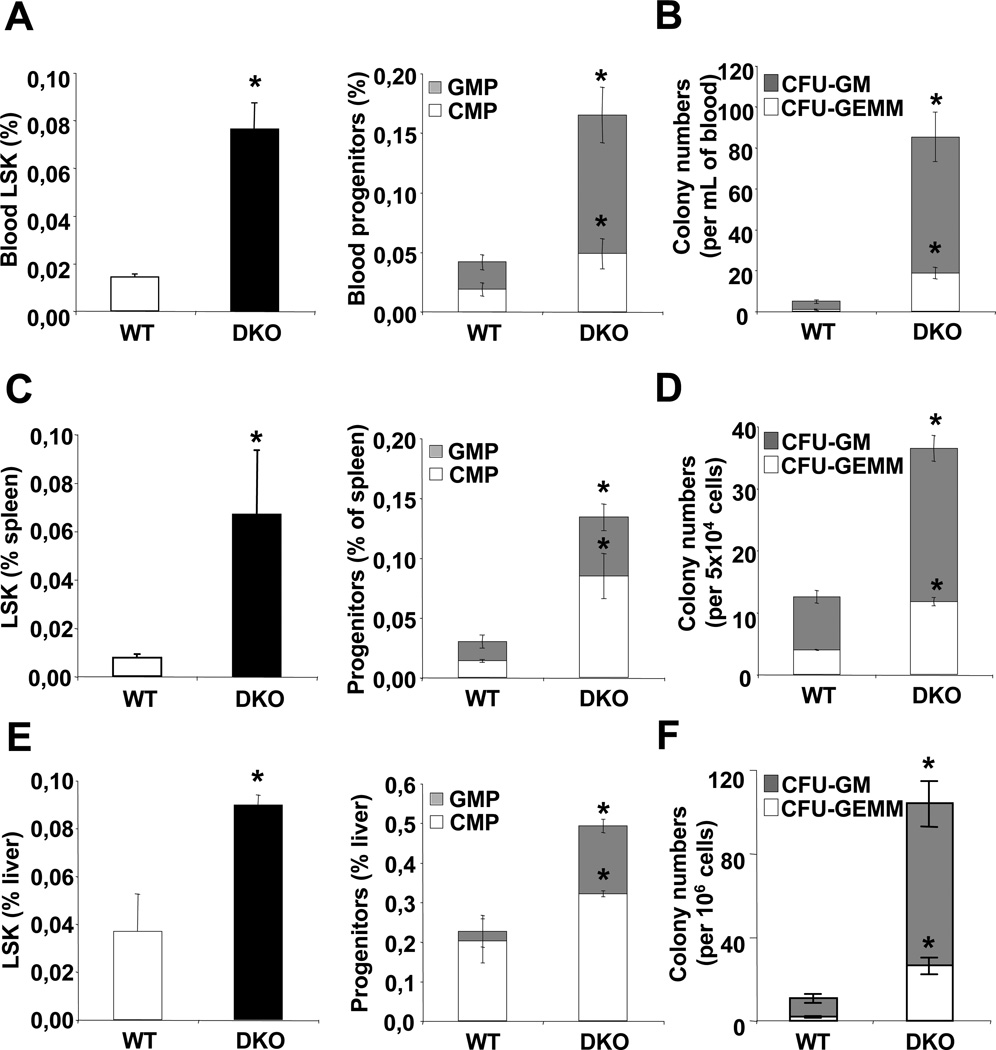
Quantification of hematopoietic stem and multipotential progenitor cells (HSPCs) by flow cytometry (LSK, LinSca1+c-Kit+) or common myeloid progenitors (CMP) and granulocye/macrophage progenitors (GMP) from (A) the blood, (C) the spleen or (E) the liver of chow fed WT and Abca1−/−Abcg1−/− mice. Colony forming unit assays of multipotential progenitors and granulocyte macrophage progenitors (CFU-GEMM and CFU-GM, respectively) from (B) the blood, (D) the spleen, or (F) the liver of chow fed WT and Abca1−/−Abcg1−/− mice. Results are ± SEM of 6 animals per group. *P<0.05 vs. WT.
Figure 2
Figure 2. G-CSF-dependence of HSPC mobilization in Abca1−/−Abcg1−/− mice
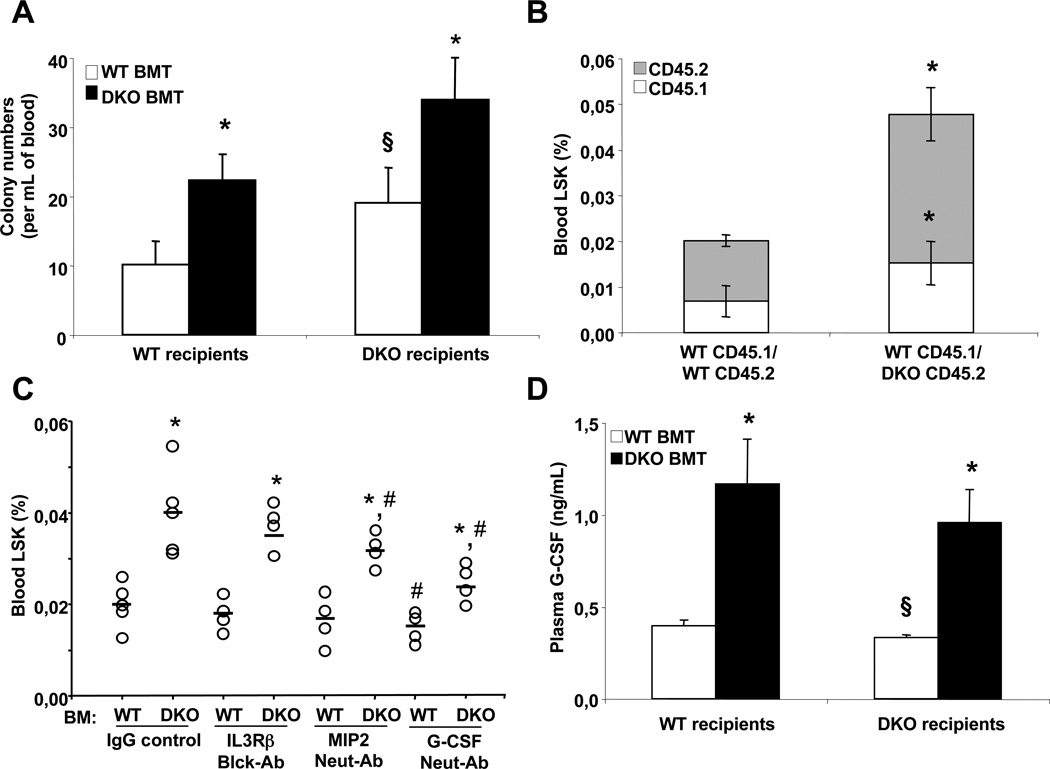
Colony-forming unit numbers of multipotential progenitors (CFU-GEMM) from the blood of WT and Abca1−/−Abcg1−/− recipient mice transplanted with either WT or Abca1−/−Abcg1−/− BM 8 weeks post-reconstitution (A). Competitive BM transplantation of WT CD45.1+ BM equally mixed with either CD45.2+ WT BM or CD45.2+ DKO BM and transplanted into WT recipient mice. Circulating HSPCs were analyzed by flow cytometry (B). WT recipients transplanted with WT and DKO BM 14 weeks post-reconstitution were i.p injected with IgG control, 100µg IL3Rβ blocking antibody, MIP2 (CXCL2) neutralizing antibody or G-CSF neutralizing antibody for 16h and analyzed for circulating HSPC (C). Plasma G-CSF levels in WT and Abca1−/−Abcg1−/− recipient mice transplanted with either WT or Abca1−/−Abcg1−/− BM 8 weeks post-reconstitution (D). Results are ± SEM of 5 to 6 animals per group. *P<0.05 vs. WT recipients transplanted with WT BM. #P<0.05 vs. IgG control. §P<0.05 vs. Abca1−/−Abcg1−/− recipients transplanted with Abca1−/−Abcg1−/− BM.
Figure 3
Figure 3. IL-23/IL-17-dependent G-CSF regulation in Abca1−/−Abcg1−/− mice
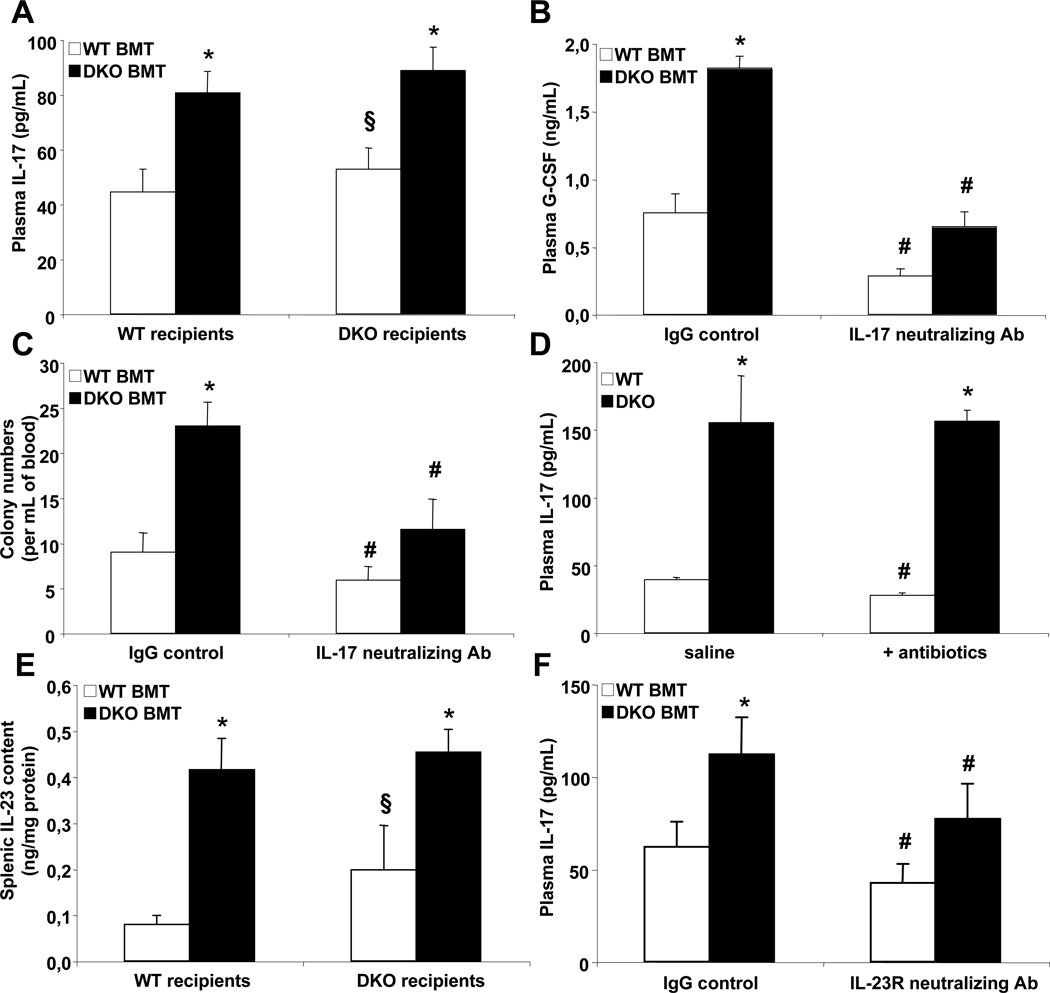
Plasma IL-17 levels in WT and Abca1−/−Abcg1−/− recipient mice transplanted with either WT or Abca1−/−Abcg1−/− BM 8 weeks post-reconstitution (A). Plasma G-CSF levels in WT recipients transplanted with WT and Abca1−/−Abcg1−/− BM 14 weeks post-reconstitution and i.p injected with IgG control or 250µg IL-17 neutralizing antibody for 16h (B). Colony-forming unit numbers from the blood of these mice (C). Plasma IL-17 levels in WT and Abca1−/−Abcg1−/− mice treated with broad-spectrum antibiotics for 2 weeks to deplete commensal bacteria (D). IL-23 protein content in the spleen of WT and Abca1−/−Abcg1−/− recipient mice transplanted with either WT or Abca1−/−Abcg1−/− BM 8 weeks post-reconstitution (E). Plasma IL-17 levels in WT recipients transplanted with WT and Abca1−/−Abcg1−/− BM 14 weeks post-reconstitution and i.p injected with IgG control or 200µg IL-23R neutralizing antibody for 16h (F). Results are ± SEM of 5 to 6 animals per group. *P<0.05 vs. WT recipients transplanted with WT BM. #P<0.05 vs. IgG control. §P<0.05 vs. Abca1−/−Abcg1−/− recipients transplanted with Abca1−/−Abcg1−/− BM.
Figure 4
Figure 4. Deficiency of ABCA1 and ABCG1 in macrophages and dendritic cells promotes the G-CSF-dependent HSPC mobilization
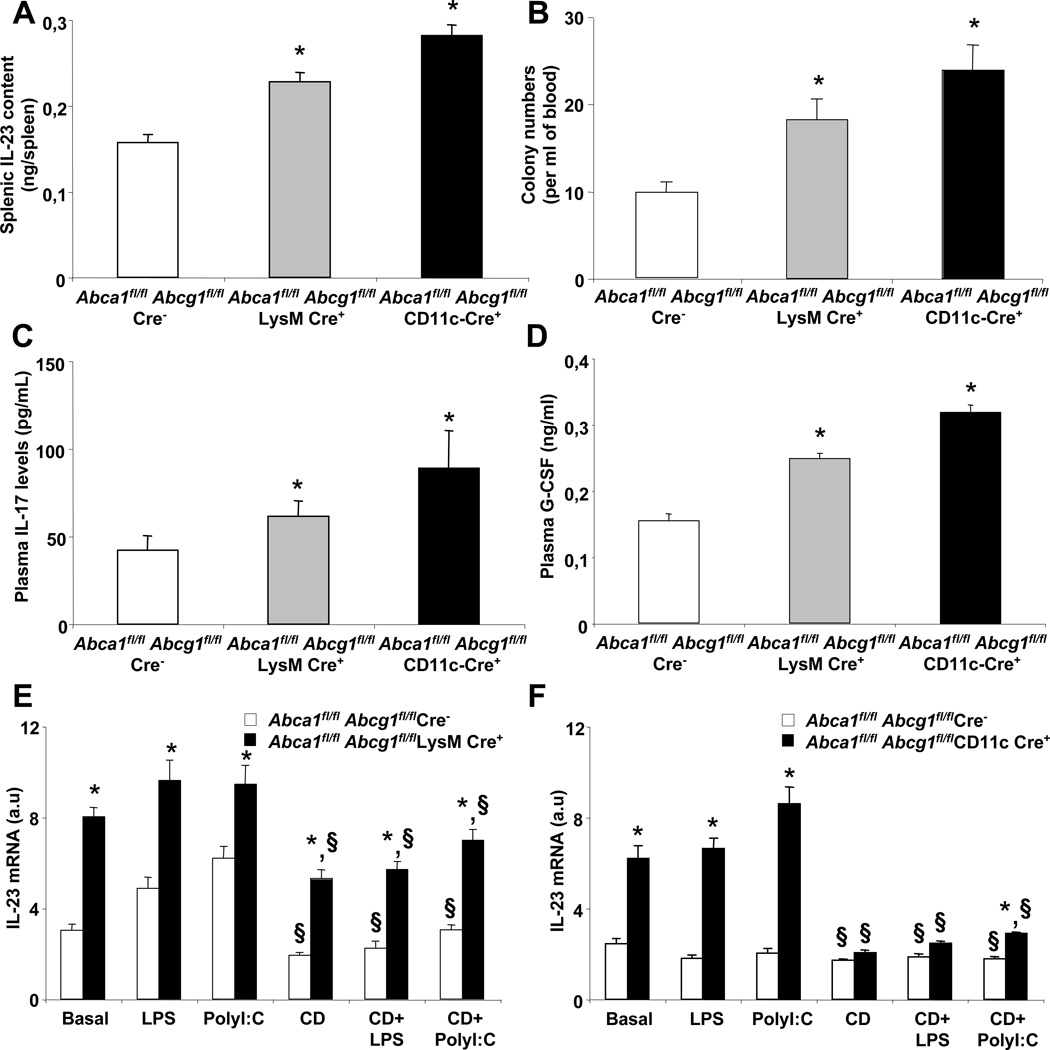
Splenic IL-23 protein content (A), Colony-forming unit numbers (B), plasma G-CSF levels (C), and plasma IL-17 levels (D) in 28 weeks old Abca1fl/flAbcg1fl/fl (controls), LysM-Cre Abca1fl/flAbcg1fl/fl, and CD11c-Cre Abca1fl/flAbcg1fl/fl mice. Results are ± SEM of 5 to 6 animals per group. *P<0.05 vs. controls. Modulation of IL-23 mRNA expression levels in Abca1fl/flAbcg1fl/fl and LysM-Cre Abca1flfl-Abcg1fl/fl BM-derived macrophages (E) and CD11c-Cre Abca1fl/flAbcg1fl/fl BM-derived dendritic cells (F) after manipulation of plasma membrane cholesterol. Cells were incubated with 5mmol/L cyclodextrin (CD) for 30minutes before treatment with 50ng/mL lipopolysaccharide (LPS, TLR4 ligand) or 2,5µg/mL PolyI:C (TLR3 ligand) for 3 hours. IL-23 transcript levels were normalized to m36B4 mRNA amount. RNA levels were expressed as arbitrary units (a.u). Values are mean ± SEM of an experiment performed in quadruplicate. *P<0.05 vs. respective controls. §P<0.05 vs. conditions without cyclodextrin treatment.
Figure 5
Figure 5. Reduced osteoblastic SDF-1/Cxcl12 production in Abca1−/−Abcg1−/− mice
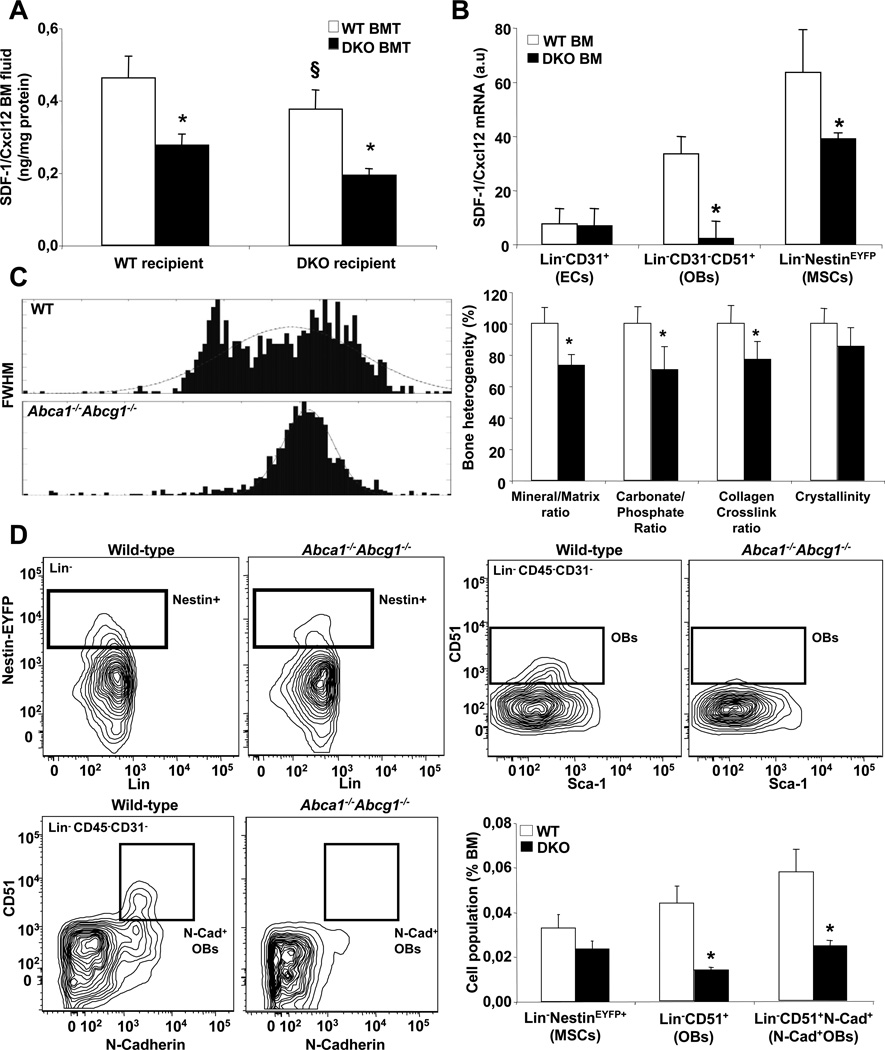
Quantification of the SDF-1/Cxcl12 protein content in the BM fluid of WT and Abca1−/−Abcg1−/− recipient mice transplanted with either WT or Abca1−/−Abcg1−/− BM 8 weeks post-reconstitution (A). SDF-1/Cxcl12 mRNA levels normalized to ribosomal m36B4 in sorted LinCD45CD31+ endothelial cells (ECs), LinCD45CD31Sca1CD51+ OB lineage cells (OBs) and Lin-Nestin+ progenitors (MSCs) from Nestin-Cre+Gt(Rosa)26Sor and Abca1−/−Abcg1−/− Nestin-Cre+Gt(Rosa)26Sor mice (B). Representative histograms and percentage changes in the bone heterogeneity of the indicated bone mineral and matrix properties quantified by Fourier Transform Infrared (FTIR) spectroscopy as the full width at half maximum (FWHM) of the pixel histogram distribution (PHD) (C). Representative dot plots and quantification of Lin-Nestin+ MSCs, LinCD45CD31Sca1CD51+ OB lineage cells and LinCD45CD31CD51+N-Cadherin+ OBs by flow cytometry (D). Results are ± SEM of 5 to 6 animals per group. *P<0.05 vs. WT. §P<0.05 vs. Abca1−/−Abcg1−/− recipients transplanted with Abca1−/−Abcg1−/− BM.
Figure 6
Figure 6. Depletion of BM macrophages in Abca1−/−Abcg1−/− mice
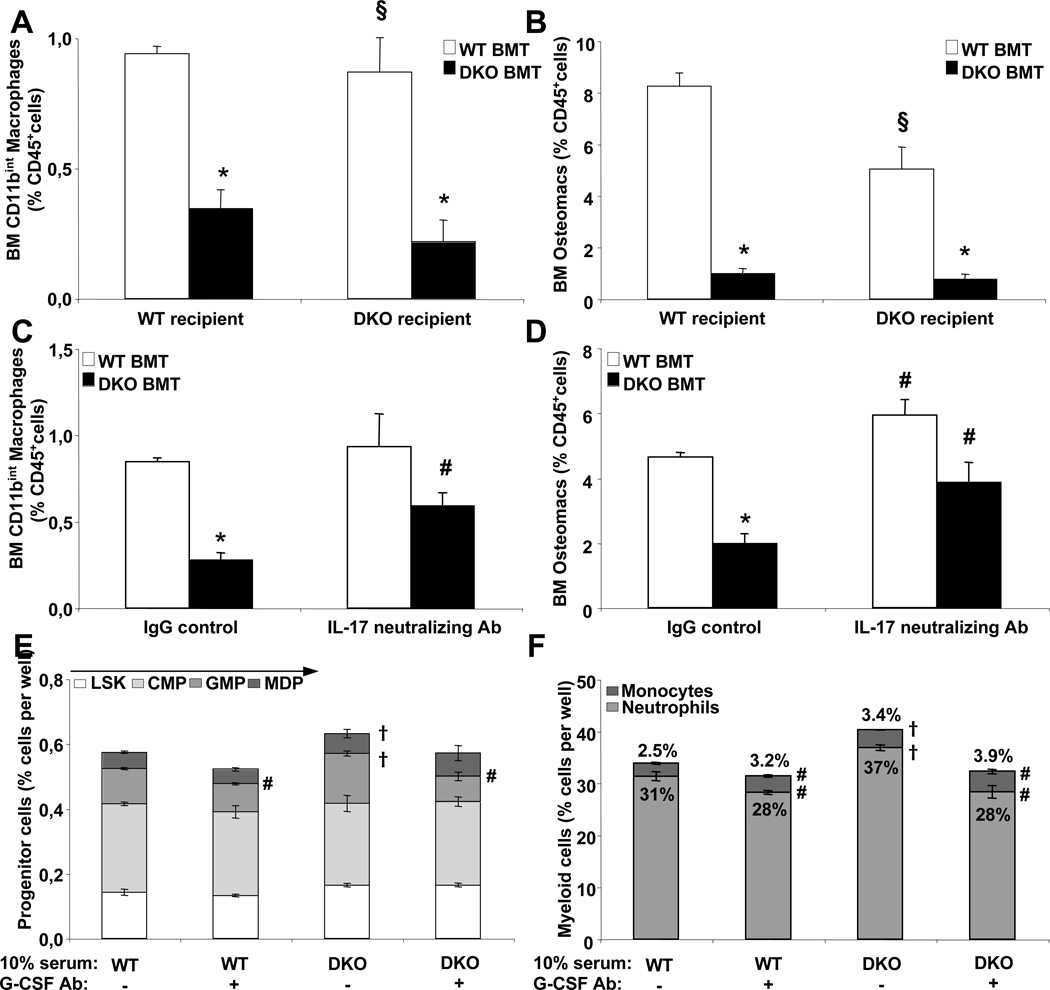
Quantification of BM macrophage subsets by flow cytometry in WT and Abca1−/−Abcg1−/− recipient mice transplanted with either WT or Abca1−/−Abcg1−/− BM 8 weeks post-reconstitution (A and B) and in WT recipients transplanted with WT and Abca1−/−Abcg1−/− BM 14 weeks post-reconstitution and i.p injected with IgG control or 250µg IL-17 neutralizing antibody for 16h (C and D). Results are ± SEM of 5 to 6 animals per group. *P<0.05 vs. WT. §P<0.05 vs. Abca1−/−Abcg1−/− recipients transplanted with Abca1−/−Abcg1−/− BM. Quantification of hematopoietic progenitors (E), monocytes and neutrophils (F) in WT BM cultures grown for 48h in liquid culture in presence of 10% of the indicated serum and 50ng/mL G-CSF neutralizing antibody (+) or control non-specific IgG (−). Results are ± SEM of 3 independent experiments. #P<0.05 vs. IgG control. P<0.05 vs. 10% WT serum.
Figure 7
Figure 7. Raising HDL-cholesterol prevents HSPC mobilization
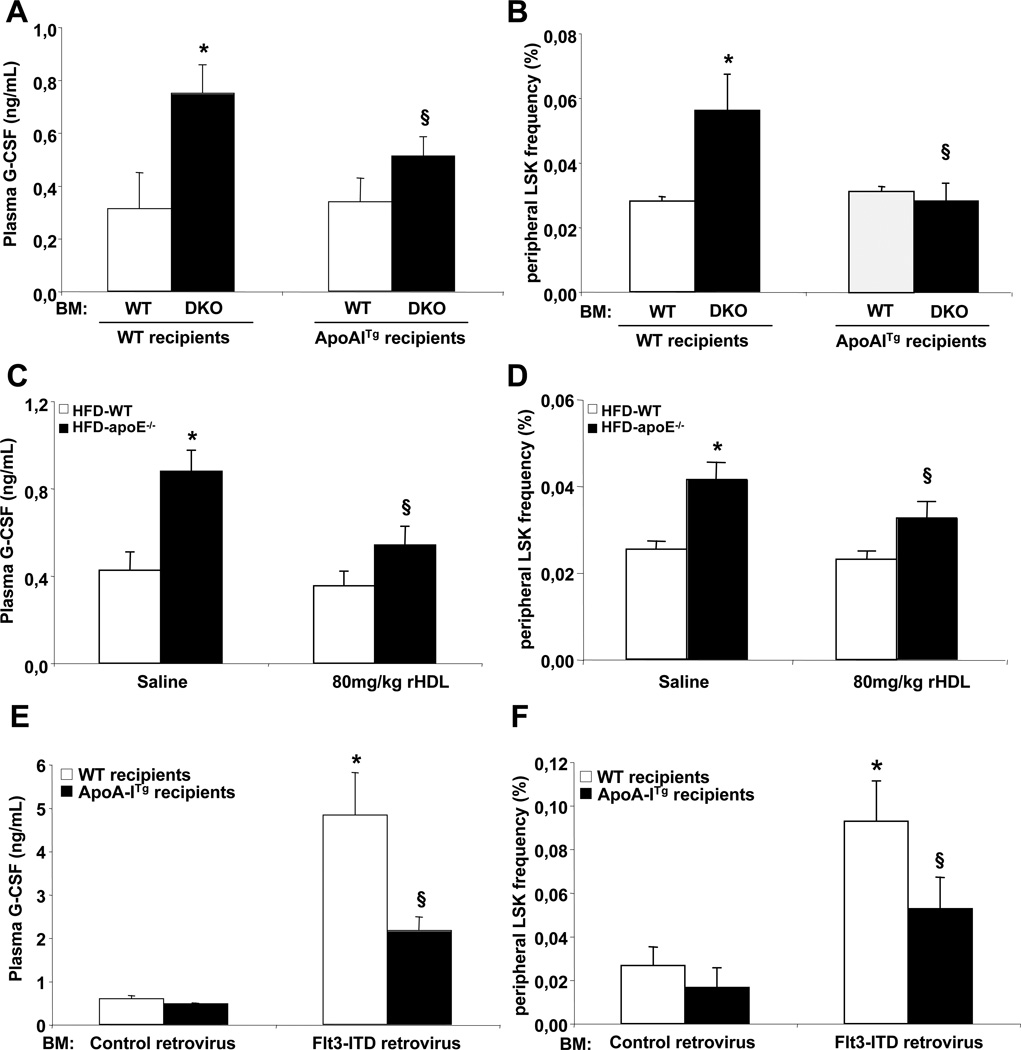
Plasma G-CSF levels and quantification of circulating HSPC cells by flow cytometry in WT and ApoA-I transgenic recipient mice transplanted with either WT or Abca1−/−Abcg1−/− BM 12 weeks post-reconstitution (A and B), in 4-weeks high fat diet-fed WT and apoE−/− mice infused or not with 80mg/kg rHDL for 96h (C and D) and in WT and ApoA-I transgenic recipient mice transplanted with BM transduced with retroviruses encoding the human oncogenic Flt3-ITD mutation 6weeks post-reconstitution (E and F). Results are ± SEM of 4 to 6 animals per group. *P<0.05 vs. WT. §P<0.05, effect of HDL-raising treatment (hapoA-ITg or rHDL).

Comment in

References

    1. Calvi LM, Adams GB, Weibrecht KW, Weber JM, Olson DP, Knight MC, Martin RP, Schipani E, Divieti P, Bringhurst FR, Milner LA, Kronenberg HM, Scadden DT. Osteoblastic cells regulate the haematopoietic stem cell niche. Nature. 2003;425:841–846. - PubMed
    1. Chow A, Lucas D, Hidalgo A, Mendez-Ferrer S, Hashimoto D, Scheiermann C, Battista M, Leboeuf M, Prophete C, van Rooijen N, Tanaka M, Merad M, Frenette PS. Bone marrow CD169+ macrophages promote the retention of hematopoietic stem and progenitor cells in the mesenchymal stem cell niche. J. Exp Med. 2011;208:261–271. - PMC - PubMed
    1. Christopher MJ, Link DC. Granulocyte colony-stimulating factor induces osteoblast apoptosis and inhibits osteoblast differentiation. J. Bone Miner Res. 2008;23:1765–1774. - PMC - PubMed
    1. Christopher MJ, Liu F, Hilton MJ, Long F, Link DC. Suppression of CXC12 production by bone marrow osteoblasts is a common and critical pathway for cytokine-induced mobilization. Blood. 2009;114:1331–1339. - PMC - PubMed
    1. Christopher MJ, Rao M, Liu F, Woloszynek JR, Link DC. Expression of the G-CSF receptor in monocytic cells is sufficient to mediate hematopoietic progenitor mobilization by G-CSF in mice. J. Exp. Med. 2011;208:251–260. - PMC - PubMed

Publication types

MeSH terms

Substances