


Case-finding of dementia in general practice and effects of subsequent collaborative care; design of a cluster RCT
- PMID: 22863299
- PMCID: PMC3499192
- DOI: 10.1186/1471-2458-12-609
Case-finding of dementia in general practice and effects of subsequent collaborative care; design of a cluster RCT
Abstract
Background: In the primary care setting, dementia is often diagnosed relatively late in the disease process. Case finding and proactive collaborative care may have beneficial effects on both patient and informal caregiver by clarifying the cause of cognitive decline and changed behaviour and by enabling support, care planning and access to services.We aim to improve the recognition and diagnosis of individuals with dementia in general practice. In addition to this diagnostic aim, the effects of case finding and subsequent care on the mental health of individuals with dementia and the mental health of their informal carers are explored.
Design: cluster randomised controlled trial with process evaluation.
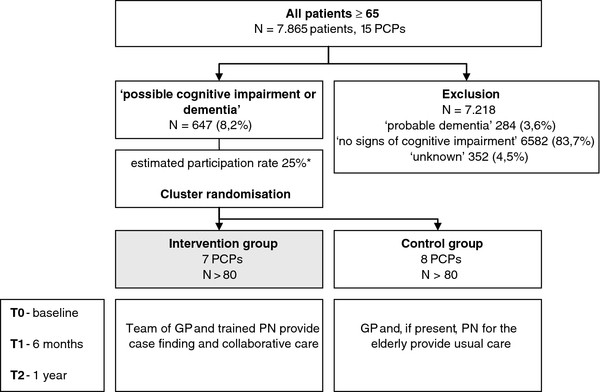
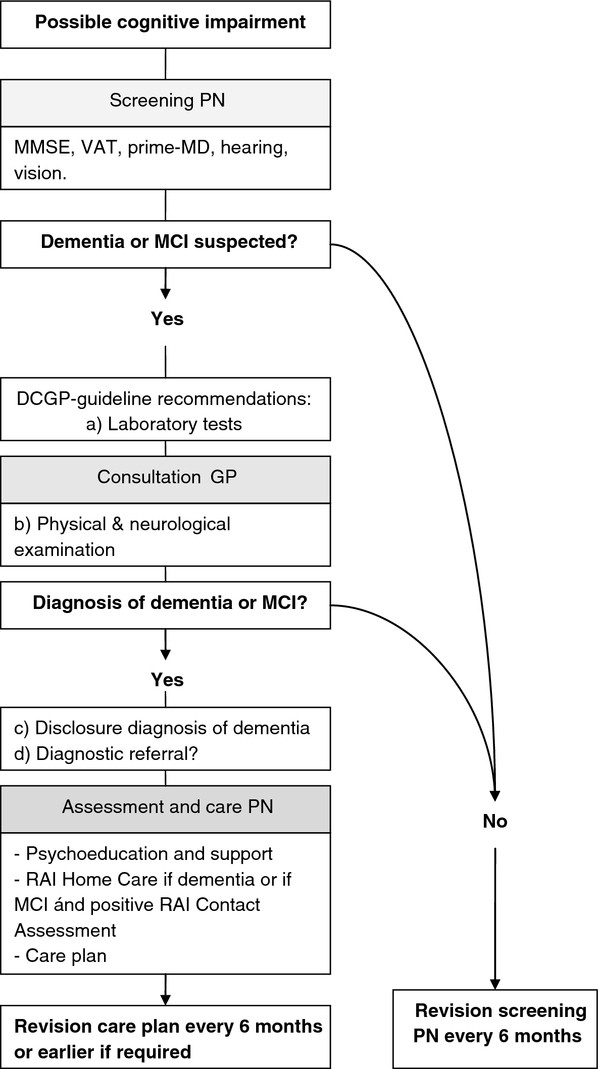
Participants: 162 individuals ≥ 65 years, in 15 primary care practices, in whom GPs suspect cognitive impairment, but without a dementia diagnosis.Intervention; case finding and collaborative care: 2 trained practice nurses (PNs) invite all patients with suspected cognitive impairment for a brief functional and cognitive screening. If the cognitive tests are supportive of cognitive impairment, individuals are referred to their GP for further evaluation. If dementia is diagnosed, a comprehensive geriatric assessment takes place to identify other relevant geriatric problems that need to be addressed. Furthermore, the team of GP and PN provide information and support.
Control: GPs provide care and diagnosis as usual.Main study parameters: after 12 months both groups are compared on: 1) incident dementia (and MCI) diagnoses and 2) patient and caregiver quality of life (QoL-AD; EQ5D) and mental health (MH5; GHQ 12) and caregiver competence to care (SSCQ). The process evaluation concerns facilitating and impeding factors to the implementation of this intervention. These factors are assessed on the care provider level, the care recipient level and on the organisational level.
Discussion: This study will provide insight into the diagnostic yield and the clinical effects of case finding and collaborative care for individuals with suspected cognitive impairment, compared to usual care. A process evaluation will give insight into the feasibility of this intervention.The first results are expected in the course of 2013.
Trial registration: NTR3389.
Figures
References
-
- van den Dungen P, van Marwijk HW, van der Horst HE, Moll van Charante EP, Macneil VJ, van d V. et al. The accuracy of family physicians’ dementia diagnoses at different stages of dementia: a systematic review. Int J Geriatr Psychiatry. 2012;27:342–354. - PubMed
-
- Perry M. Development and evaluation of a Dementia Training Programme for primary care. 2011.
Publication types
MeSH terms
LinkOut - more resources
Full Text Sources
Medical
