


Elevated expression of the chemokine-scavenging receptor D6 is associated with impaired lesion development in psoriasis
- PMID: 22867710
- PMCID: PMC3532592
- DOI: 10.1016/j.ajpath.2012.06.042
Elevated expression of the chemokine-scavenging receptor D6 is associated with impaired lesion development in psoriasis
Abstract
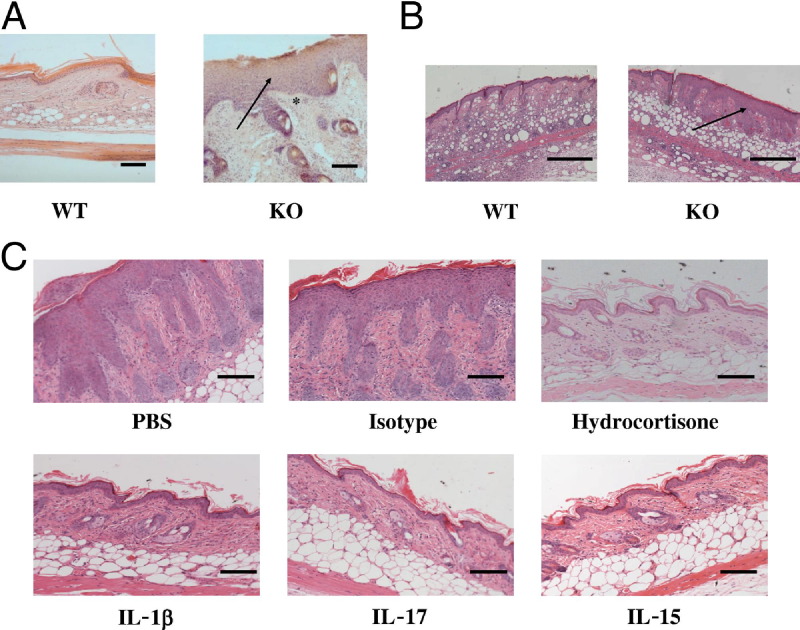
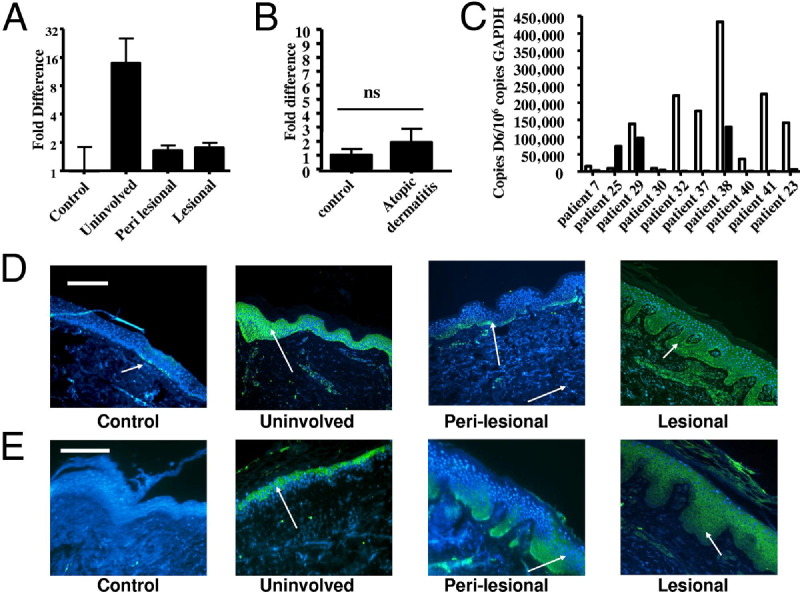
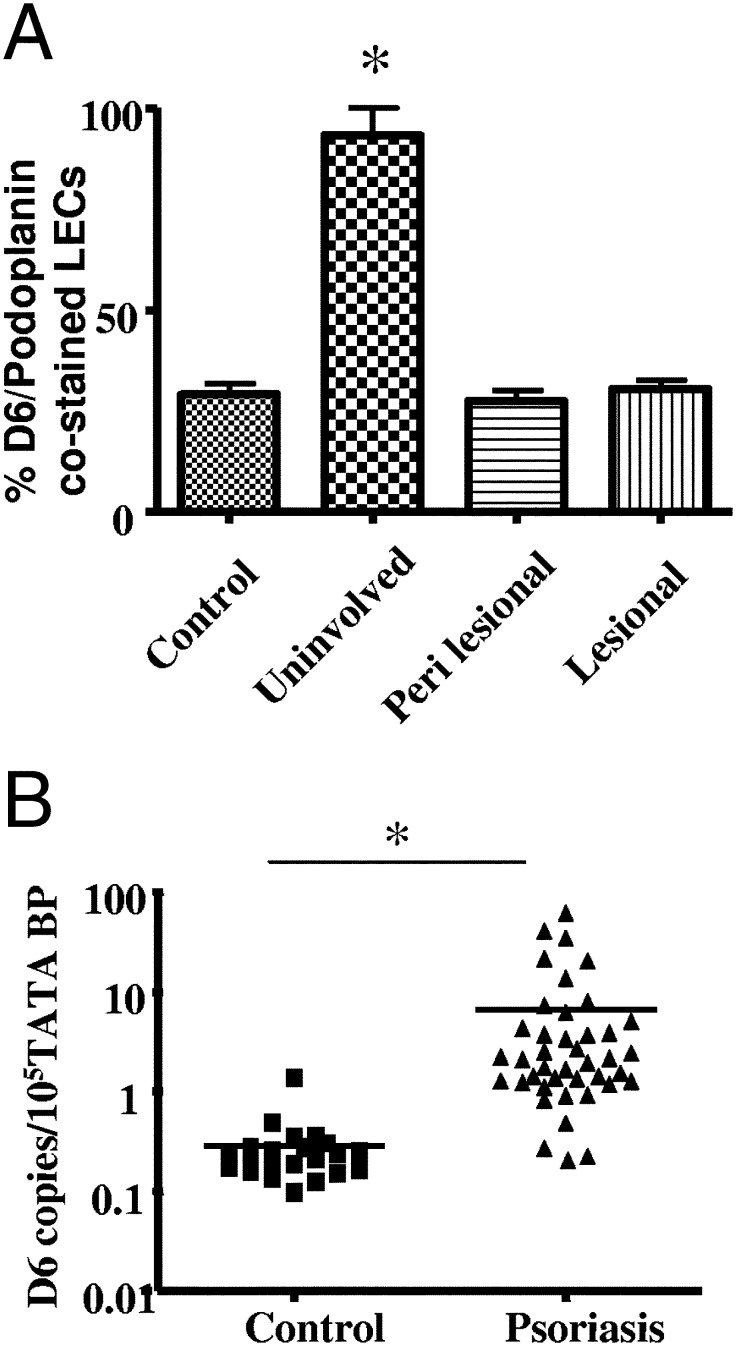
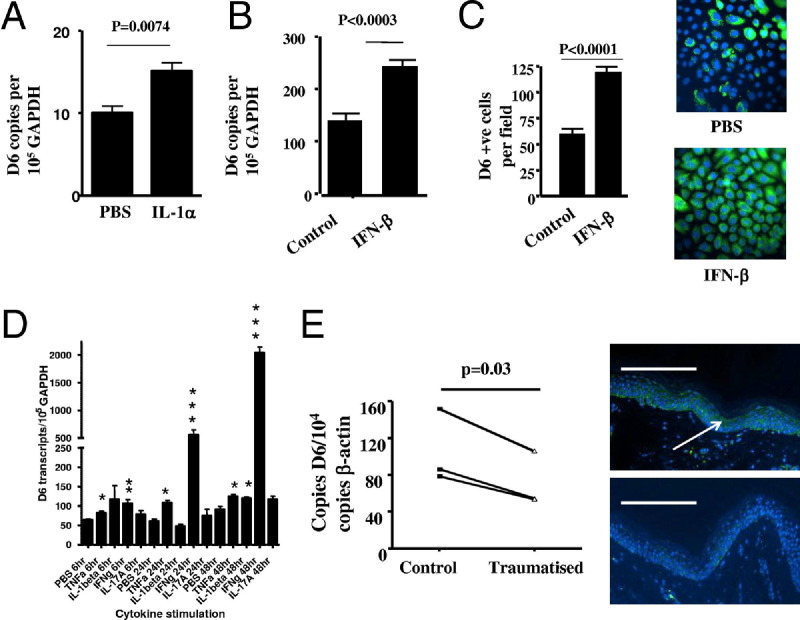
D6 is a scavenging-receptor for inflammatory CC chemokines that are essential for resolution of inflammatory responses in mice. Here, we demonstrate that D6 plays a central role in controlling cutaneous inflammation, and that D6 deficiency is associated with development of a psoriasis-like pathology in response to varied inflammatory stimuli in mice. Examination of D6 expression in human psoriatic skin revealed markedly elevated expression in both the epidermis and lymphatic endothelium in "uninvolved" psoriatic skin (ie, skin that was more than 8 cm distant from psoriatic plaques). Notably, this increased D6 expression is associated with elevated inflammatory chemokine expression, but an absence of plaque development, in uninvolved skin. Along with our previous observations of the ability of epidermally expressed transgenic D6 to impair cutaneous inflammatory responses, our data support a role for elevated D6 levels in suppressing inflammatory chemokine action and lesion development in uninvolved psoriatic skin. D6 expression consistently dropped in perilesional and lesional skin, coincident with development of psoriatic plaques. D6 expression in uninvolved skin also was reduced after trauma, indicative of a role for trauma-mediated reduction in D6 expression in triggering lesion development. Importantly, D6 is also elevated in peripheral blood leukocytes in psoriatic patients, indicating that upregulation may be a general protective response to inflammation. Together our data demonstrate a novel role for D6 as a regulator of the transition from uninvolved to lesional skin in psoriasis.
Copyright © 2012 American Society for Investigative Pathology. Published by Elsevier Inc. All rights reserved.
Figures
References
-
- Nickoloff B.J., Qin J.Z., Nestle F.O. Immunopathogenesis of psoriasis. Clin Rev Allergy Immunol. 2007;33:45–56. - PubMed
-
- van de Kerkhof P.C. The evolution of the psoriatic lesion. Br J Dermatol. 2007;157:4–15. - PubMed
-
- Gudjonsson J.E., Ding J., Li X., Nair R.P., Tejasvi T., Qin Z.S., Ghosh D., Aphale A., Gumucio D.L., Voorhees J.J., Abecasis G.R., Elder J.T. Global gene expression analysis reveals evidence for decreased lipid biosynthesis and increased innate immunity in uninvolved psoriatic skin. J Invest Dermatol. 2009;129:2795–2804. - PMC - PubMed
-
- Rot A., von Andrian U.H. Chemokines in innate and adaptive host defense: basic chemokinese grammar for immune cells. Annu Rev Immunol. 2004;22:891–928. - PubMed
-
- Homey B., Meller S. Chemokines and other mediators as therapeutic targets in psoriasis vulgaris. Clin Dermatol. 2008;26:539–545. - PubMed
Publication types
MeSH terms
Substances
Grants and funding
LinkOut - more resources
Full Text Sources
Medical
Molecular Biology Databases
