


Seasonal trends of microbial keratitis in South India
- PMID: 22868629
- PMCID: PMC4986607
- DOI: 10.1097/ICO.0b013e31825694d3
Seasonal trends of microbial keratitis in South India
Abstract
Purpose: Previous studies suggest that fungal keratitis is more common in hot humid climates and that bacterial keratitis is independent of seasonal variation. This study analyzes seasonal trends in the incidence of fungal and bacterial keratitis at the Aravind Eye Hospital in southeast India.
Methods: Using microbiology records from August 2006 to July 2009, retrospective analyses of infectious keratitis were performed. Bacterial and fungal keratitis incidence data were analyzed for seasonal patterns.
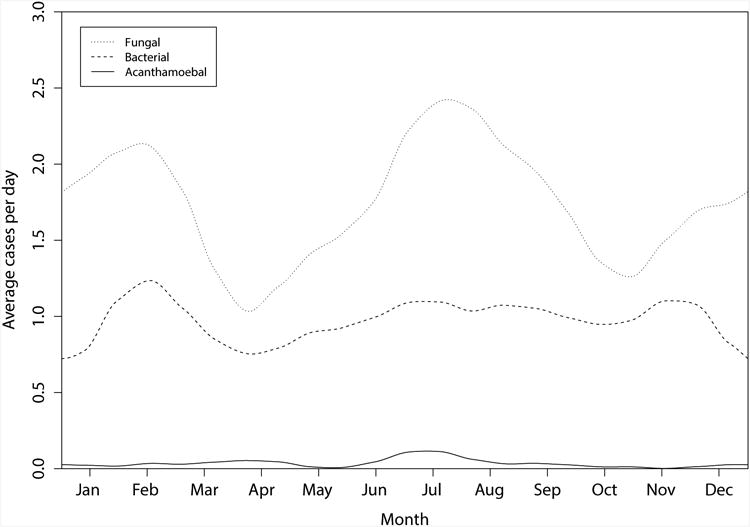
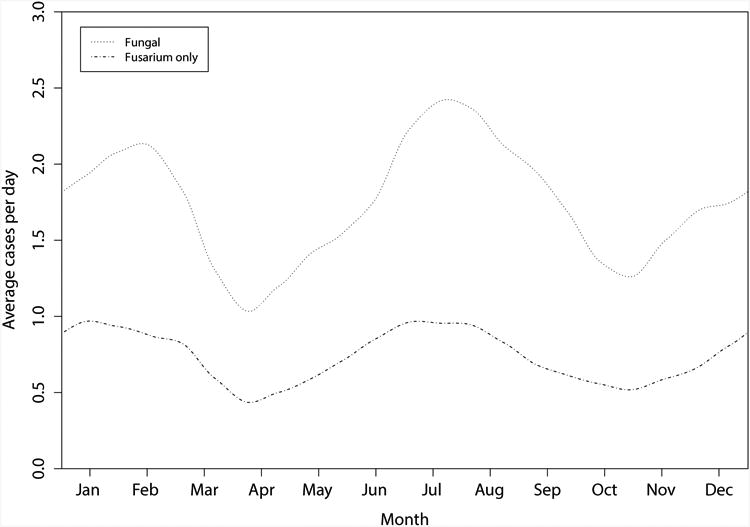
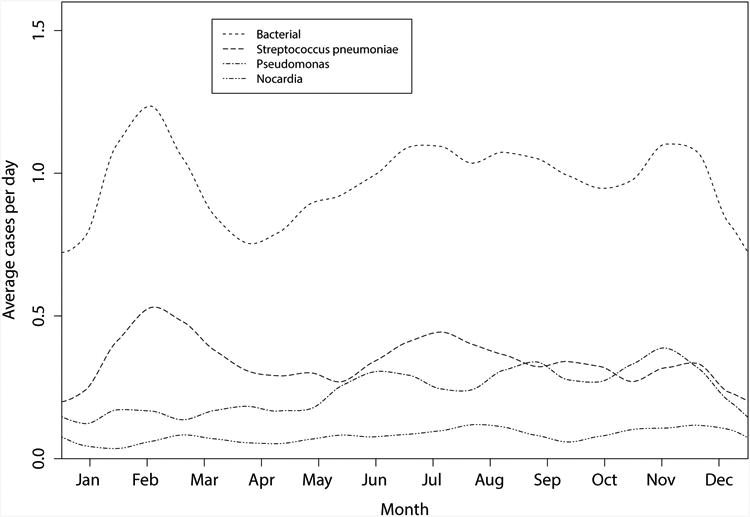
Results: Among the 6967 infectious keratitis cases, cultures were performed in 5221 (74.9%) cases; among them, 3028 (58%) were positive. Of the culture-positive cases, 1908 (63%) and 1081 (35.7%) were of fungal and bacterial etiology, respectively. The predominant fungal organism was Fusarium spp (42.3%) and the predominant bacterial organisms were Streptococcus pneumoniae (35.1%), Pseudomonas aeruginosa (24.3%), and Nocardia spp (8.1%). Analyses revealed an uneven distribution of fungal keratitis throughout the year (P < 0.001) with peaks in July and January. No significant seasonal trend was observed for the combined bacterial keratitis group.
Conclusions: A higher incidence of fungal keratitis occurs during the months corresponding to the windy and harvest seasons, during which time infection from vegetative corneal injury may be more likely. Robust screening efforts during these periods may mitigate visually debilitating sequelae from infectious keratitis.
Figures
References
-
- Erie JC, Nevitt MP, Hodge DO, et al. Incidence of ulcerative keratitis in a defined population from 1950 through 1988. Arch Ophthalmol. 1993;111:1665–1671. - PubMed
-
- Gonzales CA, Srinivasan M, Whitcher JP, et al. Incidence of corneal ulceration in Madurai district, South India. Ophthalmic Epidemiol. 1996;3:159–66. - PubMed
-
- Bharathi MJ, Ramakrishnan R, Meenakshi R, et al. Microbial keratitis in South India: influence of risk factors, climate, and geographical variation. Ophthalmic Epidemiol. 2007;14:61–69. - PubMed
-
- Green M, Apel A, Stapleton F. A longitudinal study of trends in keratitis in Australia. Cornea. 2008;27:33–39. - PubMed
