


Mass spectrometry study of a transferrin-based protein drug reveals the key role of protein aggregation for successful oral delivery
- PMID: 22869744
- PMCID: PMC3427120
- DOI: 10.1073/pnas.1206924109
Mass spectrometry study of a transferrin-based protein drug reveals the key role of protein aggregation for successful oral delivery
Abstract
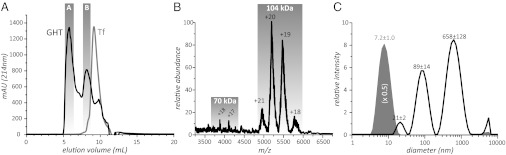
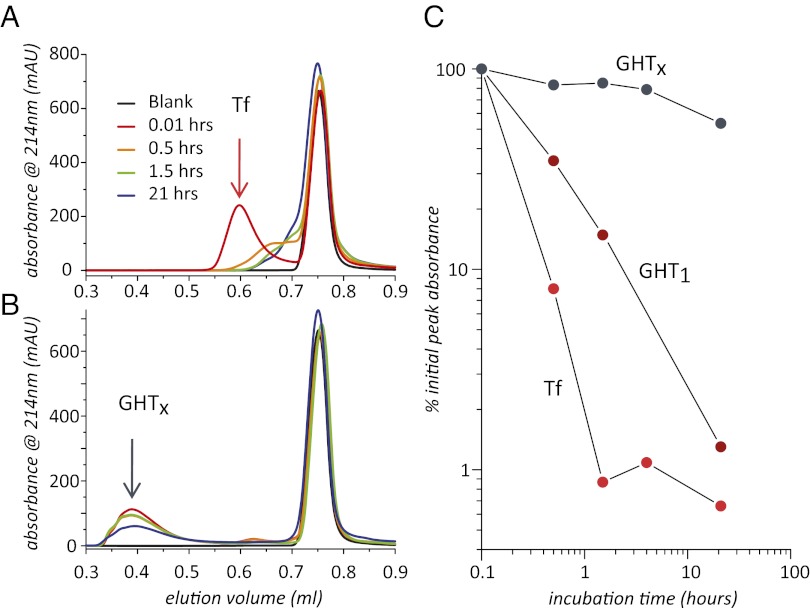
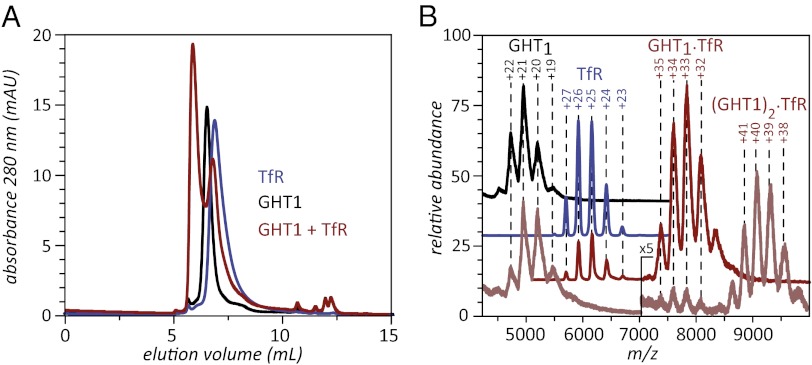
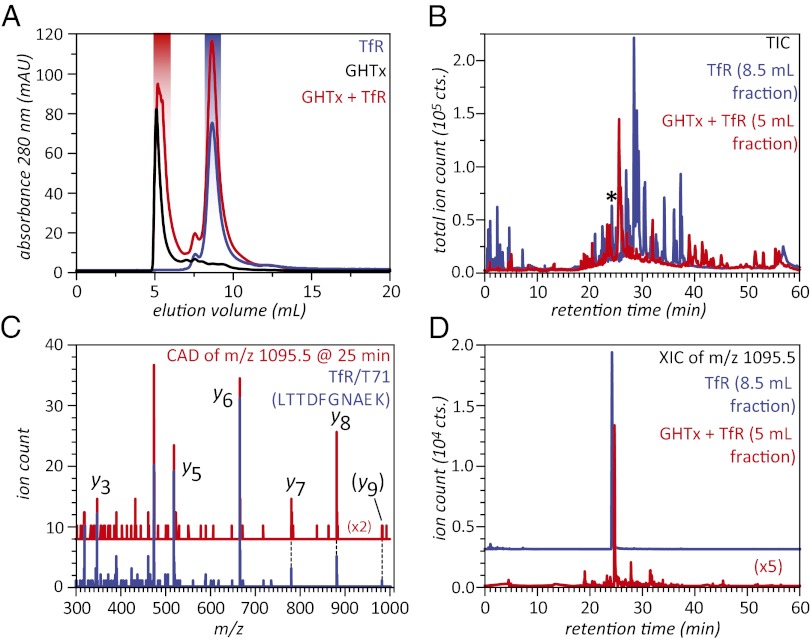
A recently designed human growth hormone/transferrin fusion protein (GHT) remains one of the very few examples of a protein capable of eliciting measurable therapeutic response after oral administration. To better understand the underlying factors that resulted in this rare success of nonparenteral protein drug delivery, we analyzed proteolytic stability and receptor binding properties of this protein, the key factors in overcoming the primary barriers to successful oral delivery. Analysis of GHT by a combination of size exclusion chromatography and mass spectrometry revealed that a significant protein population exists in an oligomeric (GHTx) state in addition to the anticipated monomer (GHT1). These states of GHT were evaluated for their survivability in stomach-like conditions, as well as their ability to bind transferrin receptor (TfR). Our results reveal an exceptional stability of GHTx, as well as the preserved ability to bind TfR, a critical first step in crossing the epithelial-intestinal barrier through receptor-mediated transcytosis.
Conflict of interest statement
The authors declare no conflict of interest.
Figures
References
-
- Morishita M, Peppas NA. Is the oral route possible for peptide and protein drug delivery? Drug Discov Today. 2006;11:905–910. - PubMed
-
- Shen W-C. Oral peptide and protein delivery: Unfulfilled promises? Drug Discov Today. 2003;8:607–608. - PubMed
-
- Moeller EH, Jorgensen L. Alternative routes of administration for systemic delivery of protein pharmaceuticals. Drug Discov Today. 2008;5:e89–e94. - PubMed
-
- Daniels TR, Delgado T, Helguera G, Penichet ML. The transferrin receptor part II: Targeted delivery of therapeutic agents into cancer cells. Clin Immunol. 2006;121:159–176. - PubMed
Publication types
MeSH terms
Substances
Grants and funding
LinkOut - more resources
Full Text Sources
