


Expression profile of genes during resistance reversal in a temephos selected strain of the dengue vector, Aedes aegypti
- PMID: 22870187
- PMCID: PMC3411583
- DOI: 10.1371/journal.pone.0039439
Expression profile of genes during resistance reversal in a temephos selected strain of the dengue vector, Aedes aegypti
Abstract
Background: The mosquito Aedes aegypti is one of the most important disease vectors because it transmits two major arboviruses, dengue and yellow fever, which cause significant global morbidity and mortality. Chemical insecticides form the cornerstone of vector control. The organophosphate temephos a larvicide recommended by WHO for controlling Ae. aegypti, however, resistance to this compound has been reported in many countries, including Brazil.
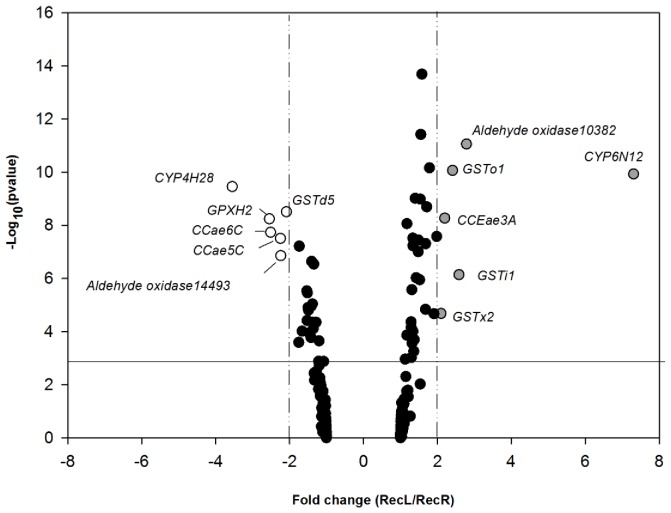
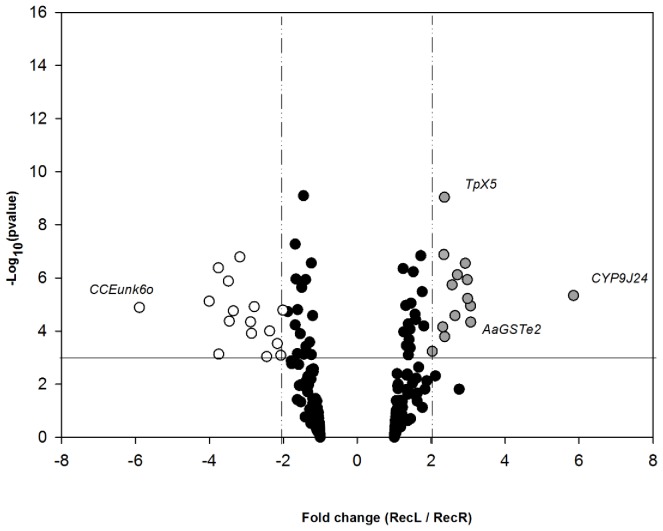
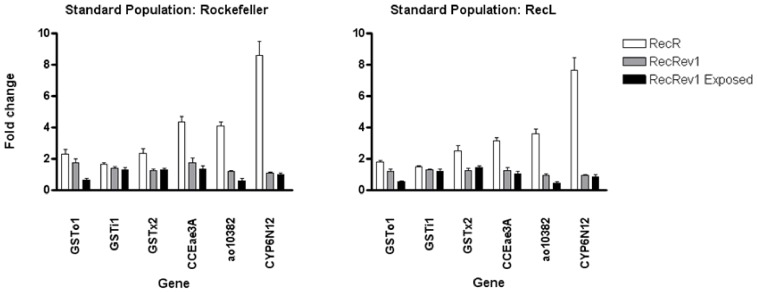
Methodology/principal findings: The aim of this study was to identify genes implicated in metabolic resistance in an Ae. aegypti temephos resistant strain, named RecR, through microarray analysis. We utilized a custom 'Ae. aegypti detox chip' and validated microarray data through RT-PCR comparing susceptible and resistant individuals. In addition, we analyzed gene expression in 4(th) instar larvae from a reversed susceptible strain (RecRev), exposed and unexposed to temephos. The results obtained revealed a set of 13 and 6 genes significantly over expressed in resistant adult mosquitoes and larvae, respectively. One of these genes, the cytochrome P450 CYP6N12, was up-regulated in both stages. RT-PCR confirmed the microarray results and, additionally, showed no difference in gene expression between temephos exposed and unexposed RecRev mosquitoes. This suggested that the differences in the transcript profiles among the strains are heritable due to a selection process and are not caused by immediate insecticide exposure. Reversal of temephos resistance was demonstrated and, importantly, there was a positive correlation between a decrease in the resistance ratio and an accompanying decrease in the expression levels of previously over expressed genes. Some of the genes identified here have also been implicated in metabolic resistance in other mosquito species and insecticide resistant populations of Ae. aegypti.
Conclusions/significance: The identification of gene expression signatures associated to insecticide resistance and their suppression could greatly aid the development of improved strategies of vector control.
Conflict of interest statement
Figures
References
-
- Liu N, Scott JG (1996) Genetic analysis of factors controlling high-level expression of cytochrome P450, CYP6D1, cytochrome b5, P450 reductase, and monooxygenase activities in LPR house flies, Musca domestica. Biochem Genet 34: 133–148. - PubMed
-
- Li X, Schuler MA, Berenbaum MR (2007) Molecular mechanisms of metabolic resistance to synthetic and natural xenobiotics. Annu Rev Entomol 52: 231–253. - PubMed
Publication types
MeSH terms
Substances
LinkOut - more resources
Full Text Sources
Medical
