


Recent trends in the incidence of anxiety diagnoses and symptoms in primary care
- PMID: 22870242
- PMCID: PMC3411689
- DOI: 10.1371/journal.pone.0041670
Recent trends in the incidence of anxiety diagnoses and symptoms in primary care
Abstract
Background: Anxiety is common, with significant morbidity, but little is known about presentations and recording of anxiety diagnoses and symptoms in primary care. This study aimed to determine trends in incidence and socio-demographic variation in General Practitioner (GP) recorded diagnoses of anxiety, mixed anxiety/depression, panic and anxiety symptoms.
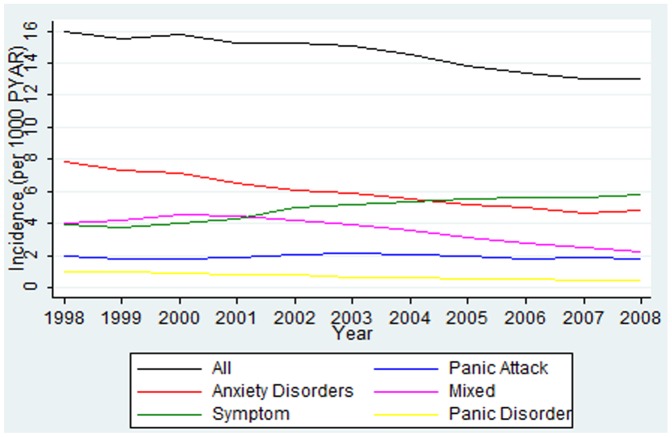
Methodology/principal findings: Annual incidence rates of anxiety diagnoses and symptoms were calculated from 361 UK general practices contributing to The Health Improvement Network (THIN) database between 1998 and 2008, adjusted for year of diagnosis, gender, age, and deprivation. Incidence of GP recorded anxiety diagnosis fell from 7.9 to 4.9/1000PYAR from 1998 to 2008, while incidence of anxiety symptoms rose from 3.9 to 5.8/1000PYAR. Incidence of mixed anxiety/depression fell from 4.0 to 2.2/1000PYAR, and incidence of panic disorder fell from 0.9/1000PYAR in 1998 to 0.5/1000PYAR in 2008. All these entries were approximately twice as common in women and more common in deprived areas. GP-recorded anxiety diagnoses, symptoms and mixed anxiety/depression were commonest aged 45-64 years, whilst panic disorder/attacks were more common in those 16-44 years. GPs predominately use broad non-specific codes to record anxiety problems in the UK.
Conclusions/significance: GP recording of anxiety diagnoses has fallen whilst recording of anxiety symptoms has increased over time. The incidence of GP recorded diagnoses of anxiety diagnoses was lower than in screened populations in primary care. The reasons for this apparent under-recording and whether it represents under-detection in those being seen, a reluctance to report anxiety to their GP, or a reluctance amongst GPs to label people with anxiety requires investigation.
Conflict of interest statement
Figures
References
-
- Kessler RC, Berglund P, Demler O, Jin R, Merikangas KR, et al. (2005) Lifetime prevalence and age of onset distributions of DSM-IV disorders in the National Comorbidity Survey Replication. Arch Gen Psychiatry 62: 93–602. - PubMed
-
- Somers JM, Goldner EM, Waraich P, Hsu L (2006) Prevalence and Incidence Studies of Anxiety Disorders: A Systematic Review of the Literature. Can J Psychiatry 51: 100–113. - PubMed
-
- McManus S, Meltzer H, Brugha T, Bebbington P, Jenkins R (2009) Adult psychiatric morbidity in England, 2007: results of a household survey. London: National Centre for Social Research.
-
- King M, Nazareth I, Levy G, Walker C, Morris R, et al. (2008) Prevalence of common mental disorders in general practice attendees across Europe Br J Psychiatry. 192: 362–367. - PubMed
-
- Stein MB, Roy-Byrne PP, Craske MG, Bystritsky A, Sullivan G, et al. (2005) Functional impact and health utility of anxiety disorders in primary care outpatients. Med Care. 43: 1164–70. - PubMed
Publication types
MeSH terms
Grants and funding
LinkOut - more resources
Full Text Sources
Medical
