. 2012;7(8):e42036.
doi: 10.1371/journal.pone.0042036. Epub 2012 Aug 1.

Transgenic resistance confers effective field level control of bacterial spot disease in tomato

Affiliations

Transgenic resistance confers effective field level control of bacterial spot disease in tomato

Diana M Horvath et al. PLoS One. 2012.

Abstract

We investigated whether lines of transgenic tomato (Solanum lycopersicum) expressing the Bs2 resistance gene from pepper, a close relative of tomato, demonstrate improved resistance to bacterial spot disease caused by Xanthomonas species in replicated multi-year field trials under commercial type growing conditions. We report that the presence of the Bs2 gene in the highly susceptible VF 36 background reduced disease to extremely low levels, and VF 36-Bs2 plants displayed the lowest disease severity amongst all tomato varieties tested, including commercial and breeding lines with host resistance. Yields of marketable fruit from transgenic lines were typically 2.5 times that of the non-transformed parent line, but varied between 1.5 and 11.5 fold depending on weather conditions and disease pressure. Trials were conducted without application of any copper-based bactericides, presently in wide use despite negative impacts on the environment. This is the first demonstration of effective field resistance in a transgenic genotype based on a plant R gene and provides an opportunity for control of a devastating pathogen while eliminating ineffective copper pesticides.


Conflict of interest statement

Competing Interests: The Two Blades Foundation holds an exclusive license to the Bs2 gene and has contributed funds in support of field trial costs. This does not alter the authors’ adherence to all the PLoS ONE policies on sharing data and materials.

Figures

Figure 1
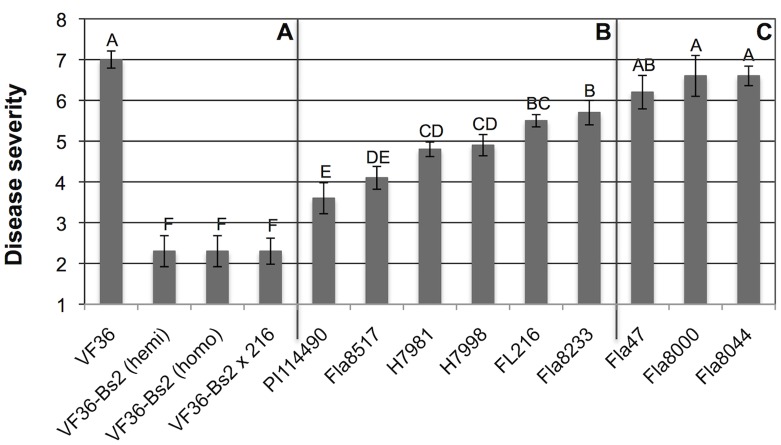
Figure 1. Comparison of bacterial spot disease severity among transgenic and disease resistant tomato genotypes.
Results of field trials in Citra and Balm, FL, 2006-7. Data are overall mean disease severity scores from three field trials (Table S4). Panel a: VF 36 lines without Bs2 or with one (hemi, and VF36-Bs2 x 216) or two (homo) copies of the Bs2 gene; Panel b: tomato breeding lines with resistance to bacterial spot disease; Panel c: tomato lines susceptible to bacterial spot. Disease severity was determined by the Horsfall-Barratt defoliation scale (1 = 0%; 2 = 0–3%; 3 = 3–6%; 4 = 6–12%; 5 = 12–25%; 6 = 25–50%; 7 = 50–75%; 8 = 75–87%; 9 = 87–93%; 10 = 93–97%;11 = 97–100%; and 12 = 100% defoliation) . Error bars denote standard errors of the mean. Letters above bars indicate statistically significant differences in mean values.
Figure 2
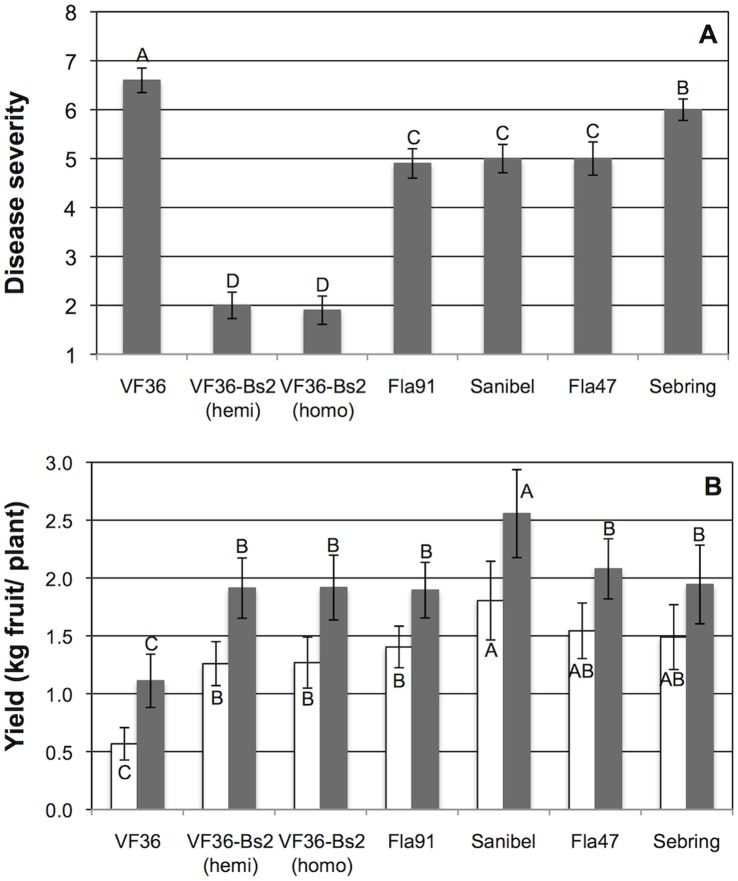
Figure 2. Comparison of disease severity and yield in transgenic and commercial tomato varieties.
Results from Balm, FL, field trials, 2007–2010. Data shown are the combined analysis of five trials (Table S6), derived from the individual trial results given in Table S5. a: Bacterial spot disease severity. Disease severity was determined by the Horsfall-Barratt defoliation scale (See Fig. 1 legend) . Error bars denote standard errors of the mean. Letters above bars indicate statistically significant differences in mean values. b: Yield. Marketable yield (open bars) is kg per plant for medium, large, and extra large fruit. Total yield (filled bars) is kg per plant for marketable yield plus small fruit and culls. VF 36 lines have no (VF36), one (VF36-Bs2 hemi) or two (VF36-Bs2 homo) copies of the Bs2 gene. Error bars denote standard errors of the mean. Letters above bars indicate statistically significant differences in mean values for total yield data, whereas letters below bars indicate significant differences in mean values for marketable yield data.
Figure 3
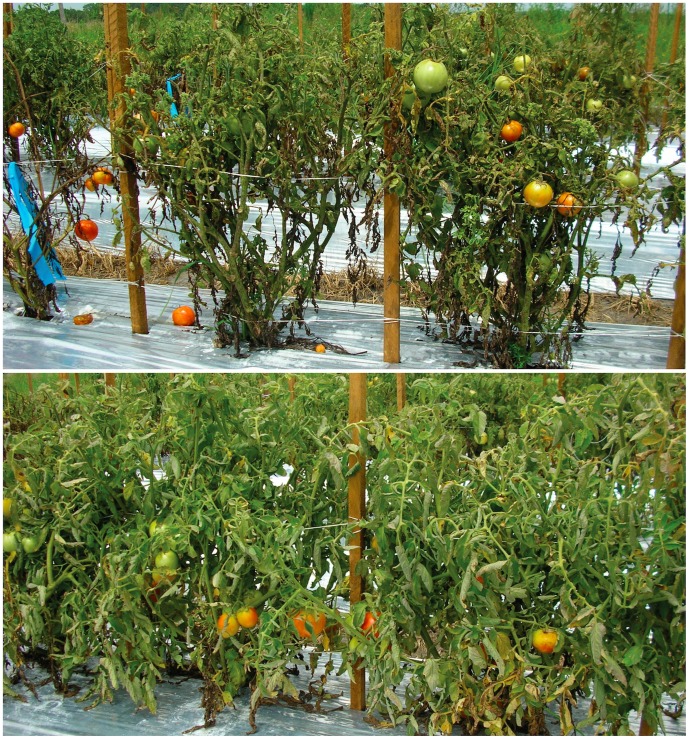
Figure 3. Photographs of non-transgenic and Bs2-transgenic VF36 lines in field trials.
Top. Plants of the non-transformed VF36 line. Bottom. Plants of the transgenic VF36 line containing the 35S:Bs2 gene. Balm, FL, Spring 2008 Trial.

References

    1. Pohronezny K, Volin RB (1983) Effect of bacterial spot on yield and quality of fresh market tomatoes. HortScience 18: 69–70.
    1. Glades Crop Care website (1999) Crop profiles for south Florida tomatoes. Available: http://wwwgladescropcarecom/CP_tomatoes.pdf. Accessed 2012 July 5..
    1. Stall RE, Thayer PL (1962) Streptomycin resistance of the bacterial spot pathogen and control with streptomycin. Plant Disease Reporter 46: 389–392.
    1. Thayer PL, Stall RE (1962) A survey of Xanthomonas vesicatoria resitance to streptomycin. Florida Agricultural Experiment Station Journal 1523: 163–165.
    1. Marco GM, Stall RE (1983) Control of bacterial spot of pepper initiated by strains of Xanthomonas campestris pv. vesicatoria that differ in sensitivity to copper. Plant Disease 67: 779–781.

Publication types

MeSH terms

Substances