


A systematic review of methods to diagnose oral dryness and salivary gland function
- PMID: 22870895
- PMCID: PMC3573918
- DOI: 10.1186/1472-6831-12-29
A systematic review of methods to diagnose oral dryness and salivary gland function
Abstract
Background: The most advocated clinical method for diagnosing salivary dysfunction is to quantitate unstimulated and stimulated whole saliva (sialometry). Since there is an expected and wide variation in salivary flow rates among individuals, the assessment of dysfunction can be difficult. The aim of this systematic review is to evaluate the quality of the evidence for the efficacy of diagnostic methods used to identify oral dryness.
Methods: A literature search, with specific indexing terms and a hand search, was conducted for publications that described a method to diagnose oral dryness. The electronic databases of PubMed, Cochrane Library, and Web of Science were used as data sources. Four reviewers selected publications on the basis of predetermined inclusion and exclusion criteria. Data were extracted from the selected publications using a protocol. Original studies were interpreted with the aid of Quality Assessment of Diagnostic Accuracy Studies (QUADAS) tool.
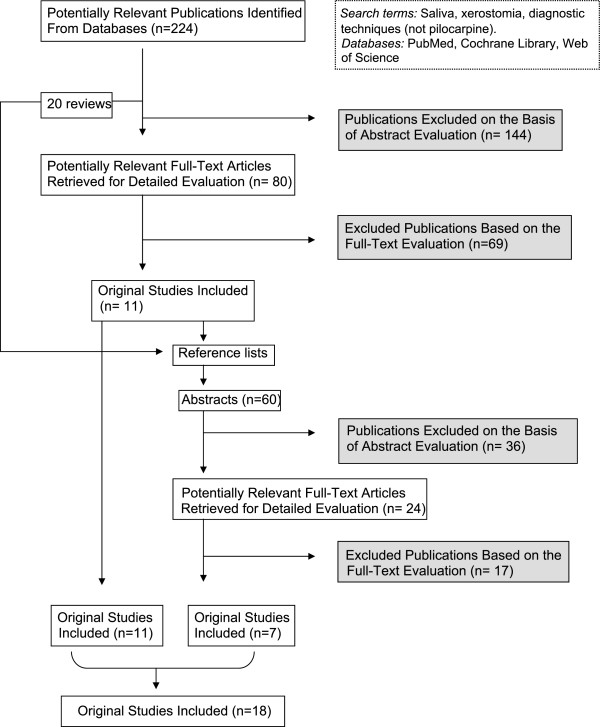
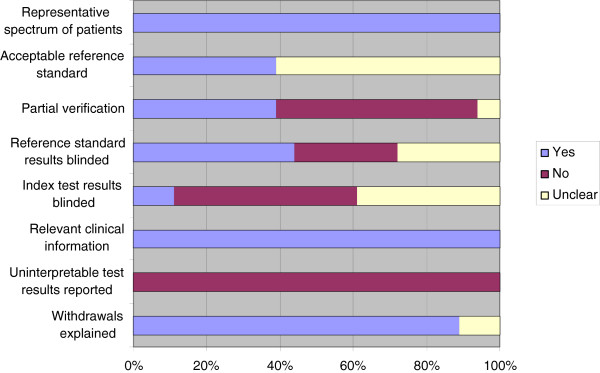
Results: The database searches resulted in 224 titles and abstracts. Of these abstracts, 80 publications were judged to meet the inclusion criteria and read in full. A total of 18 original studies were judged relevant and interpreted for this review. In all studies, the results of the test method were compared to those of a reference method.Based on the interpretation (with the aid of the QUADAS tool) it can be reported that the patient selection criteria were not clearly described and the test or reference methods were not described in sufficient detail for it to be reproduced. None of the included studies reported information on uninterpretable/intermediate results nor data on observer or instrument variation. Seven of the studies presented their results as a percentage of correct diagnoses.
Conclusions: The evidence for the efficacy of clinical methods to assess oral dryness is sparse and it can be stated that improved standards for the reporting of diagnostic accuracy are needed in order to assure the methodological quality of studies. There is need for effective diagnostic criteria and functional tests in order to detect those individuals with oral dryness who may require oral treatment, such as alleviation of discomfort and/or prevention of diseases.
Figures
References
-
- Levine MJ. In: Saliva as a Diagnostic Fluid. Malamud D, Tabak LA, editor. New York: Annals of the New York Academy of Sciences; 1993. Salivary molecules. A structure/function synopsis; pp. 11–16.
-
- Thorselius I, Emilson CG, Osterberg T. Salivary conditions and drug consumption in older age groups of elderly Swedish individuals. Gerodontics. 1988;4:66–70. - PubMed
Publication types
MeSH terms
LinkOut - more resources
Full Text Sources
Other Literature Sources
Medical
