


Alternative Perspectives on Aging in Caenorhabditis elegans: Reactive Oxygen Species or Hyperfunction?
- PMID: 22870907
- PMCID: PMC5395017
- DOI: 10.1089/ars.2012.4840
Alternative Perspectives on Aging in Caenorhabditis elegans: Reactive Oxygen Species or Hyperfunction?
Abstract
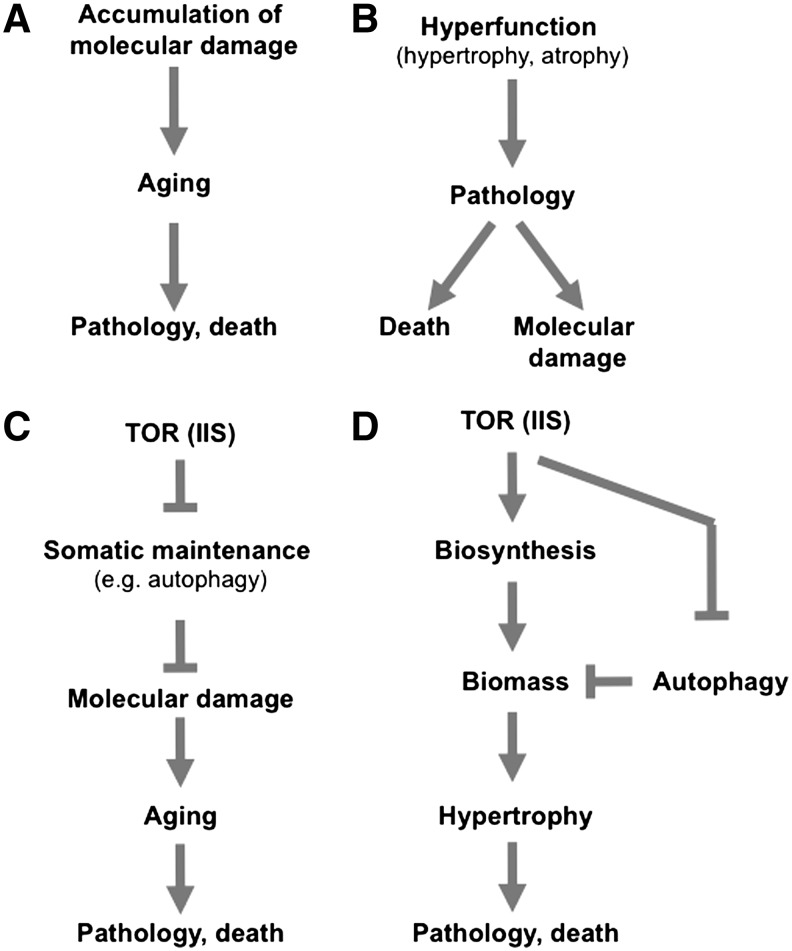
Significance: The biological mechanisms at the heart of the aging process are a long-standing mystery. An influential theory has it that aging is the result of an accumulation of molecular damage, caused in particular by reactive oxygen species produced by mitochondria. This theory also predicts that processes that protect against oxidative damage (involving detoxification, repair, and turnover) protect against aging and increase lifespan.
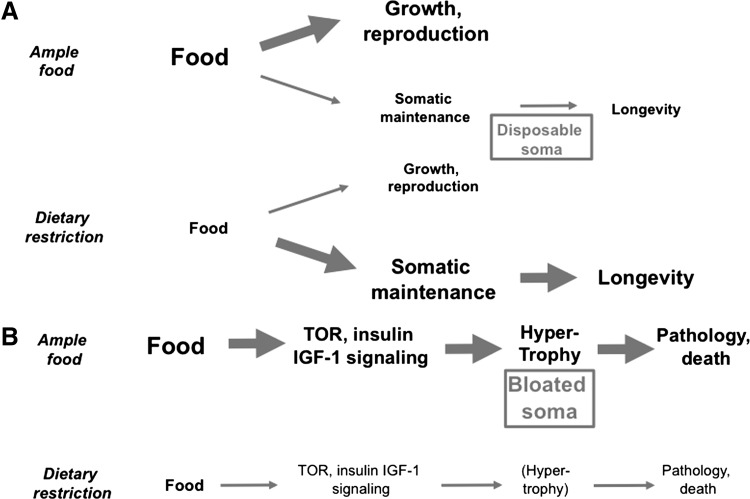
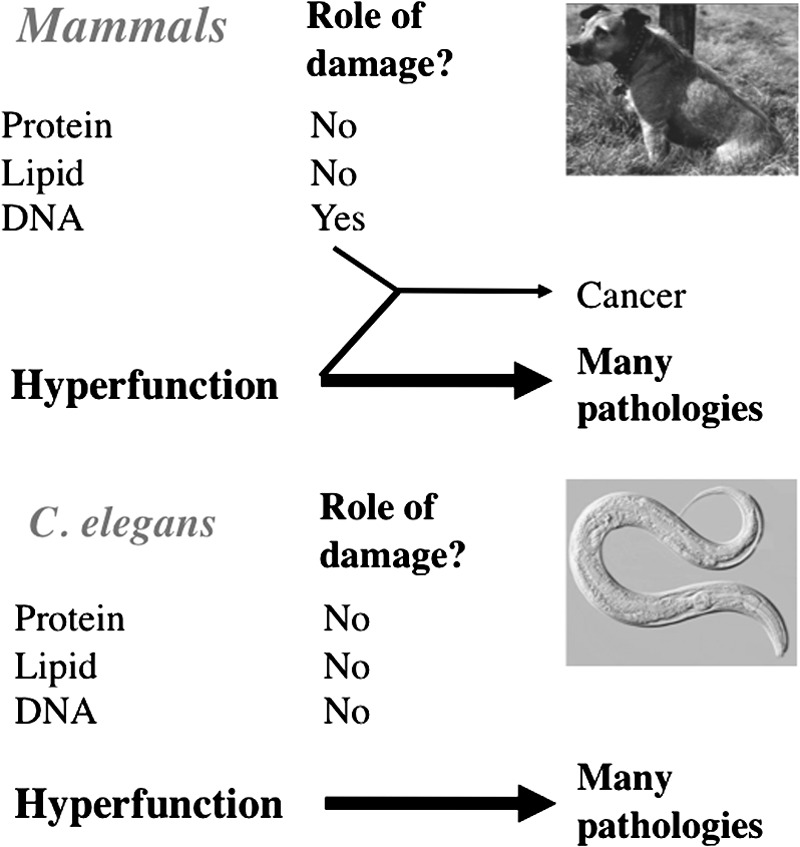
Recent advances: However, recent tests of the oxidative damage theory, many using the short-lived nematode worm Caenorhabditis elegans, have often failed to support the theory. This motivates consideration of alternative models. One new theory, conceived by M.V. Blagosklonny, proposes that aging is caused by hyperfunction, that is, overactivity during adulthood of processes (particularly biosynthetic) that contribute to development and reproduction. Such hyperfunction can lead to hypertrophy-associated pathologies, which cause the age increase in death.
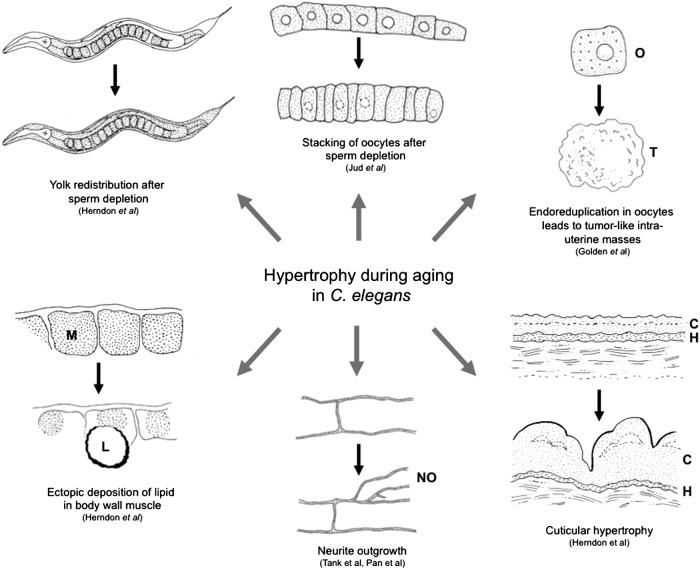
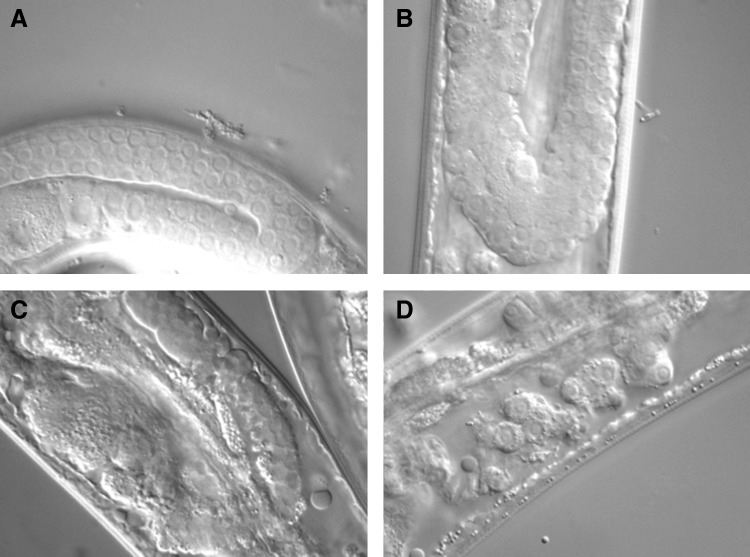
Critical issues: Here we assess whether the hyperfunction theory is at all consistent with what is known about C. elegans aging, and conclude that it is. In particular, during adulthood, C. elegans shows a number of changes that may reflect pathology and/or hyperfunction. Such changes seem to contribute to death, at least in some cases (e.g., yolk accumulation).
Future directions: Our assessment suggests that the hyperfunction theory is a plausible alternative to the molecular damage theory to explain aging in C. elegans.
Figures
References
-
- Ackerman D. Gems D. The mystery of C. elegans aging: an emerging role for fat. Bioessays. 2012;34:466–471. - PubMed
-
- Angelo G. Van Gilst MR. Starvation protects germline stem cells and extends reproductive longevity in C. elegans. Science. 2009;326:954–958. - PubMed
-
- Blagosklonny MV. Aging and immortality: quasi-programmed senescence and its pharmacologic inhibition. Cell Cycle. 2006;5:2087–2102. - PubMed
-
- Blagosklonny MV. Aging: ROS or TOR. Cell Cycle. 2008;7:3344–3354. - PubMed
Publication types
MeSH terms
Substances
Grants and funding
LinkOut - more resources
Full Text Sources
Other Literature Sources
Medical
