


Endotoxemia and mortality prediction in ICU and other settings: underlying risk and co-detection of gram negative bacteremia are confounders
- PMID: 22871090
- PMCID: PMC3580737
- DOI: 10.1186/cc11462
Endotoxemia and mortality prediction in ICU and other settings: underlying risk and co-detection of gram negative bacteremia are confounders
Abstract
Introduction: The interdependence between endotoxemia, gram negative (GN) bacteremia and mortality has been extensively studied. Underlying patient risk and GN bacteremia types are possible confounders of the relationship.
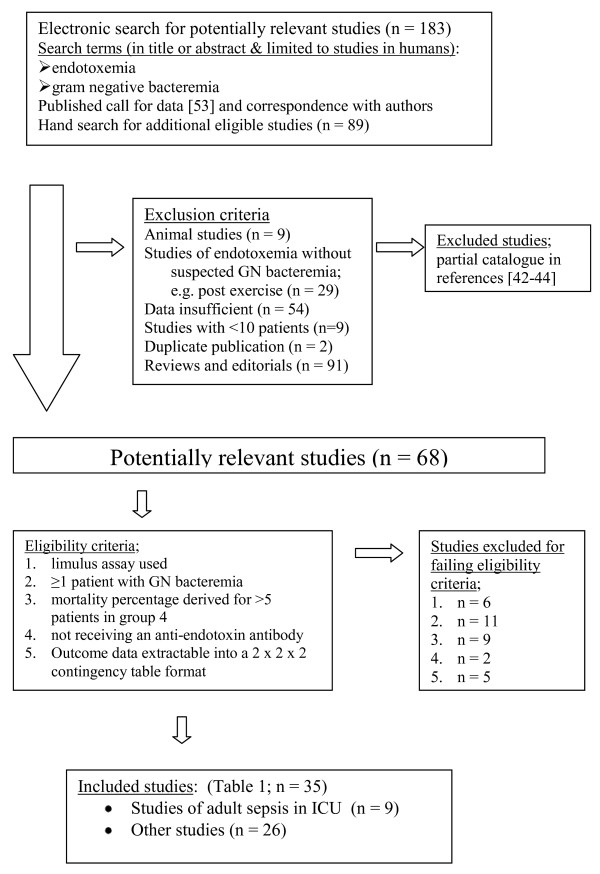
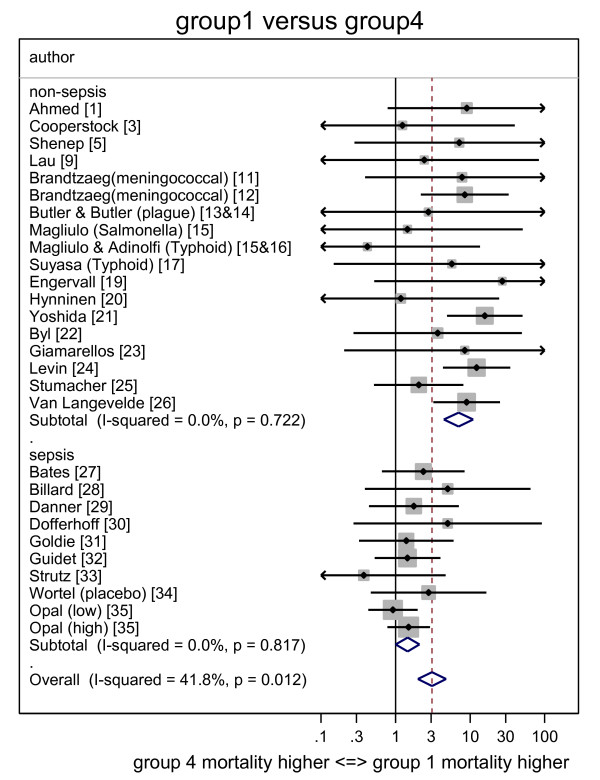
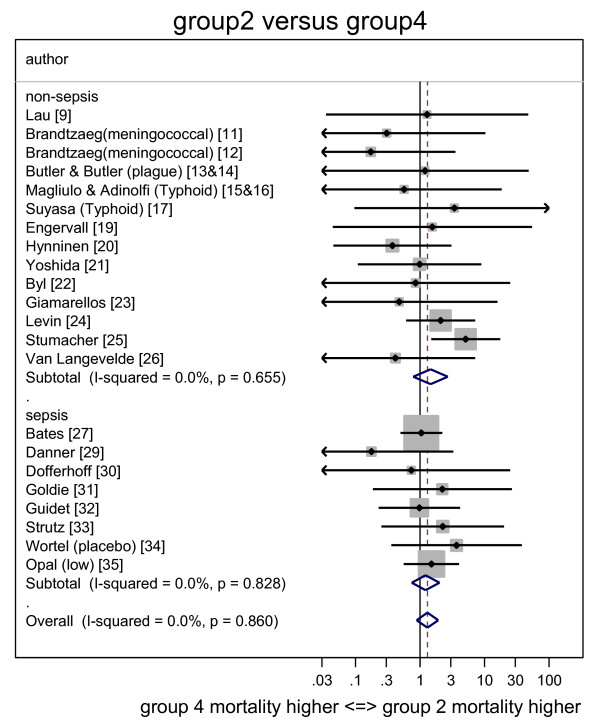
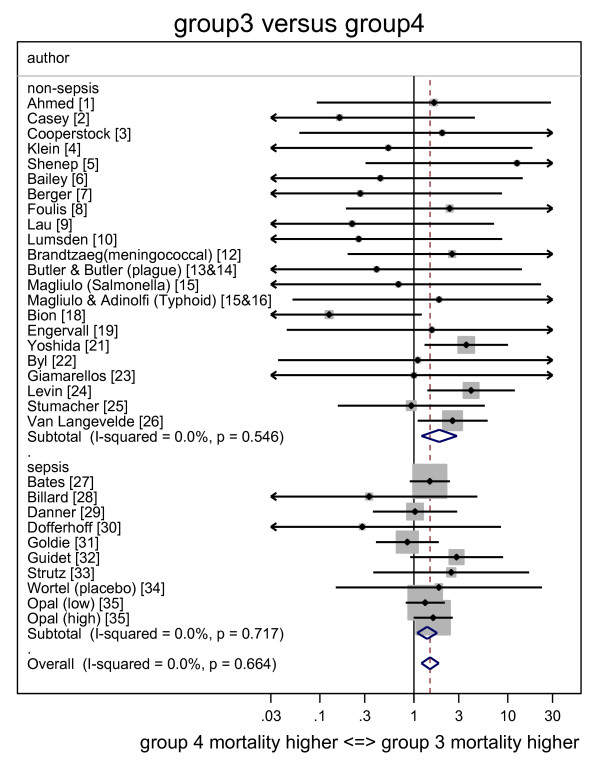
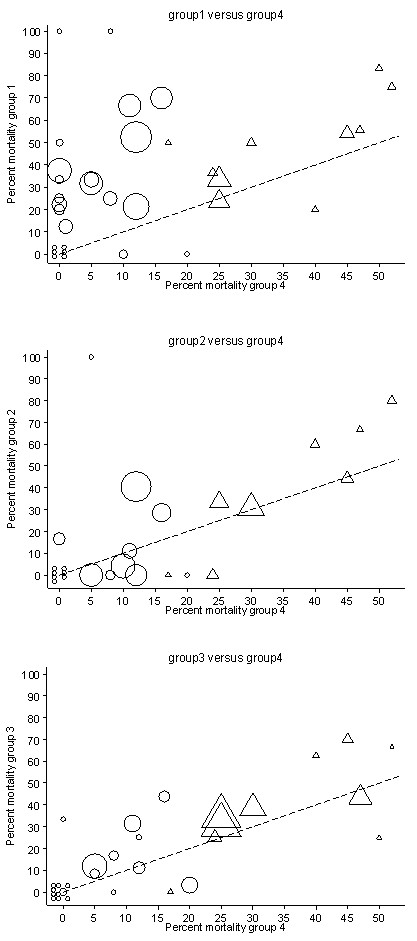
Methods: Published studies with ≥ 10 patients in either ICU or non-ICU settings, endotoxemia detection by limulus assay, reporting mortality proportions and ≥ 1 GN bacteremia were included. Summary odds ratios (OR) for mortality were derived across all studies by meta-analysis for the following contrasts: sub-groups with either endotoxemia (group three), GN bacteremia (group two) or both (group one) each versus the group with neither detected (group four; reference group). The mortality proportion for group four is the proxy measure of study level risk within L'Abbé plots.
Results: Thirty-five studies were found. Among nine studies in an ICU setting, the OR for mortality was borderline (OR <2) or non-significantly increased for groups two (GN bacteremia alone) and three (endotoxemia alone) and patient group one (GN bacteremia and endotoxemia co-detected) each versus patient group four (neither endotoxemia nor GN bacteremia detected). The ORs were markedly higher for group one versus group four (OR 6.9; 95% confidence interval (CI), 4.4 -to 11.0 when derived from non-ICU studies. The distributions of Pseudomonas aeruginosa and Escherichia coli bacteremias among groups one versus two are significantly unequal.
Conclusions: The co-detection of GN bacteremia and endotoxemia is predictive of increased mortality risk versus the detection of neither but only in studies undertaken in a non-ICU setting. Variation in GN bacteremia species types and underlying risk are likely unrecognized confounders in the individual studies.
Figures
References
-
- Ahmed T, Azam MA, Armed N, Jamil KM, Hassan F, Ogura N, Tamura H, Yokochi T. Detection of endotoxin in sera from children hospitalized for treatment of diarrhea in Bangladesh. J Endotoxin Res. 2004;10:223–228. - PubMed
-
- Cooperstock M, Riegle L. Plasma limulus gelation assay in infants and children: correlation with gram negative bacterial infection and evidence for "intestinal endotoxemia". Prog Clin Biol Res. 1985;189:329–345. - PubMed
Publication types
MeSH terms
LinkOut - more resources
Full Text Sources
