


An aggression-specific cell type in the anterior hypothalamus of finches
- PMID: 22872869
- PMCID: PMC3427066
- DOI: 10.1073/pnas.1207995109
An aggression-specific cell type in the anterior hypothalamus of finches
Abstract
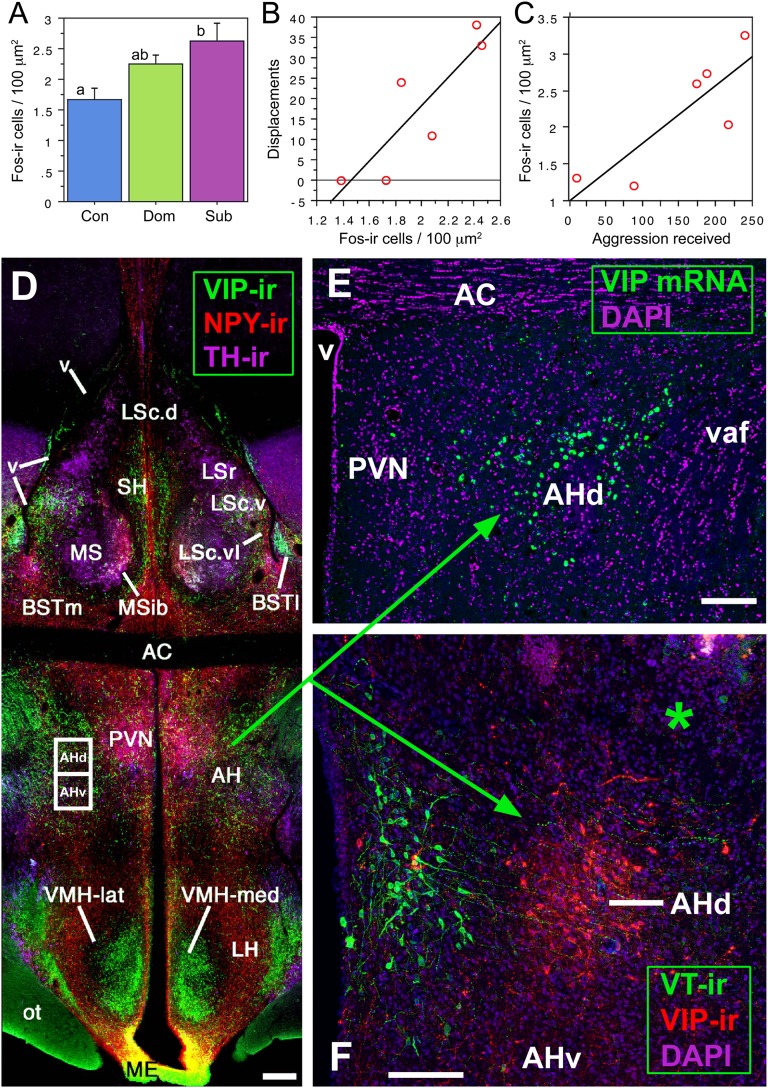
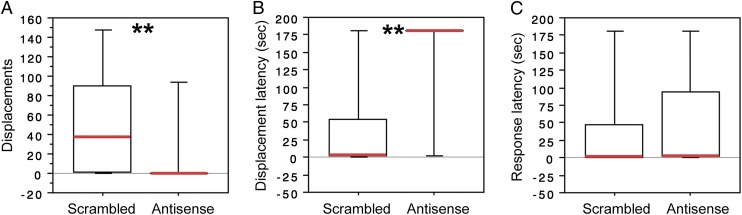
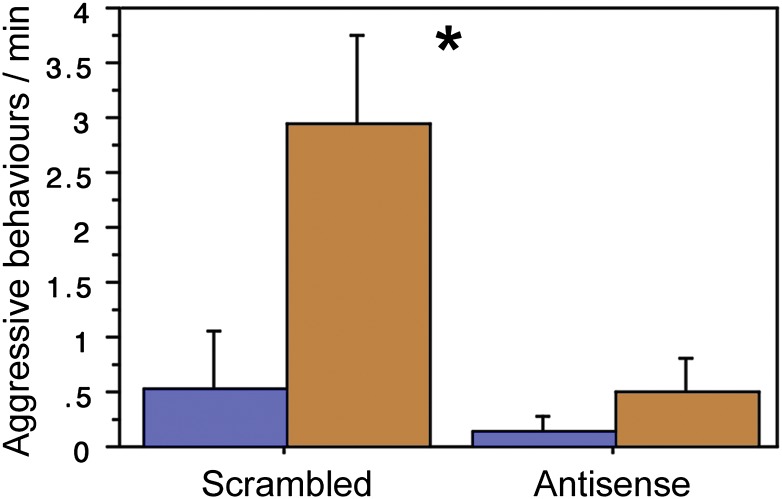
The anterior hypothalamus (AH) is a major integrator of neural processes related to aggression and defense, but cell types in the AH that selectively promote aggression are unknown. We here show that aggression is promoted in a very selective and potent manner by dorsal AH neurons that produce vasoactive intestinal polypeptide (VIP). Fos activity in a territorial finch, the violet-eared waxbill (Estrildidae: Uraeginthus granatina) is positively related to aggression in the dorsal AH, overlapping a population of VIP-producing neurons. VIP is known to promote territorial aggression in songbirds, and thus we used antisense oligonucleotides to selectively block AH VIP production in male and female waxbills. This manipulation virtually abolishes aggression, reducing the median number of displacements in a 3-min resident-intruder test from 38 in control subjects to 0 in antisense subjects. Notably, most antisense and control waxbills exhibit an agonistic response such as a threat or agonistic call within 2 s of intrusion. Thus, antisense subjects clearly classify intruders as offensive, but fail to attack. Other social and anxiety-like behaviors are not affected and VIP cell numbers correlate positively with aggression, suggesting that these cells selectively titrate aggression. Additional experiments in the gregarious zebra finch (Estrildidae: Taeniopygia guttata) underscore this functional specificity. Colony-housed finches exhibit significant reductions in aggression (primarily nest defense) following AH VIP knockdown, but no effects are observed for social preferences, pair bonding, courtship, maintenance behaviors, or anxiety-like behaviors. To our knowledge, these findings represent a unique identification of an aggression-specific cell type in the brain.
Conflict of interest statement
The authors declare no conflict of interest.
Figures
References
-
- Brown JL. Behavior elicited by electrical stimulation of the brain of the Stellar's Jay. Condor. 1973;75:1–16.
-
- Delville Y, De Vries GJ, Ferris CF. Neural connections of the anterior hypothalamus and agonistic behavior in golden hamsters. Brain Behav Evol. 2000;55:53–76. - PubMed
-
- Demski LS, Knigge KM. The telencephalon and hypothalamus of the bluegill (Lepomis macrochirus): Evoked feeding, aggressive and reproductive behavior with representative frontal sections. J Comp Neurol. 1971;143:1–16. - PubMed
Publication types
MeSH terms
Substances
Grants and funding
LinkOut - more resources
Full Text Sources
Miscellaneous
