


Genetic amplification and the individualization of the parent-child relationship across adolescence
- PMID: 22874583
- PMCID: PMC3495089
- DOI: 10.1017/S0033291712001201
Genetic amplification and the individualization of the parent-child relationship across adolescence
Abstract
Background: Many psychological traits become increasingly influenced by genetic factors throughout development, including several that might intuitively be seen as purely environmental characteristics. One such trait is the parent-child relationship, which is associated with a variety of socially significant outcomes, including mental health and criminal behavior. Genetic factors have been shown to partially underlie some of these associations, but the changing role of genetic influence over time remains poorly understood.
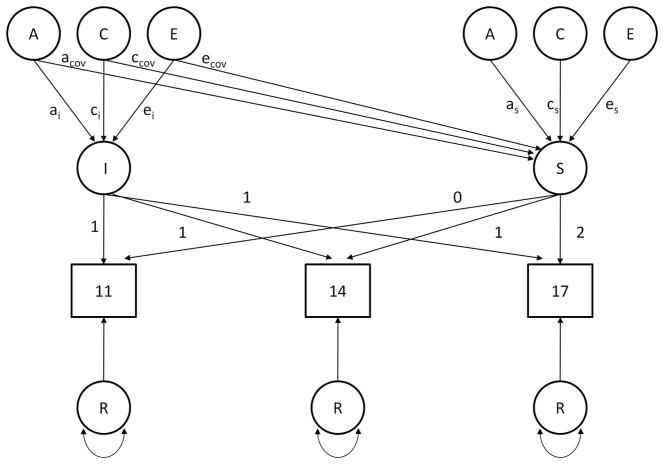
Method: Over 1000 participants in a longitudinal twin study were assessed at three points across adolescence with a self-report measure regarding the levels of warmth and conflict in their relationships with their parents. These reports were analyzed with a biometric growth curve model to identify changes in genetic and environmental influences over time.
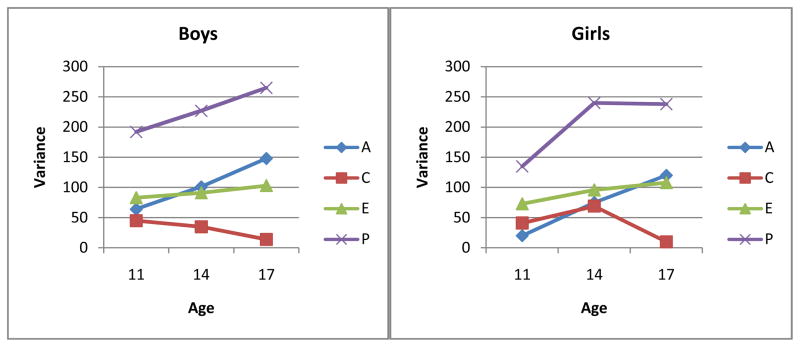
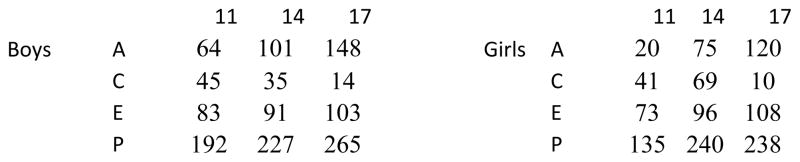
Results: Genetic influence on the child-reported relationship with parent increased throughout adolescence, while the relationship's quality deteriorated. The increase in genetic influence resulted primarily from a positive association between genetic factors responsible for the initial relationship and those involved in change in the relationship over time. By contrast, environmental factors relating to change were negatively related to those involved in the initial relationship.
Conclusions: The increasing genetic influence seems to be due to early genetic influences having greater freedom of expression over time whereas environmental circumstances were decreasingly important to variance in the parent-child relationship. We infer that the parent-child relationship may become increasingly influenced by the particular characteristics of the child (many of which are genetically influenced), gradually displacing the effects of parental or societal ideas of child rearing.
Conflict of interest statement
Declaration of Interest
None.
Figures
References
-
- Akaike H. Information theory and an extension of the maximum likelihood principle. In: Petrov BN, Csaki F, editors. Proceedings of the Second International Symposium on Information Theory. Budapest: Akademiai Kiado; 1973. pp. 267–281.
-
- Baumrind D. The Influence of Parenting Style on Adolescent Competence and Substance Use. The Journal of Early Adolescence. 1991;11(1):56–95.
-
- Bergen SE, Gardner CO, Kendler KS. Age-related changes in heritability of behavioral phenotypes over adolescence and young adulthood: a meta-analysis. Twin Research and Human Genetics. 2007;10(3):423–33. - PubMed
-
- Elkins IJ, McGue M, Iacono WG. Genetic and environmental influences on parent-son relationships: evidence for increasing genetic influence during adolescence. Developmental Psychology. 1997;33(2):351–63. - PubMed
Publication types
MeSH terms
Grants and funding
LinkOut - more resources
Full Text Sources
Medical
