


Molecular characterization of pathogenic members of the genus Fonsecaea using multilocus analysis
- PMID: 22876287
- PMCID: PMC3410912
- DOI: 10.1371/journal.pone.0041512
Molecular characterization of pathogenic members of the genus Fonsecaea using multilocus analysis
Erratum in
- PLoS One. 2012;7(10). doi:10.1371/annotation/8fef18d2-c01c-4f66-9b75-ecbfac5c82a5. Najafzadeh, Mohammed J [corrected to Najafzadeh, Mohammad J]
Abstract
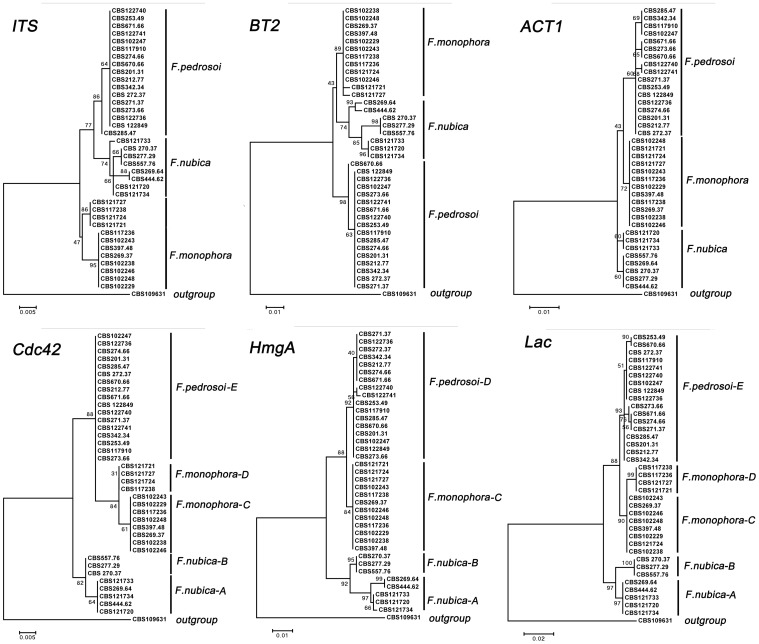
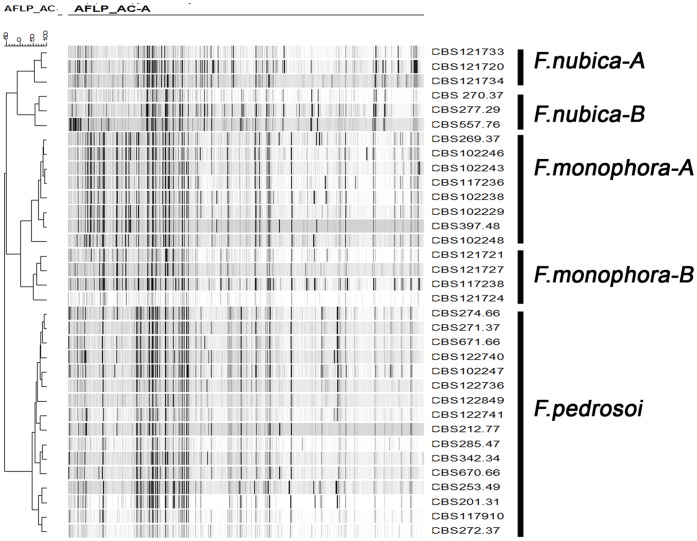
Members of the fungal genus Fonsecaea causing human chromoblastomycosis show substantial geographic structuring. Genetic identity of clinical and environmental strains suggests transmission from plant debris, while the evolutionary processes that have led to spatially separated populations have remained unexplained. Sequences of ITS, BT2, ACT1, Cdc42, Lac and HmgA were analyzed, either by direct sequencing or by cloning. Thirty-seven clinical and environmental Fonsecaea strains from Central and South America, Asia, Africa and Europe were sequenced and possible recombination events were calculated. Phylogenetic trees of Cdc42, Lac and HmgA were statistically supported, but ITS, BT2 and ACT1 trees were not. The Standardized Index of Association (I(A) (S)) did not detect recombination (I(A) (S) = 0.4778), neither did the Phi-test for separate genes. In Fonsecaea nubica non-synonymous mutations causing functional changes were observed in Lac gene, even though no selection pressures were detected with the neutrality test (Tajima D test, p>0.05). Genetic differentiation of populations for each gene showed separation of American, African and Asian populations. Strains of clinical vs. environmental origin showed genetic distances that were comparable or lower than found in geographic differentiation. In conclusion, here we demonstrated clonality of sibling species using multilocus data, geographic structuring of populations, and a low functional and structural selective constraint during evolution of the genus Fonsecaea.
Conflict of interest statement
Figures
References
-
- Queiroz-Telles F, Esterre P, Perez-Blanco M, Vitale RG, Salgado CG, et al. (2009) Chromoblastomycosis: an overview of clinical manifestations, diagnosis and treatment. Med Mycol 47: 3–15. - PubMed
-
- Lopez Martinez R, Mendez Tovar LJ (2007) Chromoblastomycosis. Clin Dermatol 25: 188–194. - PubMed
-
- Esterre P, Andriantsimahavandy A, Ramarcel ER, Pecarrere JL (1996) Forty years of chromoblastomycosis in Madagascar: a review. Am J Trop Med Hyg 55: 45–47. - PubMed
-
- Kombila M, Gomez de Diaz M, Richard-Lenoble D, Renders A, Walter P, et al. (1995) [Chromoblastomycosis in Gabon. Study of 64 cases]. Sante 5: 235–244. - PubMed
-
- Silva JP, de Souza W, Rozental S (1998) Chromoblastomycosis: a retrospective study of 325 cases on Amazonic Region (Brazil). Mycopathologia 143: 171–175. - PubMed
Publication types
MeSH terms
Substances
LinkOut - more resources
Full Text Sources
Miscellaneous
