. 2012;7(8):e41730.
doi: 10.1371/journal.pone.0041730. Epub 2012 Aug 2.

Hypothesis-based analysis of gene-gene interactions and risk of myocardial infarction

Collaborators, Affiliations

Hypothesis-based analysis of gene-gene interactions and risk of myocardial infarction

Gavin Lucas et al. PLoS One. 2012.

Abstract

The genetic loci that have been found by genome-wide association studies to modulate risk of coronary heart disease explain only a fraction of its total variance, and gene-gene interactions have been proposed as a potential source of the remaining heritability. Given the potentially large testing burden, we sought to enrich our search space with real interactions by analyzing variants that may be more likely to interact on the basis of two distinct hypotheses: a biological hypothesis, under which MI risk is modulated by interactions between variants that are known to be relevant for its risk factors; and a statistical hypothesis, under which interacting variants individually show weak marginal association with MI. In a discovery sample of 2,967 cases of early-onset myocardial infarction (MI) and 3,075 controls from the MIGen study, we performed pair-wise SNP interaction testing using a logistic regression framework. Despite having reasonable power to detect interaction effects of plausible magnitudes, we observed no statistically significant evidence of interaction under these hypotheses, and no clear consistency between the top results in our discovery sample and those in a large validation sample of 1,766 cases of coronary heart disease and 2,938 controls from the Wellcome Trust Case-Control Consortium. Our results do not support the existence of strong interaction effects as a common risk factor for MI. Within the scope of the hypotheses we have explored, this study places a modest upper limit on the magnitude that epistatic risk effects are likely to have at the population level (odds ratio for MI risk 1.3-2.0, depending on allele frequency and interaction model).


Conflict of interest statement

Competing Interests: The authors have declared that no competing interests exist.

Figures

Figure 1
Figure 1. Summary of subjects, methods and analyses.
a. Number of SNP pairs for which interaction testing was performed - may not equal the number of possible pair-wise tests [n*(n−1)/2] because some pairs were captured in previous Analyses (File S1 Supporting Figure 2), and some tests were not feasible due to low allele frequencies (File S1 Section 3.3). b. Significance threshold computed using permutations under the null hypothesis (see File S1 Section 3.4) c. SNP pairs with p-value for interaction within 3 orders of magnitude of the significance threshold for each Analysis were brought forward for validation in the WTCCC sample; the numbers of SNP pairs for which data were available in the WTCCC study are shown. LDL, concentration of LDL cholesterol; HDL, concentration of HDL cholesterol; TG, triglyceride concentration; BP, blood pressure; CH, carbohydrate metabolism (loci associated with risk of Type II diabetes and related phenotypes, such as fasting glucose concentration); SMK, smoking; OB, obesity; small LDL, concentration of small atherogenic LDL particles; Lp(a), plasma levels of lipoprotein(a); CHD, risk of coronary heart disease; MI, risk of myocardial infarction.
Figure 2
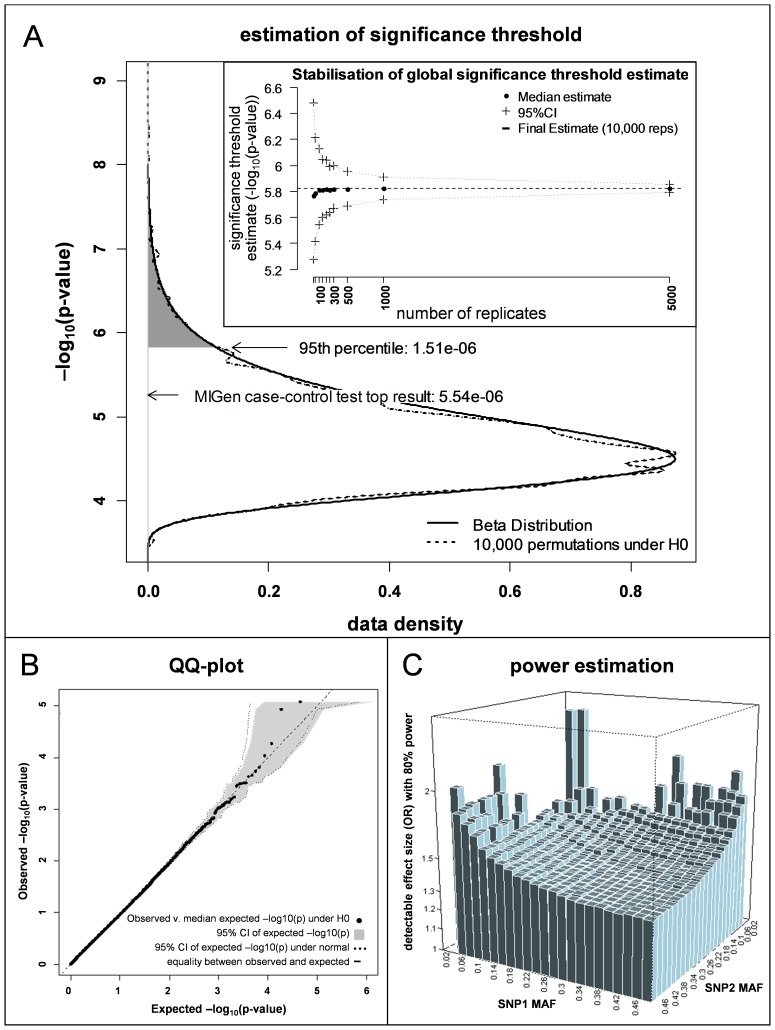
Figure 2. Results of gene-gene interaction search among CVRF SNPs (Analysis 1).
Panel A. Plot of the top result (arrow) from Analysis 1 against the distribution of the top results from 10,000 permutations under the null hypothesis (dotted line). The permuted top results are expected to follow a beta-distribution (solid line, parameters obtained from permuted top results), the 95th percentile of which was taken as the significance level required to obtain a Type II error of 0.05 (arrow). Inset: While the significance level computed in Analysis 1 (dashed black line) was estimated using 10,000 null permutations, this estimate was found to stabilize rapidly with increasing number of permutations (black points) and to change little after 100–200 permutations. Consequently, we progressively reduced the number of permutations used to estimate the significance level in subsequent Analyses. Panel B. Quantile-quantile plot showing rank-ordered observed results (black points) from 29,161 tests in Analysis 1 (y-axis) against expected results (x-axis) estimated from 10,000 permutations under the null hypothesis (randomized phenotype). See File S1 Section 3.5 for computation methods. The shaded area corresponds to the 95%CI of the permuted expected results. The 95%CI of a normal distribution is indicated by the dotted lines. Panel C. Estimation of the interaction effect sizes this analysis has 80% power to detect across a range of MAF under an additive × additive interaction model. The heights of the vertical bars correspond to the effect size (OR) detectable for a typical pair of SNPs whose MAFs are as indicated on the horizontal axes.

References

    1. World Health Organization (2009) GLOBAL HEALTH RISKS. Mortality and burden of disease attributable to selected major risks. 28–29.
    1. Zdravkovic S, Wienke A, Pedersen NL, Marenberg ME, Yashin AI, et al. (2002) Heritability of death from coronary heart disease: a 36-year follow-up of 20 966 Swedish twins. J Intern Med 252: 247–254. - PubMed
    1. Schunkert H, Konig IR, Kathiresan S, Reilly MP, Assimes TL, et al. (2011) Large-scale association analysis identifies 13 new susceptibility loci for coronary artery disease. Nat Genet 43: 333–338. - PMC - PubMed
    1. Manolio TA, Collins FS, Cox NJ, Goldstein DB, Hindorff LA, et al. (2009) Finding the missing heritability of complex diseases. Nature 461: 747–753. - PMC - PubMed
    1. Cordell HJ (2009) Detecting gene-gene interactions that underlie human diseases. Nat Rev Genet 10: 392–404. - PMC - PubMed

Publication types